| Vampire Bats | |||||||||||||||||||||
| (Desmodus Rotundus) | |||||||||||||||||||||
![]() |
|||||||||||||||||||||
| Physical Characteristics | |||||||||||||||||||||
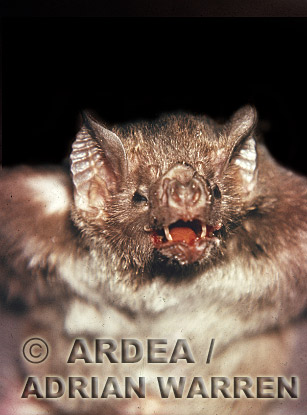
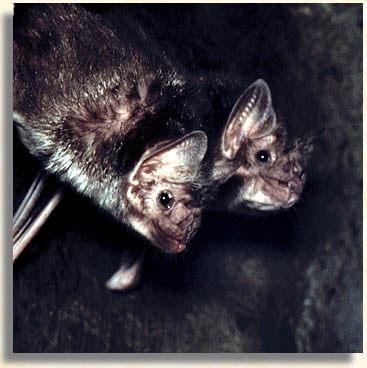
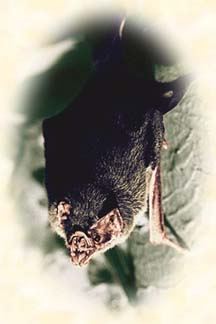
| Desmodus rotundus has grayish-brown fur which is lighter on the ventral side. The muzzle is compact and looks swollen and the ears are pointy. The wing span averages 350-400mm and the head and body length is usually 70-90mm. The common vampire bat has no tail and the membrane between the hind legs, called the uropatagium, is reduced. Females are usually larger than males. The common vampire bat is highly adapted for its specialized feeding behaviour. The braincase is large and the rostrum is reduced to accomodate razor sharp incisors and canines, used for feeding.. There are two lateral grooves in the tongue that expand and contract as the bat feeds. The Desmodus Rotundus has an acute sense of smell. The limbs are also specialized. The thumb of the wing is long and well developed, and the hind legs are strong. |
|||||||||||||||||||||
![]() |
|||||||||||||||||||||
| Food Habits | |||||||||||||||||||||
| Desmodus Rotundus feeds exclusively on the blood of other vertebrates. The species is an obligate parasite. In the wild, the bats feed preferentially on livestock, because of its abundance, but also prey on wild animals and humans. In captivity the bats have also been known to feed on snakes, lizards, toads, crocodiles and turtles. | |||||||||||||||||||||
![]() |
|||||||||||||||||||||
| More Bat Images | |||||||||||||||||||||
| Bat Ecology | |||||||||||||||||||||
| PhotoVault | |||||||||||||||||||||
| Reproduction -and- Growth | |||||||||||||||||||||
| Vampire Bat Bio | |||||||||||||||||||||