
Medz Bahk in the Tradition of the Orthodox Church of Armenia
to offer up spiritual sacrifices acceptable to God through Jesus Christ."
-The First Epistle of Saint Peter (2:5)
The significant difference between the modern and ancient observances of the Great Fast is whether it is approached individualistically or corporately. In the Western Churches, similar to making a new year's resolution, a Christian decides what he is "giving up for Lent." While penances must be chosen by individuals (preferably under the guidance of a spiritual father) this modern approach is in contrast with that of the Eastern Churches which observe the canonical fast. This fast was ordained by the Church in the 69th Apostolic Canon and has been observed since ancient times.
Simply stated this corporate fast consists of abstaining from all meat and animal byproducts for forty days and whatever else is contrary to the penitential spirit of the season. The Great Fast is also a call to set aside additional time for God and to remember the poor through almsgiving. Although variations existed, this basic pattern has been followed by the one holy catholic and apostolic Church up until modern times. Today, many are emphasizing the individualistic approach at the expense of the corporate, totally ignoring the fact that the canonical fast remains the rule of Eastern Churches.
Traditionally, following the Biblical pattern, the Church worked together to keep the Great Fast and as ONE BODY to seek God's forgiveness. Lenten cook books are an outgrowth of this experience. The Great Fast has for generations been a source of great spiritual healing for the Church. Abstinence and total fasting from food, as the Holy Fathers teach, are indispensable, intrinsic elements of repentance. As the Holy Father Saint Basil the Great once said, "Since we were wounded by sin, we must treat it with penance. But penance without fast is worthless. Then by fasting justify yourself before God." Thus fasting from food is not considered optional by Eastern Christians.
Today, more than ever in this age of hedonism, Christians need to lives of repentance. The Church needs its clergy to announce the many canonical fasts and to encourage the faithful on the narrow road of repentance. Sadly, it is common to see clergy trivializing our fasts or ignoring them altogether. Let us work together as the Body of Christ, as one "spiritual house... to offer spiritual sacrifices acceptable to God through Jesus Christ." Then, at the conclusion of the Great Fast, having traveled this road together as ONE BODY, we can celebrate our Lord's Passover from death to life on the day of His Glorious Resurrection.
-Sub-Dn. Lazarus Der-Ghazarian
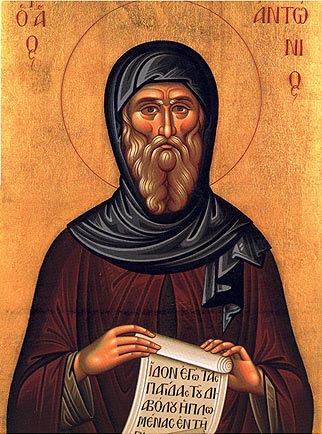
St. Anthony the Hermit AD 251-356
the Father of Monasticism
and keeper of a life of Repentence
Commemorations of the Armenian Church during the Great Fast from the Domar
Great Week in the Armenian Church Tradition
The Traditional Fasts in the Armenian Church by Archbishop Malachias Ormanian
Frequently Asked Questions about Great Lent by V. Rev. Fr. Daniel Findikyan
Keeping the Fasts in the Armenian Orthodox Church by Sub-Dn. Lazarus Der-Ghazarian
Great Lent- the Journey to Pascha by Rev. Fr. Shenork Souin
Lenten Talk (2005) The Parable of the Unjust Steward by Sub-Dn. Lazarus Der-Ghazarian
Lenten Talk (2007) Keeping a Daily Rule of Prayer by Sub-Dn. Lazarus Der-Ghazarian
The Fast of the Catechumens by Rev. Fr. Shenork Souin
The Lenten Readings of St. Gregory of Narek's Book of Prayers
On Fasting: Lessons from the Fathers
Fasting for Orthodox Christians The Desert Fathers and other reflections
Unceasing Prayer from Fr. Thomas Hopko's "Rainbow Series" on the Orthodox Faith
Fasting from Fr. Thomas Hopko's Rainbow Series on the Orthodox Faith
Almsgiving from Fr. Thomas Hopko's Rainbow Series on the Orthodox Faith
Return to Looys Kreesdosee
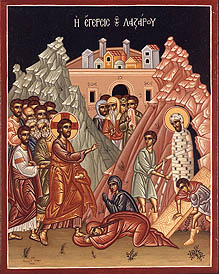
The festival of the
"Raising of Lazarus" marks the end
of the Great Fast
and the transition to Great Week