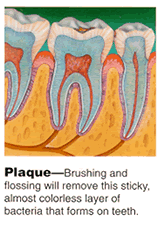
If tooth pellicle is not removed it becomes more sticky and becomes colonized by bacteria , at first aerobic organism as Strept.sangius & Strept.mutans . This is the beginning of a dental plaque which is at first thin and structureless but by time it matures and becomes more thick and having more organisms especially anaerobes as Veillonella , Actinomyces , Fusobacteria , & Bacteroids .
Deposition of calcium phosphate on this mature plaque result in calculus formation.
Some bacteria in the dental plaque promote this calcification , e.g , Veillonella , Neiss eria & Actinomyces . This dental calculus is at first small in size but becomes enlarged by more sticky substances , more bacterial colonization and more calcification .Calculus contains a large variety of organisms not less than 20 species. The most important of these are Strept.sangius , Strept.mutans , Strept.mitior , & actinomyces .
1- The embedded organisms especially St.mutans synthesize polymerized carbohydrate as glycan , dextran , and levan & this will allow more organism to be embedded and the plaque becomes larger in size .
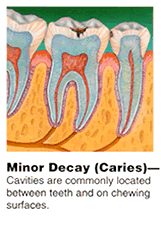
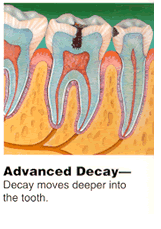
2- Dental Caries : Fermentation of sucrose producing lactic acid cause lowering the pH to below 5.6 . This results in demineralization of tooth enamel and starting of dental caries .
3- Gum Bleeding : The surfaces of dental plaques and calculus are not smooth causing mechanical irritation and minor trauma to the gum producing their inflammation and bleeding .
4- Periodontal Disease : The organisms embedded in the plaque and calculus and also their products of enzymes and toxins initiate inflammatory responses and immunological responses in the surrounding tissues leading to periodontal disease .