| Viet Nam |
 |
 |
 |
 |
 |
 |
 |
 |
 |
 |
 |
 |
 |
 |
 |
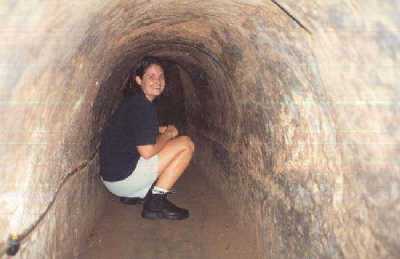
| Sorry about the size of these pictures and the slow download. Communication is a bit tough sometimes. This is us at the tunnels of Cu Chi outside Saigon. No way was an American going to fight the VC down here and win. Two American Army divisions spent 7 years trying to drive the VC out of this complex and never did. The propaganda story that went with the visit was also enlightening. |
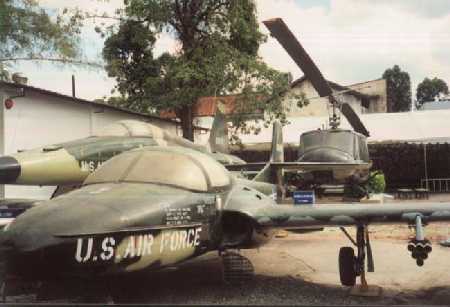
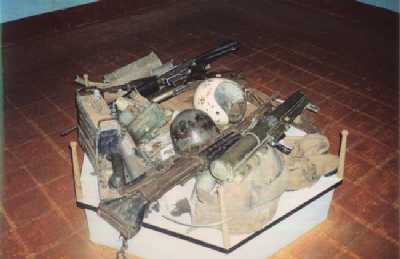
| A view of the courtyard display of American junk left behind after the war. Much of the museum is dedicated to the stories as told by the war correspondents and photographers. It is a remarkable display in a country that has few really organized attractions for a visitor. More on that in the DMZ photos below. |
| We flew up to Hue, about 1/2 way (500 miles) to Hanoi from Saigon. From there we took an all-day tour of the DMZ, the former buffer between the Communist North and the American supported government (until 1975, when the North won the war) in the South. We only covered about 200 miles, but it took 12 hours in a hot minibus. There isn't much there to look at anymore, the jungle took it all back. We visited a number of sites, but unless you know the history, they look like the mountains, beaches or caves that they are. The government hasn't built any museums or visitor's centers that help the tourist to understand what happened in these places. |
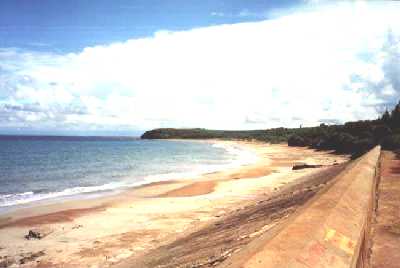
| This is a view of a beach just above the DMZ. There is a huge tunnel complex that civilians lived in in the hills here. The beaches here are very pretty. |
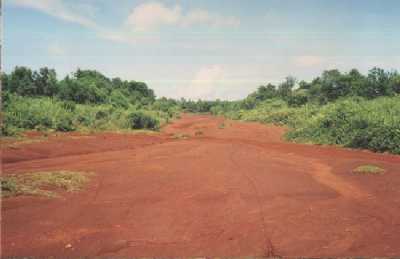
| One of our stops was the site of the US Marines' combat base at Khe Sanh, about 9 miles from the Laos border (to the west), and 50 miles from the sea (to the east). It is amazing that so much fighting took place to control so narrow a piece of land. The Americans were trying to stop the flow of supplies and men from the North into the South, and this base was supposed to control the surrouding area. It didn't. This is all that remains, the red strip that used to be the runway. All the supplies to keep the Marines alive had to be delivered by air for quite a while, and this strip of ground was shelled by the Vietnamese with big guns for over 6 years. |
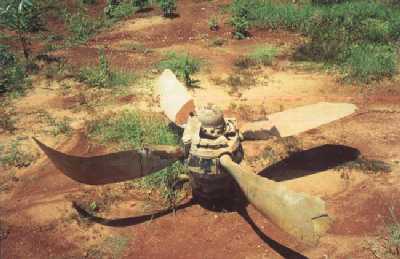
| Many American planes and helicopters were shot down trying to land or take off here. This is the propeller from one of the unlucky ones. There are a few tank hulls and guns left here, but mostly the wreckage of war was removed so that the metal could be recycled. The runway was made of aluminum plates, but some lucky recycler found out and hauled it all away years ago. |
| Among the souvenirs below are an M-60 machine gun, M-79 grenade launcher, M-16 rifle, claymore mine, fragmentation grenade, LAW (bazooka), boots, landmine, field telephone, dog-tags and ammunition. The locals find this stuff and lots more all over the area. They (and their children and cows) occasionaly step on and explode old bombs, mines, shells and assorted other nasty stuff. Lots of amputees here. Their government, maybe because this is a Socialist "workers paradise", doesn't do a good job of taking care of those maimed by war or the remnants of war. You aren't able to work for the state if you don't have legs. |
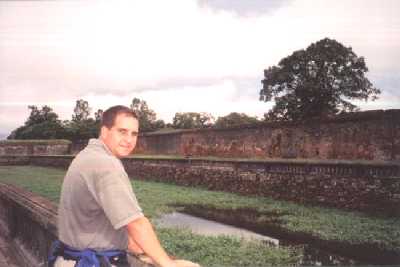
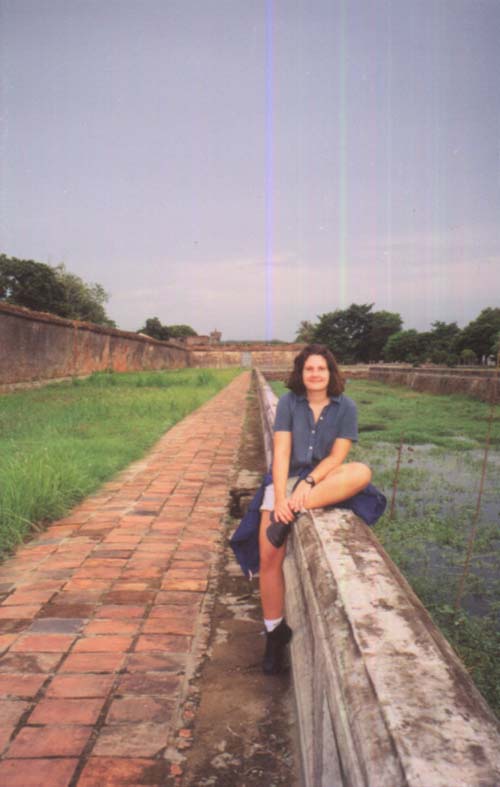
| Back in Hue. This is the old Imperial City. The inner city is called the Citadel because it is ringed by a tall stone wall and a double moat. The benefit to rainy season travel is that it is cooler and the moats are full. The city is in ruins and isn't being preserved, but most of the country is in ruins, so why expect anything different when it comes to historical sights? |
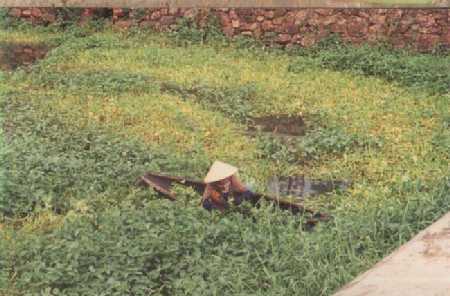
| The moat is the garden for water spinach that ends up on your plate every night. People take these little canoes out every day to harvest it. Yummy! |
| Yes, that is sweat. It was 90 and humid, just like any other day for the past 3 months. At least if I'm sweating, I know I'm still alive. |
| This is Charlie, and his brothers Charlie, Charlie and Charlie. We interrupted their soccer game for a photo. After this they reminded us that we were "round eyes". |
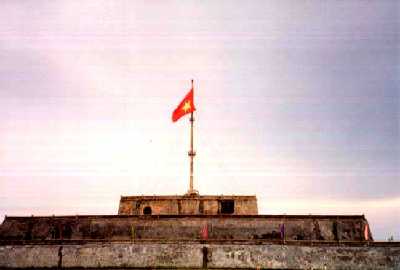
| NAM 57 1945 - 2002. The red flag flies over the main gate of the Citadel. |
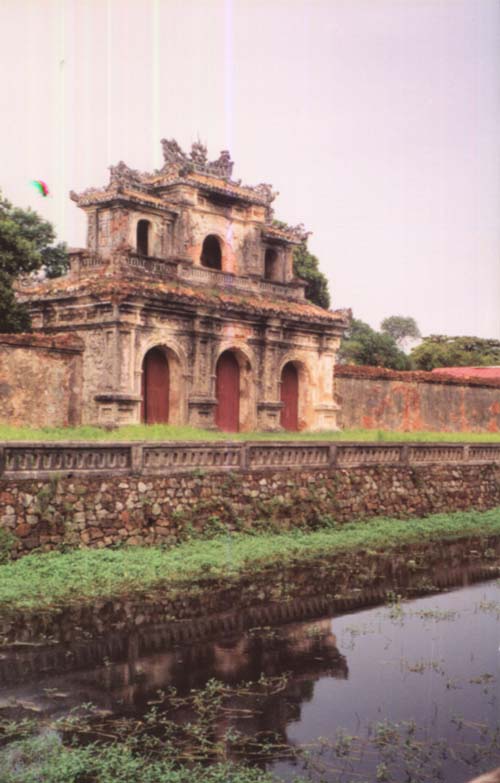
| One of the gates to the Emperor's enclave within the Citadel. |
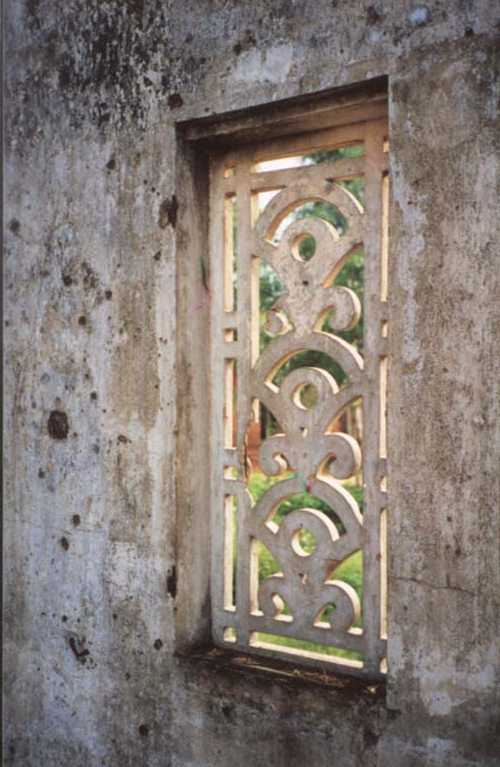
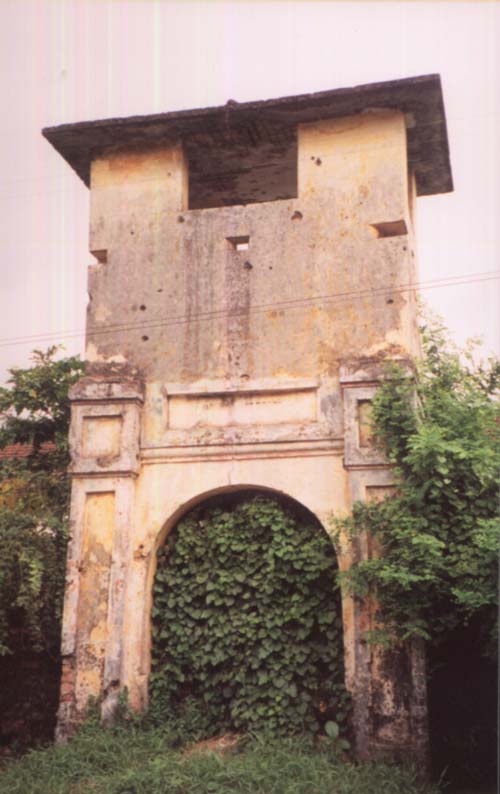
| Many buildings still have scars of war. If it looks like a bullet hole, it is. Many of the holes still have the bullet embedded in the concrete or stone. |