A clergyman finally notified King Matthias of Hungary, who commissioned Elizabeth's cousin, Count Thurzo, to conduct an investigation of the Countess' activities. A raid on the castle proved ghastlier.than Thurzo and his men had prepared themselves for: one dead girl in the main hallway, another, still alive, whose entire body had been pierced with holes, and several more hung from the rafters of the basement ceiling like gutted deer, their blood emptying into Elizabeth's now-legendary vat. Fifty bodies were exhumed from the basement of the castle; the roster, discovered in Elizabeth's desk, listed the names of 650 girls who had been murdered. The Countess' accomplicies - Dorka, Ficzko, and Thorko, among others - were taken into custody, while the Countess herself was placed under house arrest in her castle.
In 1610, the Countess and her accomplices were placed on trial. Dorka, Helena Jo, and Ficzko confessed after lengthy torture sessions, though their attempts to diminish their roles in the terror were blatant; "life in prison with the possibility of parole" was not an option in seventeenth-century Hungary. All placed the majority of blame on Anna Darvulia, a witch consort of Elizabeth's who passed away several years prior to the trial. Over 200 witnesses were called, many of whom had little more than hearsay to offer; nonetheless, confessions of those close to the Countess' court, as well as the grisly evidence uncovered at Thurzo's raid, provided ample testimony to her guilt. Elizabeth herself never physically appeared in court or admitted to any crime.
Here I must briefly digress. Elizabeth's failure to appear in court was not by her own choosing; in fact, she pleaded constantly with her captors to publicly present her own side of the story. Unfortunately for her, King Matthias was not privy to her demands, having engineered her trial as a public spectacle to check the unruly nobility. Although there exists ample evidence proving Elizabeth's guilt, it is important to note that she was not permitted to testify at her own trial.
Her accomplices, however, were shown no mercy. Dorka and Helena Jo, whose hands had "spilled Christian blood," had their fingers torn out with red-hot pincers before being thrown into a fire; the others were beheaded and burned at the stake. Another cohort, Erszi Majorova, was later beheaded when evidence surfaced linking her to the Countess' sadistic activities.
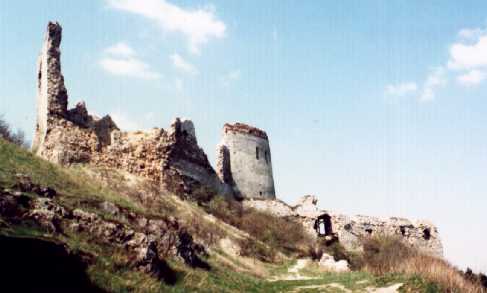
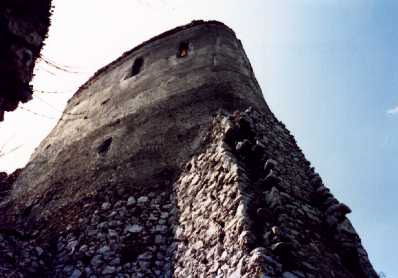
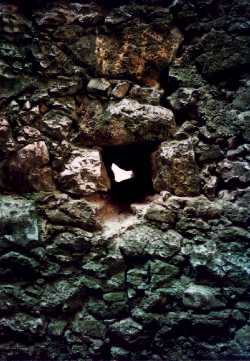
By law, Elizabeth's noble birth prevented her from sharing the fate of her accomplices, but her cousin Thurzo sentenced her to "perpetual imprisonment in [her] own castle" in 1611. (Legend holds that he pronounced this judgement upon raiding the Countess' torture chamber, but we have no evidence that this ever happened.) Elizabeth was walled into a small chamber in her castle, with only a small hole left open for air and food. The tower still stands today in the modern Slovak Republic. A full transcript of the trial was produced and remains today in the Hungarian State Archive in Budapest.
Countess Elizabeth Bathory never confessed to her crimes, nor did she utter a word of repentence or remorse. After refusing the services of a battalion of priests, she was found dead in her prison in 1614, three years after her initial imprisonment. She was fifty-four years old. Folklore has attributed her death to deprivation of virgins' blood, but old age was the most likely culprit.
A complete transcript of Elizabeth's trial was compiled during the proceedings but spent the next few centuries locked away in the Hungarian State Archive in Budapest. Csjethe Castle fell into ruins, which can be seen today in the modern Slovak Republic. (For pictures of what remains of the castle, please see the "images" page.) Elizabeth was interred in the Bathory family tomb, and the act of speaking her name was declared a criminal act by the Hungarian Parliament. Only after the demise of Communism was the Archive opened and the trial transcript released. The prior lack of evidence, though, did not stop Hollywood from turning out a handful of cheap horror flicks based on the Countess' story. The 1970's film Countess Dracula was the first to deal explicitly with the Bathory story, though the villainess is named "Mathory." Movie insiders say that a newer version of the Bathory story (starring (gulp) Linda Blair, which offers some insight into its predicted quality) is in the works right now. |