LEGENDS OF TREES AND PLANTS
Many of the trees, plants and flowers we associate with Christmas have legends attached to them. Here are a few.
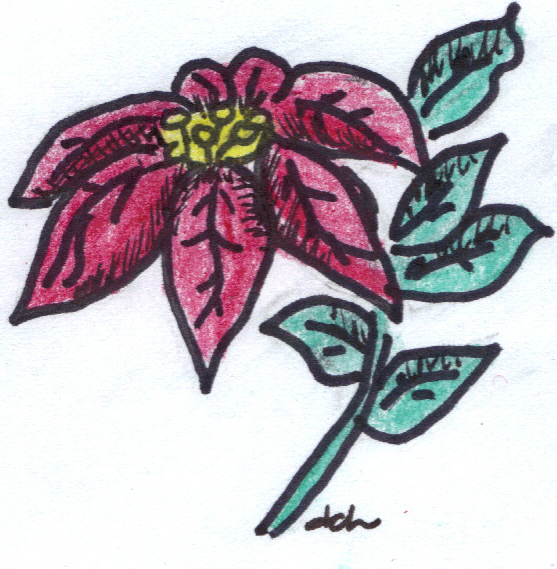
The poinsettia as a lovely legend about a poor Mexican boy who had nothing to offer the church on Christmas Eve. In his great faith he fell upon his knees outside of the church and prayed to God that he could have something to place upon the altar in honor of the birth of the Christ Child. When he rose from the spot beautiful red leaved flowers sprung from the ground and spread all over. He picked an armful and offered them to God at the altar.
The poinsettia is also called the Flower of the Holy Night and did originate in Mexico. Joel Roberts Poinsett, US ambassador to Mexico and a botanist, brought the flower to the US in 1829. It is grown in greenhouses all over the United States today and graces our homes and churches at Christmas time.
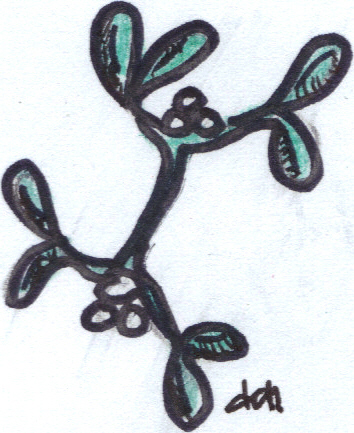
The ancient Druids of Britain honored this plant. They held a great ceremony when cutting it from the host tree. Mistletoe is a parasitic plant that grows on other trees yet does not usually do harm. The Druids would spread out a brilliant white cloth and cut the mistletoe with a golden sickle. It would be caught in the white cloth because it should never touch the ground. They used it for many things including medicinal reasons and to keep evil away.
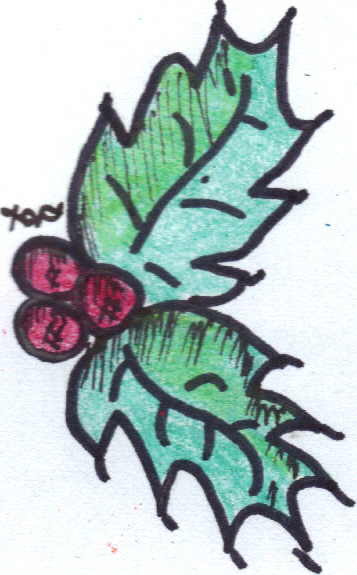
Holly was another sacred plant of the Druid's. The leaves and berries were used to heal the sick. Holly was hung on their houses and barns to keep evil spirits away. Holly has a gender. The male holly has leaves and the female holly has leaves and berries. To grow holly with berries you must have both genders planted near each other. In England it is called the He and She holly. In Ireland the first person who brought the holly into the house during the holidays would rule. Therefore, if the wife brought it in first the husband was out of luck - she would rule the roost for the year. Legend has it that the cross on which Christ was crucified was holly wood. The berries used to be white but turned red from then on to represent Christ's blood that was shed.
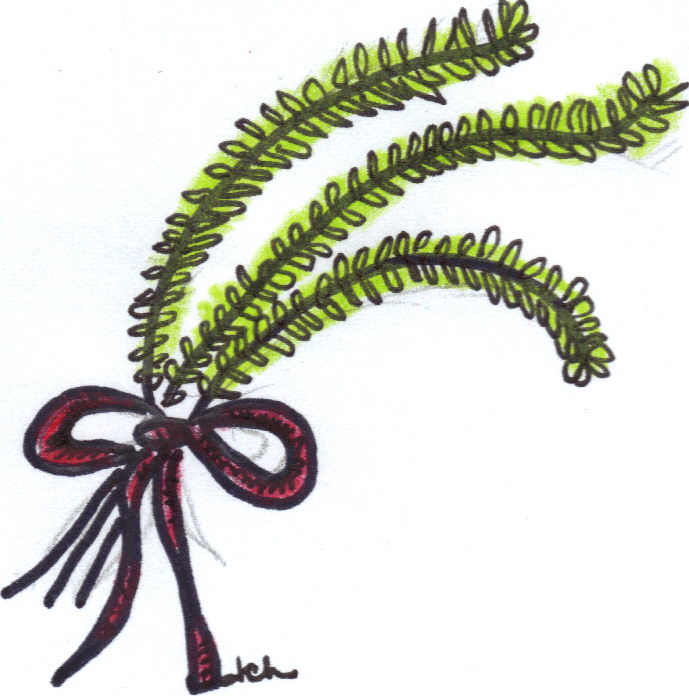
The herb Rosemary has a legend connected with it. During the flight of the Holy Family into Egypt they stopped near a stream for Mary to wash out a few things. She washed her blue robe and was looking for a place to hang it to dry. Nearby were beautifully scented rosemary bushes. She spread it out over the bushes in the sun and the little white flowers changed to blue to match her robe, in her honor.
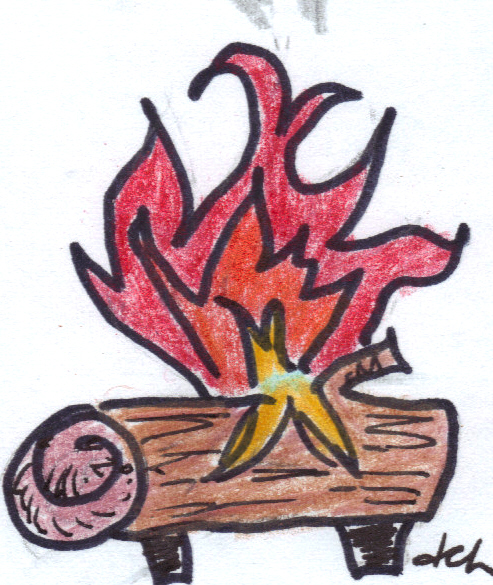
Logs from trees took a great part in the Christmas celebration before we recognized Christmas Trees. The practice of the Yule Log comes from pagan origins. During Yule a large log would be placed in the hearth and burned for many days. This wasn't just a log like we think of logs. It might be half a tree and it protruded out into the living area floor and was pushed in as it burned. The ancients thought of the dark as evil and the burning log brought light. It was bad luck for it to go out because the bad spirits could get into the house. When many of the pagans were Christianized the Log was still used in celebrations. In England it was covered with a cloth and children would beat it with sticks and their hands demanding presents. The children were sent out of the room and trinkets were hidden under the cloth. They were let back in to beat the log again and the trinkets would fall out apparently given to them from the log. The Yule log was never burned the whole way through. There were always remnants of it left to keep in the house during the year and protect it from lightening and to start the next years Yule log blaze.
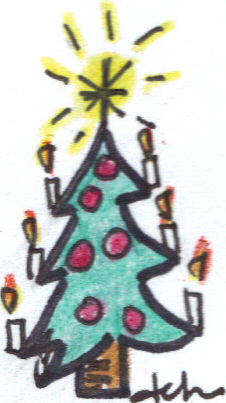
There are many legends connected to the Christmas Tree, Pine, and/or Fir.
The Holy Family on it's flight to Egypt sought a place to rest and sleep. An old pine beckoned the family and had them hid inside its old hollow trunk bringing its branches close down around so they could not be seen. Herod's soldiers passed by not knowing they were only a few feet away. Because of the pine's bravery the Christ Child blessed it. Cut a pine cone in half lengthwise and you will see the imprint of the Holy Baby's tiny hand.
St Boniface, also called St. Winifred, brought the word of Christianity to the pagan tribal people of Germany. These people worshipped the trees before this and the oak was the most sacred. The saint was called back to Italy to receive commendations for his work in Germany. He came back on Christmas Eve to find the chieftain's son was to be a sacrifice. He was outraged and took an ax to a sacred oak chopping it in half with one stroke. This amazed the Germanic people to begin with, but even more miraculous, out of the center of this oak grew a small pine. Boniface explained that it was the birth night of Christ who died for their sins so that no more human sacrifice was necessary. He pointed to the pine and called it the tree of Christ. He told them it reached toward heaven and they should take it into their homes and gather about it giving gifts of love and human kindness.
Another legend is about Martin Luther who was walking home on Christmas Eve. He was impressed by the great pines in the distance. The night was clear and cold and it looked as if the stars were dancing on every bough. He cut down a small pine and placed it upright in his house attaching candles to the branches to imitate the stars dancing in the tree.