
MEMBRANE DESOLVATION FOR HPLC ATOMIC EMISSION SPECTROSCOPY

Liquid sampling systems with atomic spectroscopic instruments, such as ICP and MIP systems, have always been encumbered with solvent related problems which affect analytical performance. The most common problems caused by solvents include plasma cooling, instability and extinguishment, spectral interferences, reduction of S/B and S/N ratios, poor sensitivities, and high detection limits. To mitigate these problems complete desolvation of analyte stream before introduction to plasma is desirable.

Recently solvent removal using a membrane desolvator has shown great promise. Remarkable among it's advantages over other desolvation systems are high analyte transport and desolvation (90%) efficiencies. However design geometry, flow type (laminar or turbulent), membrane type (porous or non-porous, tubular or flat sheet) are factors which affect the analytical performance of any membrane desolvator.

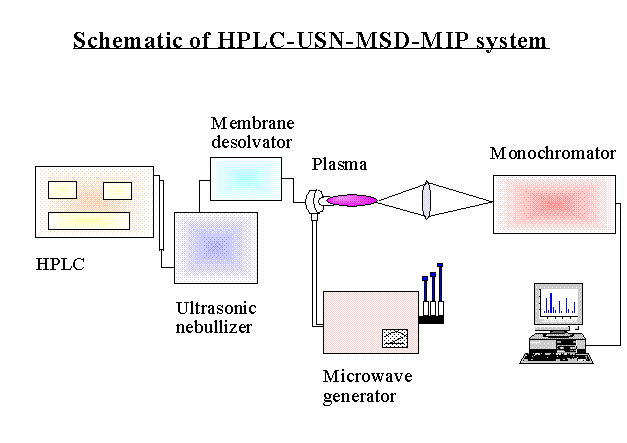
My research involves interfacing a PTFE (polytetrafluoroethylene) membrane desolvator to the HPLC(high performance liquid chromatography)-USN(ultrasonic nebulizer)-MIP(microwave induced plasma) system and study of its analytical performance for the organic solvents.

FACSS 99, Vancouver
CLICK ON ANY PART TO KNOW MORE ABOUT IT
Description about High performance liquid chromatography Description about Membrane desolvator Description about Ultrasonic nebulizer Description about Microwave induced plasma Description about Monochromator Description about Microwave generator Description about Data acqusition and processing
Hosted by www.Geocities.ws

1