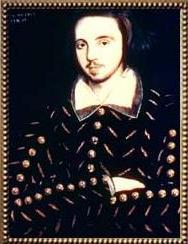
contemporaries knew he simply disappeared in May 1593, though romours began to circulate of his death.
He had been arrested by the Privy Council in May 1593 and released on bail. It was not until 1925 when Dr. Leslie Hotson discovered in the Public Records Office details of an inquest conducted at Deptford by the Queen's Coroner, William Danby, concerning an affray in which Marlowe is said to have lost his life on 30th May 1593, that an explaination was offered about his death, which did not occur in a tavern as is the popularly accepted story. The Coroners report states that his death took place in the house of Dame Elenor Bull, who had court connections. The other three people present at the meeting were Robert Poley, an experienced goverment agent, Ingram Frizer, business agent of Thomas Walsingham, and Nicholas Skeres, Poley's assistant and petty criminal. According to the report, Marlowe and Frizer had an argument over money, and Marlowe drew Frizers dagger and wounded him twice on the head. In his defence, Frizer struggled with Marlowe and retained his dagger, at which time a mortal wound was inflicted over Marlowes right eye and he died instantly.
As to whether the report was accurate or not is unsubstanciated, but Frizer did go to prison, and then received the Queens pardon some 28 days later. |