| BOOK REVIEW |
 |
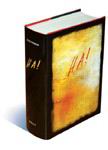
| Hubert Aquin (HA) was a mentally, and apparently physically, tormented man from Montr�al, an author, professor, poster boy for Qu�bec independence and a typical victim of Roman Catholic brainwashing - in other words, a wild colonial boy. After 47 years of carrying the weight of French-Canadian resentment, as well as his own personal, often unjustified, guilt on his shoulders, he finally makes good on his threats (promises?) to end his misery on his own terms. Apart from being a classic case of the perpetual child who can never get enough attention to satisfy his fragile ego, this is a man with a serious case of the Blues. Subconsciously seeking rejection, and thus reinforcing his lack of self-esteem (a highly underrated psychological affliction), he sustains himself on self-destructive habits such as alcohol, drugs and adultery. Not to be outdone by amateurs in this regard, he finally rejects his own existence and annihilates himself with a 12-gauge shotgun inherited from his father. Seemingly obsessed with various legendary idols (both real-life and fictional) who also committed suicide, he must have died believing he would be in good company in his afterlife. Mr. Sheppard, a fellow writer (The Man Who Gave Everything Away) and film producer (�The Most� and �Eliza�s Horoscope�), also from Montr�al, was personally acquainted with Mr. Aquin and even, at one point, attempted to collaborate with him on a film with a controversial religious theme. He obviously found Hubert�s grisly demise to be a subject of great fascination, inspiration and mystery, as did this reader. My own background as a female Roman Catholic �army brat� and intermittent resident of Qu�bec provided me with many parallels to this story. There were, however, a couple of elements in the thoroughly researched documentation that I found rather mystifying. It is mentioned by two different interviewees that Hubert contended he was raped �by a man in the street� at five or six years of age. Inexplicably, this revelation is left completely unquestioned, leaving the reader to presume that it was simply another of many examples suggesting that Mr. Aquin was a pathological liar. Apparently, the man was not beyond acts and words of duplicity, but if, in fact, he had been raped as a child, would this not account, in large part, for his severely damaged psyche? He is quoted as telling his second wife that he first considered the idea of suicide somewhere around the age of 10 to 15, which would certainly coincide with this theory. Whatever subsequent tragedies he experiences just seem to add fuel to the emotional fire raging within him. Like a true actor, he disguises his pain with laughter. Early on in the voluminous 26-year investigation (800+ pages), there appears a photocopy of an article from La Presse, dated Thursday, March 18, 1977, announcing the appointment of Mr. Aquin as the editor-in-chief of the daily Le Jour. However, the correct date would have been around mid-October, 1976. As well, on March 18, 1977, Mr. Aquin had already been dead for three days! It was at this point that I started thinking the entire story was a fabrication and that there was no Qu�bec writer named Hubert Aquin. (I was not immersed long enough in French culture to have known of this man, although if I had attended Carleton University one year later than I did (1973), I might well have had him as a professor.) Barring those two glitches in the otherwise straightforward �evidence�, Mr. Sheppard adds an extra dimension in his quest to justify the suicide by exploring historical and literary detours that might have influenced Hubert�s decision. As well, Mr. Sheppard's insertion of various �soundscapes� served to remind me that life continues on without the deceased. As Marguerite Yourcenar is quoted in HA! as saying, �The dead are so quickly forgotten.� Even if the existence of Hubert Aquin meant nothing to the reader, HA! will enrich them with an intimate look into the numerous intelligent and highly intuitive people who surrounded him with love but could not affect a change in his perspective on life. |
| TO RETURN TO THE BOOK REVIEW INDEX, |
 |
| HA! - GORDON SHEPPARD McGill-Queen's University Press (2003) Book Review by Diane Wells |
 |