| Buddhist Temples of Korea: Part 2 |
 |
|
 |
 |
 |
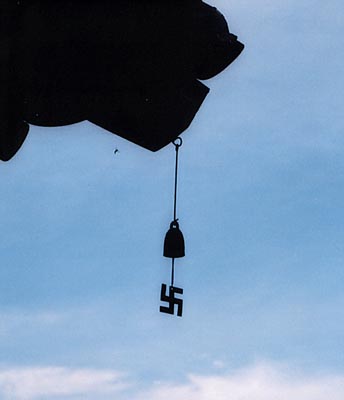
| No this is not a swastika. When we first came here we discovered, to our great surprise, that the symbol for a temple is the exact mirror image of Hitler's famous insignia. This is nothing more than an innocent temple bell swaying in the light breeze against a rare blue sky. |
 |
 |
 |
 |
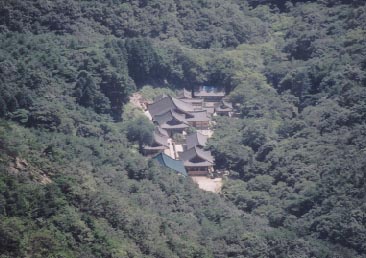
| An overview of donghaksa (Donghak temple) from the tops of the surrounding mountains. Contrary to what most westerners think, buddhist temples consist of more than just one building. Instead, they are a complex of buildings, each one situated in a symbolic manner. Donghaksa is a very small nunnery located just outside Daejeon in central Korea. |
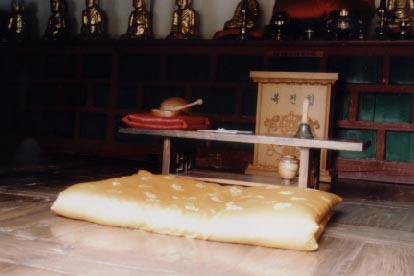
| The inside of one of the shrines within a temple complex. This is where a monk would normally kneel, chant and beat the moktak (the wooden gong to the left) creating a hauntingly reverent and peaceful sound. |
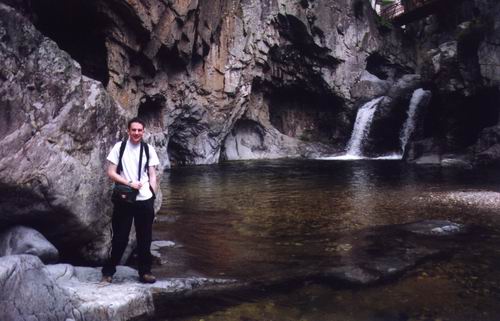
| Now, temples are not all ancient statues, pagodas, golden buddha's, bells and shrines. Most temples are located in beautiful PRESERVED wilderness areas which mean they are a haven for hikers, like us. Here is Dave on one of our hikes, completely soaked after an unsuccessful attempt to reach the caves behind the waterfalls. |
 |
| And what better place to top off a day of temple viewing and hiking. Happily, restaurants on the limits of the temple areas are always sure to serve pajeon and beer to the weary. |
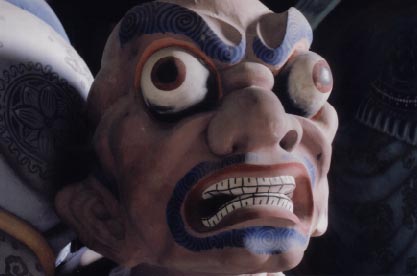
| At the front gates of each temple there is some depiction of the four protectors of the temple. These kings are usually huge, imposing statues that look down on everyone trying to enter the temple, the idea being that everyone who has an evil heart will be scared away. The kings each have a symbolic weapon and have small demons at their feet which they have tamed, showing their power. This is a demon next to the knee of a king. |