The Idler's email list
To advertise in The Idler
Write a letter to the editor
(www.the-idler.com)
Volume II, Number 85




PERU'S "DEMOCRATIC OPPOSITION" PLAYS WITH FIRE
by Michael Radu
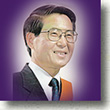
On July 28, the date of Alberto Fujimori's inauguration as president of Peru, mobs set fire to the Education Ministry, the National Bank, and the Palace of Justice -- the culmination of Alejandro Toledo's "national march for democracy."
Toledo first ran for president against incumbent Alberto Fujimori in 1995 and drew a scant 3 percent of the vote. In 2000 he became the surprise front-runner among opposition candidates, obtaining 41 percent of the vote in the first round -- a million votes behind Fujimori but enough to force a runoff election. Toledo then withdrew from the runoff, claiming the election was fraudulent.
Throughout the campaign Toledo made a number of allegations that had no basis in reality: he declared himself president before any first-round results were known; he claimed to have had discussions with military leaders and the prime minister, which never took place; he boasted of having officially received support from the French government when none was given; and he and his wife charged that the Fujimori government had hatched conspiracies involving secret tapes and plans to kidnap them, though none appears to have come to fruition. His supporters made wild accusations of torture and stolen tapes supposedly "proving" government collusion with election officials -- and then fled the country never to be heard from again. The allegations and unsubstantiated rumors created an atmosphere of national paranoia, no doubt encouraged by President Fujimori's secretive and authoritarian style and the almost universally poor quality and partisanship of the media, whether for or against the government.
Toledo's claim to represent democracy in Peru lies solely in the real but not decisive irregularities that occurred during the first round of elections. That they were real was demonstrated by the objections raised by the Organization of American States mission of observers, and by their refusal to observe the second round. That they were not decisive was demonstrated by independent polls, which largely confirmed the election results, and by the OAS's own refusal either to declare the elections invalid or demand new ones. In fact, the most recent polls suggest that if a new election were to take place today, Fujimori would win with an even greater majority. Ultimately, what Fujimori did was what incumbents everywhere routinely do -- use the advantages of incumbency to the limit of the law, and occasionally beyond.
Most revealingly, in the same first round election that Toledo rejected as fraudulent, Fujimori's supporters (the movement known as Peru 2000) lost their majority in congress -- hardly an outcome that suggests a rigged vote. To be sure, Peru 2000 soon regained its majority after defectors from the divided opposition joined Fujimori's camp. But when Toledo predictably accused defectors of corruption, he was able to offer no proof. He then announced that some Fujimori supporters would defect to him; none did. It is indeed telling that despite their cries of vote fraud, not a single one of Toledo's followers who won a seat in the new congress refused to accept it.
Toledo seems bent on destroying the nation's hard-won gains for the sake of his own personal ambitions. First, he has tried to capitalize on his ethnicity, repeatedly describing himself as "Indian, stubborn and rebellious," thus threatening to reopen old cleavages that Fujimori had begun to heal. Fujimori, Peru's first non-white president, continues to enjoy the loyalty of many Indians. Toledo, who holds two degrees from Stanford, draws his support mostly from urban middle classes, disgruntled intellectuals, and especially radicals.
Because he lacks a real party of his own, Toledo has only been able to mobilize large numbers of people by appealing to a core constituency of radical leftists, and the results have been disheartening. One may wonder, for example, why "democrats" would burn the Education Ministry. As it happens, the teachers' union, which has long been a bastion of Maoism, Trotskyism and related ideologies, has become one of Toledo's key supporters. In addition, the traditionally communist-dominated General Confederation of Labor, badly hurt and marginalized by privatization programs under Fujimori's government, has been involved in Toledo's marches, as was a minority of Marxist students (interestingly, the national organization of students refused to participate). Thus, the specter of a revived anti-democratic left, which nearly destroyed Peru only a decade ago, again looms large. It also explains the growing doubts about Toledo's political judgment among many Peruvians, including members of his own movement.
Peru is all too familiar with the ravages of violence linked to politics, but has been largely free of that misery since the 1992 capture of the chieftains of the two Marxist terrorist groups -- the Communist Party of Peru, better known as Shining Path, and Tupac Amaru Revolutionary Movement. What Toledo is now doing is reintroducing violence as a justifiable means of political expression in Peru. Unbelievably, he has repeatedly declared his commitment to "peaceful" action and has even compared himself to Mahatma Gandhi and Martin Luther King, Jr. But his inflammatory rhetoric and encouragement of volatile demonstrations prove that such a flattering comparison is either delusion or doubletalk. After the first-round results were made public he incited a midnight "march to the palace," knowing full well that rioting, vandalism, and a forceful police response were likely to ensue. In June, he did the same on the occasion of the OAS mission's visit. He then spent most of the next two months urging people throughout the country to join demonstrations explicitly designed to prevent Fujimori from taking office. Now, Toledo feigns surprise that Lima is burning. (The six people who died in the bank building fire were neither demonstrators nor police; they were private guards. Toledo never designated a representative to attend the funeral.)
A political pyromaniac, Toledo is now the greatest threat to Peruvian democracy. Human rights groups should reconsider their support of him and reflect on the fact that the alternative in Peru to a flawed democracy is not democracy but mob rule.
Michael Radu, a Senior Fellow at the Foreign Policy Research Institute, visited Peru from April 5 to April 20 to observe the election. He was also an election observer in Peru in 1990 under the auspices of the International Foundation for Electoral Systems, and has monitored elections in Guatemala, Cambodia, and Romania as well. This article originally appeared in FRPI's E-Notes, reprinted by permission.
