The Idler's email list
To advertise in The Idler
Write a letter to the editor

(www.the-idler.com)
Volume II, Number 72






HOW POLITICAL CHANGE AFFECTED ARGENTINE CINEMA DURING THE 1980s
by Maria Elena de las Carreras de Kuntz
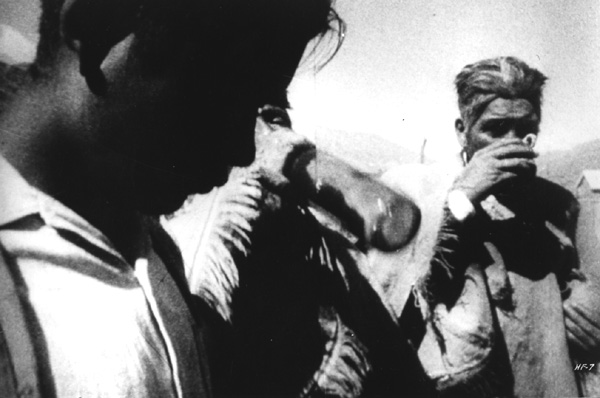
Scene from The Hour Of The Furnaces
Motion pictures made in Argentina between 1981 and 1991, reveal the impact of two phenomena that characterize the country's film industry: on the one side, the protectionist policies implemented by the Instituto Nacional de Cinematografía (National Film Institute), the government agency in charge of funding and stimulating film production; on the other, the functioning of censorship at the federal level. Established by the censorship law of 1968, film control was exerted politically by various governments until it was replaced in February 1984. The new legislation sought to guarantee ideological pluralism in the films requesting mandatory ratings from the Film Institute. Film directors worked during this decade, under different political regimes and cultural policies; the types of pictures they made; their style and genres; and these works revealed the Argentine politics of the time.
Argentine cinema in the 1980s
The decade of the 1980s in Argentina was characterized by profound political, economic and social upheavals. Yet the Argentine film industry in this period had retained a remarkable ability to stay afloat and adapt to the radical shifts of the forces in power. This skill was seen not only in production but in the areas of distribution and exhibition as well. The connection between the different governments and the national cinema was more complex than what emerged from the accounts of Argentine and foreign scholars about filmmaking during the 1980s.
The military autocracy of 1979-1983, for example, did not seek to turn the Film Institute into an office of propaganda. On the contrary, support for national productions dwindled notably. In contrast, the democratically-elected administration of 1983-1989 often funded projects whose political views coincided with those of the government.
The same administration had to contend also with the phenomenon of destape, the pervasive side effect of lifting censorship restrictions. Like in post-Franco Spain, destape (literally, taking the lid off) was primarily a commercial occurence coated with the varnish of freedom and maturity, and based on the exploitation of sex and violence through the media. Even though the invasion of eroticism and pornography had started in 1982, the massive dumping of these materials on television, cinema and the press characterized the first two years of the democratic regime.
Since film production, distribution and exhibition were very visible outlets of destape, a loud public debate erupted about the government's role in the control of this phenomenon. Some argued that destape was a small and unavoidable price to pay for shedding the shackles of censorship; others suggested that destape allowed for the handling of sexual issues unhindered by anachronistic taboos; and others contended that the debasing of moral and esthetic values was detrimental to the well-being of society.
The last three years of the military regime, the so-called Proceso de Reorganización Nacional (Process of National Reorganization), ruled the country from the coup d'état of March 1976 until the return to civilian rule in December 1983. By 1981 there were signs, however, that the regime had started to deteriorate. After the military had left power, five and a half years of the democratically-elected Unión Cívica Radical administration followed, headed by President Raúl Alfonsín from 1983 to 1989. Political and economic circumstances forced Alfonsín to resign a few months before the conclusion of his term. He in turn was replaced by Carlos Saúl Menem , the presidential candidate from the Partido Justicialista (Peronist party), winner of the 1989 elections.
Filmmaking during those ten years closely follows and responds to the political and economic conditions of the decade. The defeat of the military in the Malvinas/ Falkland war against Great Britain in 1982, coupled with economic deterioration and political impasse, triggered the demise of the armed forces' authoritarian regime.
However, since 1981 some politically-minded films had managed to overcome the constraints of ideological censorship. They recurred to allegories and oblique references to examine topics that had been hitherto avoided due to the stringent censorship law. A significant number of titles attest to the relative freedom under which filmmakers were able to operate after 1981. These films need to be seen against the blossoming of other artistic trends, which took place simultaneously in theater, literature and popular music.
They demonstrated the discontent and frustrations of large sectors of the population against the economic, political and cultural status quo. These pictures can be grouped as a category with certain recurring features. Recent studies about Argentine cinema are understandably more concerned with the political break between regimes and how filmmaking under the Alfonsín administration reflected the change. Even though the rebirth of political cinema during the last two years of the military rule has been acknowledged, a more precise study of this phenomenon is necessary.
The general elections of October 1983 marked a return to the constitutional order. President-elect Raúl Alfonsín, candidate of the Radical party, had successfully run a campaign pledging to make Argentina return to the rule of law and respect for ethics. An integral part of his electoral platform was the promise to abolish film censorship, the most conspicuous form of federal control over the content of local and foreign cinema. The task of censoring pictures was exerted by the Ente Nacional de Calificación Cinematográfica, a semi-autonomous censorship board under the jurisdiction of the Secretariat of Information and Press. Its rulings often contradicted the decisions of the Film Institute regarding the projects earmarked for funding. Film censorship was repealed by Congress in February 1984, two months after Raúl Alfonsín was inaugurated president. Simultaneously, legislation was passed mandating the rating of films to be released theatrically countrywide according to their suitability for children.
Alfonsín appointed Manuel Antín, a well-known auteur filmmaker identified with the 1960s Argentine New Wave, to head the Film Institute. A generous budget by national standards was allocated for production loans, so that established and first-time directors could launch their projects. This was part of the new government's cultural policy: visible support to activities that coincided with the new administration's agenda to uproot authoritarian trends from the Argentine social and political fabric. The Radicals believed that authoritarian behavior, pervasive in all areas of national life, was responsible for the moral and economic prostration of the country.
The results of this policy of ample economic support to local cinema soon bore fruit: film production increased substantially in the following years, and a good number of Argentine films garnered prizes in international festivals, more than two hundred according to the official count of the Film Institute. The government took credit for this prestige and was very pleased when Argentine and foreign critics hailed the emergence of a New Argentine Cinema. This resurgence was perceived to be a fine moral achievement by the democratic government of a civilian president.
The output of films during the Radical party administration was at its peak from 1984 to 1987. Critical recognition and quantity of films released went hand-in-hand.
But, the situation came to an abrupt halt in 1988 when the Film Institute saw its budget brutally curtailed by ravaging inflation. The impossibility of controlling inflation marked the demise of the government's economic plan. The Film Institute was directly affected by this turn of events, which meant that funds for loans diminished or were no longer available. The Fondo de Fomento Cinematográfico, the film aid fund administered by the Institute and supplied by a 10% tax on admissions, was depleted. Admissions to theatrical releases dwindled to record lows. The film industry was in disarray.
By 1989 the New Argentine Cinema was a nostalgic memory. Significant and well-publicized lobbying efforts by associations of directors and producers, joined by the influential film workers' union (Sindicato de la Industria Cinematográfica Argentina, or SICA), demanded stiffer protectionist measures. The industry requested taxes on foreign imports and levies for films shown on television, cable and video.
Raúl Alfonsín lost the presidential elections of May 1989 to the candidate from the rival Peronist party, Carlos Saúl Menem, former governor of La Rioja, a poor province in the Northwestern corner of the country. Menem, a lawyer and prosperous businessman of Syrian descent, was known for his flamboyant personality and populist leanings. He had spent several years as a political prisoner after the coup of 1976. Even though the Argentine Constitution called for a six-month interval between presidencies, and Alfonsín was eager to go on record for a peaceful transition, a situation of generalized social disorder ensued once the election results were known. It was largely fueled by an unstoppable outburst of hyperinflation. The Alfonsín administration was unable to quell riots, including supermarket lootings and other manifestations of social unrest. Under pressure, Alfonsín had no other choice but to resign.
President-elect Menem was inaugurated in July 1989. His economic policy, pragmatic and neoliberal, was geared towards reducing the oversized federal government. Initially, this policy had no bearing on the management of the Film Institute. In fact, quite the opposite. President Menem appointed Octavio Getino, a representative of the radicalized Peronist left, as its new director An outspoken Peronist filmmaker, Getino was the coauthor with Fernando Solanas of the agit-prop documentary LA HORA DE LOS HORNOS (1968), as well as several manifestoes on the use of Latin American political cinema as a weapon for national and cultural liberation.
Getino succeeded Menem's initial appointee, veteran filmmaker René Mugica, brought down by political infighting a few weeks after his appointment. As stated in his widely publicized plans for running the Film Institute, Getino's strategy was mostly aimed at establishing links with other Latin American countries. He intended to counteract what he denounced as the cultural aggression perpetrated by transnational media conglomerates on Latin America. Among several other projects was the design for a network of State-run distribution and exhibition outlets throughout the country.
The marriage between the neoliberal trends in the Menem administration and this thinly-disguised leftist anti-American rhetoric was ill-fated. Getino was unceremoniously replaced in November 1990 by a less vocal official, José Anastasio, a long-time functionary of the Film Institute.
In spite of their vast differences, the three political regimes of the 1980s share a pattern of recurrent economic features until 1991: unbridled inflation, marked shifts in salaries and standards of living, recession, stagnation and speculation in the financial markets. This decade provides, then, the opportunity to examine how the production of feature films for theatrical distribution was subsidized by State funds under three different political administrations, while taking place during similar and recurring economic conditions.
Since the first consistent protectionist policies were implemented in the mid-1940s, after the country's bloomimg film industry had lost its leading edge in the international Spanish-speaking markets, some recurrent features have characterized the Argentine film industry. On the one hand, film production is affected by cultural policies and legislation governing the allocations of public funds. Also, censorship practices and other forms of economic control have had an impact on the course of film production and exhibition. On the other hand, producers and directors who seek official funds to partially finance their projects are used to negotiating with State bodies like the National Film Institute and the Censorship Board (until its abolition), the terms of financial aid and the granting of mandatory exhibition permits.
The chronology is framed, then, by political events bearing a relationship mainly with film production, and to a lesser extent with distribution and exhibition. It is concerned, first, with governmental policies directly affecting the industry, but also with the impact of the country's economic and political situation on the making of films. If the chronology had been primarily based on economic considerations, this project would have resulted in a descriptive study of how the film industry operated within three main features: State protectionist policies of various sorts; the impact produced by the presence (or absence) of State censorship in the content of domestic films; and the effects of destape, which resulted in an escalation of violence, gore and sex in national productions. However, since politics has been, directly or indirectly, an integral part of the film industry since the 1940s, it is also inextricably interwoven to the economic vicissitudes which shaped filmmaking in the 1980s.
The point of departure of this study is the structure and functioning of the Argentine film industry with regards to commercial cinema, that is, features and feature-length documentaries that have received theatrical distribution. There are two main players in this industry: first, the State, acting through the Film Institute -- its financing and promoting institution -- and the Censorship Board. Since 1984, the Board has become a department of the Film Institute. Its function is to rate domestic and foreign cinema in theatrical distribution according to their suitability for children and young people. Unlike it predecessor, it cannot mandate cuts or prohibit films.
The second group of players is constituted by the private sector: directors and producers (often the same persons) who submit projects in the form of treatments, and more rarely screenplays, to be granted production loans. Once in theatrical distribution, the films are entitled to post-release subsidies, called recuperación industrial or industrial recuperation. The amounts of these subsidies are in relation to the production budget approved by the Film Institute and the box-office performance of the picture. The Film Institute also determines the types of subsidies to be given. The most sought category, "special interest", seeks to reward titles of artistic and thematic relevance, as specified by the film aid law. This legislation governing the mechanisms to grant credits and subsidies has been in place since the late 1950s. The Film Institute does not fully fund productions, but in many instances its credits function as a leverage to raise funds from private investors.
The experience of being a film critic between the years covered by this study has helped me to understand the multilayered, but ultimately predictable, relationship existing between governmental policies and the funding of culture, the area to which Argentine cinema is seen to belong. In turn, the filmmakers have learned to adapt themselves remarkably well to different political regimes, and they act accordingly.
Cultural policies originating in the military and democratic governments certainly affect the output and type of film production. Curiously enough, however, the cultural commitment of the State to support domestic production -- through financial aid and promotion by the Film Institute -- has by and large remained unaffected by partisan politics. There was the shared belief among functionaries from the three administrations, echoed by the production side of the film industry, including producers and unions, that only State protectionism, mainly through subsidies and screen quotas, guarantees the existence of the national cinema. The same belief prevails to this day.
The types of films made in each period reflect the dynamics of protectionist policies, whatever their political sign and motivation. During the military regime of 1976-1983 protectionist policies were carried out explicitly in the name of national identity and the "Argentine life style". More often than not, ideological protectionism like the type practiced by the Film Institute under the military tended to dissuade rather than actively encourage certain types of films. The Alfonsín administration, on the contrary, sought to promote its project of political openness through a wide policy of low interest production loans. The Menem administration, embarked in the privatization of inefficient State-run industries, spared the Film Institute from the list of organizations to be closed down or merged. Until 1991, funding for its activities, however, had not reached the levels of the previous administration.
In Argentina, the State is a powerful institution in the area of cultural finance. However, unlike Western European democracies from which Argentina has drawn its political models, there is a weak tradition of accountability by public officials for the policies they implement in all areas of the government.
This pattern is found among functionaries appointed by a democratic regimes as well as by the military. Amiguismo, or favors granted to the friends, has often been one of the tacit but defining criteria by which funds for the arts have been allocated. In consequence, the official culture tends to reflect the ideas and discourse of those dictating public policy in cultural matters. The economic power of organizations like the Film Institute depends not only on the state of the economy but also on the financial clout the government is willing to grant to the organizations that implement cultural policies.
The way each administration viewed the role and the function of the Film Institute, and until 1984 the activities of the Censorship Board, shaped the strategies of filmmakers seeking public funds. The pictures themselves reflected this process, mainly by echoing the government's discourse on redemocratization and its version of the recent past. Even though the public personae and the political and esthetic views espoused by filmmakers requesting credits or additional funding were individual and, indeed, highly differentiated, a common attitude regarding federal funding is noticeable during the three periods of the decade. Such an attitude also left an imprint on the films made. Thus, Argentine works became sites where styles and genres mirrored broader issues of Argentine politics. These pictures reflected the times and circumstances in which they were conceived.
It is important to note in this preliminary demarcation of the terrain, that the process of making films in Argentina is not initiated by the State. The case of Argentina is not similar to that of countries with centrally-planned economies. The Argentine Film Institute is not equivalent to what used to be Goskino in the Soviet Union, or equivalent government agencies in the Eastern European countries under Soviet control. Nor is it similar to the Cuban Instituto de Ciencias y Artes Cinematográficas (ICAIC), which controls and oversees all aspects of film production, distribution and exhibition. Even similarities with Brazil's Embrafilme, closed down in 1990, and Mexico's IMCINE (Instituto Mexicano de Cinematografía) are limited. These two governmental organizations are involved in the production and distribution of their domestic cinema, in a symbiotic relationship with the private sector. As has been noted above, the making of films in Argentina is planned and undertaken by individuals, who most of the time request a percentage of their film budget from the Film Institute's Aid Fund.
Actually, projects undertaken without any financial aid from the Film Institute are rare.
The credit is requested at the pre-production stage. It is granted through a mechanism that involves the director of the Film Institute and an advisory committee, which makes recommendations. The criteria used in the granting of these production loans reflect the cultural policies of the administration. In a country like Argentina, characterized by a weak tradition in distinguishing between the policies of the party in power and those of State organizations, these are the rules of the game. In consequence, the relationship struck by established and aspiring filmmakers with the Film Institute constitutes an important aspect of this study. An examination of very simple statistical evidence -- how many credits were granted, to whom, and what films were made -- is a way to assess the cultural policies implemented by the Film Institute under each administration. Even though statistics are often scarce and discontinuous, an accurate picture emerges.
It should be remarked also, that the number of directors and producers who consistently request and receive credits, deliver a film (which in turn becomes eligible for public funds according to its box-office gross), and return the loan is actually very low. There are only two or three production companies which are solidly established, such as Aries Cinematográfica or Argentina Sono Film. They are able to survive and make a profit in the small and unstable Argentine market because they are also in the distribution business.
The most common situation, however, is that of first or second-time directors, who start ad hoc production companies or cooperatives. They find that a low cost credit from the Film Institute is practically the only way to kick off a project. There were instances, especially during 1990 and 1991, when domestic production became virtually extinct. The Film Institute then summoned well-established directors like Eliseo Subiela and Adolfo Aristarain and offered them a substantial credit to begin a picture of their choosing. Thus Aristarain's UN LUGAR EN EL MUNDO and Subiela's EL LADO OSCURO DEL CORAZÓN were made and released in 1992.
Private investment for domestic production is difficult to come by, since it is a well-known fact in the Argentine film industry that between 80 and 90% of national titles do not recover their production costs in the domestic market. The prospect of foreign sales is always uncertain, since Argentine films lack stars and their themes tend to be too local or hermetic. Only a few filmmakers such a María Luisa Bemberg, Luis Puenzo, Aristarain and Subiela have released their work abroad, or made their pictures as coproductions.
Summing up, a study of cinema made in Argentina in the 1980s leads to three significant conclusions:
1. The Argentine film industry is one based on production, since distribution and exhibition have only a limited effect on how Argentine films are made;
2. The role played by the State in facilitating and promoting film production, via the Film Institute and the Censorship Board until it was abolished, is substantial;
3. The filmmakers themselves and the pictures they made during the decade reflect these conditions. The phenomenon studied here is oficialismo, or the similarities observed between the redemocratization discourse of the Alfonsín government and the ideological discourse of many films which received financial support from the State.
Argentine film critic Maria Elena de las Carrerras de Kuntz received her Ph.D. in Film and Television from UCLA. She teaches film history and aesthetics at Cal State Northridge and UCLA.
