The Idler's email list
To advertise in The Idler
Write a letter to the editor

(www.the-idler.com)
Volume II, Number 68





OPEN SECRET:Gay Hollywood 1928-1998
An Interview With Author David Ehrenstein
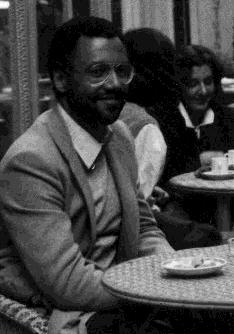
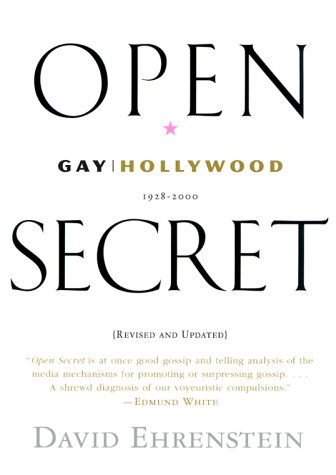
IDLER: Open Secret has just come out in paperback from HarperCollins. How did you come to write such a potentially explosive book?
DAVID EHRENSTEIN: Open Secret started with what is now chapter 11, which is the chapter about sitcom writers. I pitched the idea about doing an article on sitcom writers to Mark Horowitz, then an editor at Los Angeles Magazine. And they ran with it. Mark's an incredibly smart guy. He got what it was about right away. Like everything in publishing: It's the editors, stupid. If you have a smart editor who knows what's what, stuff gets done. Stuff got done at The Advocate because of Richard Rouilard -- the greatest editor I've ever known.
IDLER: And what gave you the idea for the original article?
EHRENSTEIN: The article came about because I met Joe Keenan at the Outwrite conference in Boston -- it was an annual meeting for gay and lesbian writers and journalists. I had been familiar with his novels and he is a great guy, and we'd gone out with a bunch of people, including Chandler Burr, one of the enthusiasts for the Gay Gene. I always say that genetics is the new chlorophyll, because like genetics it was supposed to solve every problem in the world. So a few years later I found out that Joe was hired to write Frasier. I thought 'Wait a minute, why are they hiring a known openly gay writer?'
IDLER: Why did that surprise you?
EHRENSTEIN: Being a sophisticated mainstream sitcom, I'd expect they'd hire all kinds of writers, but he was known only for gay comic material. He'd written a couple of novels, 'Puttin on the Ritz,' and 'Blue Heaven.' They are a lot like P.G. Wodehouse comic novels, only the characters are gay, they are in contemporary New York. So suddenly he's got this mainstream job -- there was a story there. I discovered that there are a couple of straight people who work for Fraiser, not that many. Then I discovered there were openly gay sitcom writers throughout the industry. The article was called "More Than Friends," cause the guy who created 'Friends' is openly gay, Marjorie Gross, one of the major writers of 'Seinfeld' -- she created Elaine -- was openly gay. So the question I was asking is 'Is situation comedy the new gay art form?'
IDLER: How did that lead to the publication of the book?
EHRENSTEIN: I wrote that article and Michael Nava, a gay mystery writer, who I know, read it, asked if I'd thought about writing a book. He said 'You should show this to my agent, Charlotte Sheedy." She's a teriffic woman. Not only is she Ally Sheedy's mother but she's Ally Sheedy's out lesbian mother. I sent the article to her and 72 hours later I got a phone call. She said 'I have an editor at William Morrow who's looking for someone to do an informal history of gays and lesbians in Hollywood, and... ' And I said 'Yes!' I didn't even let her finish her sentence. So I never really wrote a proposal. I just wrote the book.
IDLER: Was it originally going to be a catalog of some kind?
EHRENSTEIN: No. I decided right off that the book wasn't going to be a giant list of who's gay. That's something you can do in 15 minutes and put on the internet. What I decided to do was to talk about gays in Hollywood in ways that would illuminate specific issues about what Hollywood was like in the past, what it is like now, to see if I could get as many people today to talk about things. And I was really lucky because I was able to get a wide variety of people throughout the industry. Everybody talks about the stars all the time, but in many cases they are the least important part of all of this, their lives don't really reflect how the industry operates as a whole.
IDLER: Did you have any trouble getting people to cooperate with your research?
EHRENSTEIN: I was very, very lucky. For example, knew that I wanted to write about James Whale. They were making Gods and Monsters and I got on the set. I was able to talk to everybody working on the film. Almost all of them were gay and they were all up on James Whale and had a lot to say about who he was and what he did, Hollywood in the past and how that related to the present. And fortunately the film turned out to be very good too.
IDLER: Did you have any other lucky breaks?
EHRENSTEIN: Other things that were incredibly helpful were the letters that director George Cukor bequeathed to the Motion Picture Academy of Sciences. The Academy library is absolutely invaluable if you know what you are looking for and where to look, and those letters are incredibly illuminating about who Cukor was and who he knew.
IDLER: What discovery from the archives would be most surprising to your readers?
EHRENSTEIN: People get the impression that everybody who's gay in Hollywood works as a huge network, the Velvet Mafia idea, but that's not really true. It's a business and its just like everything else. People who worked in the studios hung with the people who worked in the same studios. There wasn't some giant interlocking gay scene. Living in Hollywood in the old days you had the freedom to create your own social life. You didn't have to hang out with anyone you didn't want to.
IDLER: Is it different today?
EHRENSTEIN: Now, I think there's less freedom when you reach a certain level of stardom. It is demanded that people put themselves on display 24 hours a day. Gwyenth Paltrow can't go to the icebox without our knowing about it.
IDLER: But weren't the studios all powerful then?
EHRENSTEIN: The stars have these press people who are so much more powerful than the studios were. They're a bunch of thugs, really Cause they dictate terms to the press. When you see some star on the cover of a magazine, that wasn't necessarily done because the editors wanted to put so-and-so on the cover. The publicists make it clear that if you don't cooperate with us on this one star, you're not going to get any of our other stars.
IDLER: What does that mean for the press, precisely?
EHRENSTEIN: Someone like Pat Kingsley will tell the editors exactly what they're supposed to do, with no questions asked. You're going to have Jodie Foster on the cover, and this is who does Jodie's hair, and this is who does the interview. She's arranging everything, and the magazines go along with it because celebrities are the coin of the realm. That's how you sell magazines. You put celebrities on covers. You could put something else on, but these people don't have the time or the imagination or the guts to try anything else.
IDLER: How did you go about writing Open Secret?
EHRENSTEIN: In writing this book, I set about talking to a lot of people; calling in all the information I had culled all these years in Tinseltown. In a way I've been writing this book all my life. It's based on a wealth of knowledge accumulated over the years -- not just about the movies. It involves ideas and attitudes I've been developing since I was part of the Gay Activist Alliance Media Committee in NY with Vito Russo -- right after Stonewall.
IDLER: What was that?
EHRENSTEIN: We were the group that invaded Harper's Magazine after a Joseph Epstein article came out in 1971 saying he wished all homosexuals off the face of the earth. We annoyed Midge Decter -- camping out in her office for a couple of hours, and she wrote a testy article in Commentary magazine asking, why the nice campy homosexuals of yore had become militant. Because of that piece Merle Miller came out, and he was Midge's ex-husband. Had Midge managed to get Merle to go straight, there would be no John Podhoretz. Merle wrote a piece for the New York Times that became a book called 'On Being Different' about what it means to be a homosexual.
IDLER: Was William Morrow supportive of Open Secret?
EHRENSTEIN: I got a good, solid advance for "Open Secret" -- the best I've gotten so far.
IDLER How long did it take to write the book?
EHRENSTEIN: It took me altogether a year and a half to do the major portion of the writing, but I had to take time of after having a stroke. I lost about a month and a half. Then I pulled myself back together and finished the book in 1998.
IDLER: Didn't Tom Cruise object to the chapter about his career?
EHRENSTEIN: The Tom Cruise thing happened when the book was at the printers. The existence of the book had been made known in the trade press, and the tabloids decided to go with the Tom Cruise angle for a story. They hadn't read the book, but they worte a piece anyway. And as soon as his lawyers saw the tab pieces and found out that there was a chapter on Tom Cruise, they went ballistic and started writing threatening letters. They were asking to see the book before publication. My lawyer said that there was nothing in it to get upset about. But they kept writing letters -- threatening to sue me.
IDLER: How did that controversy end?
EHRENSTEIN: It ended when the book came out -- and we never heard from them again. But I cost Tom Cruise several thousand dollars in lawyers fees.
IDLER: Were you worried about being sued when you wrote the book?
EHRENSTEIN: I had gone over the whole idea of this book very carefully with my editor, Paul Bresnick, and there was no mistake about what I was going to be doing and what I wasn't going to be doing. After the manuscript was submitted, I had a talk with their lawyers. I was not asked to change anything or take anything out.
IDLER: So you were prepared for controversy?
EHRENSTEIN: I knew when I started doing this I was walking into a minefield. People sometimes don't even listen to what you're saying, once you say 'Gay. ' I would often pre-interview people for the book to ally their fears. I would never just walk in with a microphone and do an interview 'cold.'
IDLER: Did you ever hear back from any of the people you interviewed for the book?
EHRENSTEIN: When it came out Larry Mark wrote me a very nice note saying how much he liked it. I knew him when he was a publicist at Paramount. This was part of the reason I wanted to do the book. He's a very powerful, very talented producer -- 'Terms of Endearment,''As Good As It Gets,' 'Black Widow,' "The Object of My Affection' -- those are somne of his films. And he's really interesting in a way that actors are never interesting.
IDLER: Anyone else?
EHRENSTEIN: Steve Dornbusch the gay grip, was very happy too.
IDLER: Did you interview Barry Diller?
EHRENSTEIN: I didn't talk to Barry Diller. I knew that he wouldn't talk to me. When I was working at the Advocate we went through all kinds of things with him to get an interview, and it wasn't about anything remotely personal. I got David Geffen, however.
IDLER: How did that come about?
EHRENSTEIN: I wasn't expecting to get him. I know Terry Press, she's now head of publicity for Dreamworks. I knew her when she was working at the Los Angeles County Museum of Art film series. She worked for Katzenberg at Disney and then Dreamworks for Geffen. I called her and asked, and bang -- out of the blue -- Geffen called me. I had specific questions to ask him, it wasn't just some hazy thing going on. I wasn't being intrusive about people's love lives, most of which I already knew anyway.
IDLER: Then what did the interviews add to the story?
EHRENSTEIN: Nothing beats somebody's willingness to talk about things themselves.
IDLER: Anyone you missed?
EHRENSTEIN: I had my plane tickets to go to NY to talk to Arthur Laurents when I had my stroke. I didn't get to NY, and I had to write around Arthur Laurents, and he has in his memoir 'Original Story By' more than he could possibly give me. He wrote 'Rope' for Hitchcock that starred his then-boyfriend Farley Granger.
IDLER: Why didn't you interview Gore Vidal?
EHRENSTEIN: I wasn't interested in interviewing Gore Vidal. He's possibly more elusive than Warren Beatty. He's essentially said all that he has to say in his books. He's around Hollywood rather than in it, he didn't really live here all that much as opposed to Christopher Isherwood.
IDLER: Isherwood passed away before your wrote Open Secret, didn't he?
EHRENSTEIN: I interviewed Don Bachardy. He still lives in their house in Santa Monica Canyon, its like a little artists studio, they bought it for Don to paint in. I had a nodding acquaintance with Isherwood, I talked with him a little bit occasionally. I would see him at screenings all the time. He was vigorous till the last few years, suddenly overnight he became an old man.
IDLER: What about painter David Hockney, whom you discuss in the book?
EHRENSTEIN: David Hockney is in and around Hollywood, but he's not in the movie business. I referred to him a lot, because he's the visual key to Los Angeles and especially Gay Los Angeles, the pool paintings and such.
IDLER: Any other important interview subjects?
EHRENSTEIN: Of course I did interview John Rechy. He told me a lot of things I had no idea that he knew. About Liberace, for example.
IDLER: Is there anyone you wanted to interview who refused to cooperate with your research?
EHRENSTEIN: There's nobody alive who I wanted to interview who I didn't.
IDLER: Were you disappointed in any interview?
EHRENSTEIN: I've found you always get something from someone. I had it in my mind at some point that there was possibly a connection between the blacklist and being on the outs because you're gay, and I interviewed Abe Polonsky. I found out it didn't work that way.
IDLER: There seem to be a couple of messages in the book. One, which you already discussed, is the power of publicists to control media coverage. Another seems to be the failure of fundamentalist Christian objections to homosexuality.
EHRENSTEIN: Basically, the Christian right was losing, which is a subtext of the book. The Christian right was going nuts about Disney because of domestic partner benefits. Disney was actually late putting in benefits. Disney's animation success inspired others to do animation. All the top Disney animators are gay and they are out. So how do you get top Disney animators to stay -- and not go to the competition? If they wanted to keep their animators they had to offer domestic partner benefits. Thus, domestic partner benefits were instituted industry-wide. And there was nothing that the fundamentalists could do about this. Nothing.
IDLER: Have you heard any negative reactions to your book?
EHRENSTEIN: There's been no negative feedback to the book at all -- except for Tom Cruise's lawyers. This is a story that was ready to be told. Everybody knew what was going on. People behind the scenes were completely out. It's a different time. For example, Outfest is one of the biggest film festivals in the country and all kind of industry big-wigs are on the board. People like Bruce Cohen, who won the Oscar for American Beauty.
IDLER: Do you find being an African-American writer influences your work, or the reception for your work?
EHRENSTEIN: I'm black and I write. Am I a black writer James Baldwin? No. Am I a black writer like Shelby Steele? No. I'd like to think I'm a black writer like Alexander Pushkin.
IDLER: So why do you think the New York Times declined to review your book, either in the daily edition or in the weekly Book Review? They haven't even run an article about it, or an interview with you, have they?
EHRENSTEIN: I was not expecting that the New York Times would review the book. I really didn't. It's such a bizarre superstructure at the New York Times. The only thing that has run about me in that paper was Frank Rich's column. He wrote about the original article (on gay sitcom writers in Los Angeles Magazine) years before the whole book came out.
IDLER: Do you think the New York Times really does not understand how Hollywood works today, or are they in denial?
EHRENSTEIN: Bernie Weinraub (the paper's Hollywood correspondent) is clueless when it comes to this issue. He's hopelessly straight, and he doesn't understand what is going on in term of gays in Hollywood. His articles on Ellen's coming out were ludicrous.
IDLER: What doesn't the New York Times understand?
EHRENSTEIN: We're talking about a sociopolitical phenomenon that is entirely personal and doesn't come out of an acquired belief system.
IDLER: What comes next for you?
EHRENSTEIN: I want to do another book about gay life, about gay social life yesterday and today, in the upper classes. It would not be a movie book at all. Joe Alsop once told Gore Vidal "I knew The City and the Pillar with the original cast." I think it's so hilarious that the Republicans have all these gay children of theirs to deal with. Why didn't the Cheneys send Mary to Reparative Therapy? Face it: The Cultural War that Pat Buchanan declared back in 1992 is over, and Gays and Lesbians won.
You can read an excerpt from Open Secret: Gay Hollywood 1928-1998 by clicking here.
