The Idler's email list
To advertise in The Idler
Write a letter to the editor

(www.the-idler.com)
Volume II, Number 100




A CARD-CARRYING . . . CUSTOMER
By Charlie Clark
As a consumer, I am impatient. When I pull my car into the Taco Bell drive-through and order that chalupa I've seen glistening and juicy in the television ad, I throw a tantrum when the disembodied intercom voice comes back and asks me to choose from what the cognoscenti apparently understand are three distinct varieties of chalupas. Offering a choice, of course, gives satisfaction to the greatest number of customers while promoting the competition that, in our best-of-all-possible systems, forces merchants to hustle to win our patronage.
But what if you're lazy and view choice as mostly a hassle?
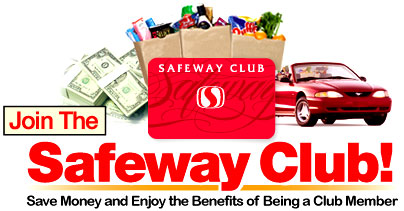
That makes you easy prey for the supermarket ``frequent shopper" or ``loyalty" cards that over the past few years have engulfed the grocery store industry. When I first signed up for my Safeway Club Card (Giant Food calls it the ``Bonus Discount Card"; Harris Teeter has a ``VIC Card''), I was attracted to the idea that finally I would be eligible for the eye-popping markdowns that other shoppers have enjoyed for decades, only because they were willing to devote alarming hunks of their spare time to clipping coupons out of newspapers.
Now, as a card-carrying Safeway shopper, I can enjoy the simplicity of having clearly marked discount items present themselves on the shelves at eye-level. And, like a kid playing a pinball machine that is promiscuous with its free games, I get to stand at the checkout when my tally has been rung up and watch with delight as the computer performs rapid-fire subtraction and shaves dollars off my total.
It's a win-win deal, no?
Customers save money, and the store gains shoppers, while unloading the products that either are moving too slowly or were acquired least expensively at the wholesale level.
But nothing in the Information Age is so simple. A bit of Web surfing alerted me to the existence of a burgeoning movement of modern-day Paul Reveres who're calling on consumers to rise up and say no to supermarket loyalty cards. ``Surveillance central" and ``Big Brotherism," they cry.
And just as fears of privacy invasion have been raised around electronic medical records, toll-road payment cards and purchases made on the Internet, critics of supermarket cards warn that their true purpose is to track your shopping patterns. In the worst-case scenarios, this highly personal data is abused by corrupt detectives and corporate hidden persuaders hell-bent on harassing the innocent.
``Your identity is pieced together by mixing and matching the bits and pieces of yourself which you leave at the grocery store register, the video counter, the DMV, at the pharmacist, the courthouse," writes California state Sen. Steve Peace. California recently became the first state to enact a law forbidding supermarkets from sharing or selling customers' personal information and from collecting driver's license or Social Security numbers on loyalty card applications.
Championing the law is Katherine Albrecht, a San Jose-based activist who runs a Web site (www.nocards.org) for Consumers Against Supermarket Privacy Invasion and Numbering.
She argues that swiping your loyalty card at the checkout machine allows a ``bully with the power to affect your pocketbook" to scrutinize your habits, an intrusion she likens to watching you perform bodily functions when you're home alone. What's more, she says, the so-called ``savings" are bogus because supermarkets that invest in loyalty cards have high prices to begin with.
Run all that by a grocery industry spokesman and you get plenty of assurances that data on purchases is secure and is used ``only in the aggregate" for strategic marketing. This January, the Washington-based Food Marketing Institute revised its privacy policy to discourage stores from selling, renting or relinquishing personalized consumer information to third parties. On the Safeway card application, the text explains that purchases ``will be automatically recorded, which allows us to provide you with special offers." It says Safeway won't sell or disclose your name, address, telephone number, or bank or credit card numbers, but will use purchasing data to ``provide you with personally tailored coupons."
But heck, why not just deep-six all the hoopla and record-keeping and simply lower the prices for all comers?
Because, obviously, there is profit in the custom-tailored promotions. Which leaves us impatient and lazy consumers with our loyalty cards feeling that shopping at a competing store would be an offense equal to cheating on a spouse.
All I can say is, if corporate snoops at this very minute are poring over data on my buying habits, my only request is: Be good to me and don't offer me three types of chalupas.
Charlie Clark is a frequent contributor to The Idler and author of Finish High School At Home, available now from Amazon.com
