Click Here To Download
The Idler's Mobile Version

The Idler's Home Page and Table of Contents
The Idler's email list
To advertise in The Idler
Write a letter to the editor

(www.the-idler.com)
Volume III, Number 91

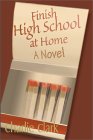
Click here to download chapters from Finish High School At Home by Charlie Clark





THE MORNING AFTER
By Alex Good
National Poetry Month (which is the same month and goes by the same name in both Canada and the United States) has come and gone. Organized as a publicity event - a party for the media, on a level with most book awards - it could claim some success. But as a "celebration of poetry and its vital place" in our culture the results were almost certainly counterproductive. The media came not to praise poetry, but to bury it. And their chorus was a bitter elegy.
No one should have been surprised. It seems the only time we talk about poetry any more is to ask if it's dead. But in some of the voices raised against poetry this year I thought I could sense a change in tone. As low as poetry has been, for so long, I wonder if things haven't begun to take a turn for the worse.
A column that appeared mid-month in the Baltimore City Paper was typical in its sentiments, if extreme in its rhetoric. Author Michael Corbin immediately makes it clear what he thinks the problem is: Poetry is "literary narcissism." "No one, other than 'poets' themselves, really gives a damn about poetry." (Yes, "poets" is put in quotation marks.) Of course the "competing avant-gardians" who "hold forth in tiny publications read only by other self-involved poets" are the main culprits, but there is more than enough scorn to go around - from Internet "poetasters" to the "vaingloriously bumptious wordsmiths" who perform the spoken word.
There were at least a couple of things that struck me as significant about this. First there was the charge that poets are vain, self-absorbed and narcissistic. I'll have more to say about this later. But what impressed me the most about the piece was its anger. The mere death of poetry - its loss of audience and gentle fading into irrelevance - would be too good an end for such horrible stuff.
And Corbin's was just one voice among many. A three-part series by Joan Houlihan in the literary e-zine web del sol attributed much of the blame for American poetry's sad decline to a core group of aging poets who have perpetrated a "continuing fraud" by "passing off their amateurish or unfinished prose jottings as poems." In her finale, she urges these relics to take sabbaticals from writing poetry and, since "the gatekeepers and tastemakers have failed to stop the cycle of devolution," spend their time encouraging the next generation.
What Houlihan says about prose masquerading as poetry is a point well made, but why just pick on older poets for living off their reputations? Most writers, be they novelists, poets or playwrights, produce their best work within a 10 to 15-year window - and once they are established there is little reason for them to stop. After all, many of our most celebrated novelists are publishing fiction today merely on the strength of their "brand name" and continuing to enjoy a great deal of critical and popular success. This past year saw Susan Sontag win the National Book Award for In America and Margaret Atwood win the Booker Prize for The Blind Assassin, two books providing ample evidence that their authors have been dead for years.
But things could be worse. After all, if dead authors like Sontag and Atwood weren't successful - if, for example, they were poets - they would probably have to get jobs teaching at university.
According to Shelby Foote, never one to mince his words, poetry today is as "dead as a doornail" - the reason being "that all of the American poets are on college campuses," spending too much time talking about their work ("which a writer knows you're not supposed to do") and "jumping the coeds." Isolated from the real world, academic poets don't even care if they have an audience, preferring to wrap their writing in networks of allusion as they try to construct the framework of their own exegesis.
From my reading, these are the three most common complaints against today's poetry: It is self-absorbed, lazy, and elitist.
And, of course, it is dead.
Any analysis of the condition of contemporary poetry has to begin by recognizing the fact that it is not very popular. When we speak of the death of the poetry this is what we mean.
That poetry is dead does not necessarily mean that today's poetry is bad, but we do have to keep in mind that a vicious circle exists. For one thing, the lack of an audience means that there are no poets writing today who are widely considered to be "great," or, to use Harold Bloom's terminology, "strong" - a part of the endless competition to make it new. Who is the greatest living poet in the English language today? One struggles to come up with a handful of names, all the while recognizing that the shortlist will be meaningless outside of the small, mostly academic subculture that still cares. What names we can come up with have produced neither heirs nor adversaries.
What I am getting at indirectly is the absolutely crucial question of where young poets are to find their inspiration. Anyone writing poetry today is doing so in a virtual void, not just in terms of audience but in terms of literary community and competition. Where is the incentive to write verse going to come from? Most major publishing houses won't touch the stuff and few newspapers bother with reviews. Relegated to the small, literary press with their low production and promotional budgets, it is hard for even the stars of the establishment to attract notice.
What attention poetry does receive is often looked upon with suspicion, and usually discounted. "Is it just my imagination," Arthur Krystal asks, "or do critics of poetry overcompensate, assigning greatness where there is only intelligence and competence?" In his 1991 essay "Can Poetry Matter?" Dana Gioia thought it worth commenting on how the purpose of most poetry reviews is "not to provide a disinterested perspective on new books but to publicize them." That's a charge that could, in fairness, be leveled at most book reviews, but even at the League of Canadian Poets Web-site, League Treasurer John Oughton complains about the generosity of his peers. Their reviews suffer "from the well-known Canadian virtue of excessive niceness." This is said to be, in part, because "many of us are likely to meet or at some point be judged ourselves by the poet under review." (A surprising statement, which gives some indication just how small the circle of people who care anything about Canadian poetry really is.)
The fact that poetry today has lost its audience is not a big problem. A solitary poetic genius is still at least a theoretical possibility. The problem is that poetry is no longer a living tradition. As Houlihan sees it, poetry is stuck in a downward spiral, "a cycle that is ultimately destructive to poetry itself": "each generation producing worse poetry until the landscape is filled with a lurching multitude of poet-steins. Soon angry readers will be pursuing with torches and pitchforks."
Angry readers? Whatever happened to angry poets? The Preface to Lyrical Ballads was an angry document. Yeats thought no man created anything but out of "bitterness." Imagism and Modernism were an angry response to the Pre-Raphaelite "slush" of people like the man Pound named "Swineburn." Where is that revolutionary passion today?
Not directed against our most prominent poetasters (breathe easy, Maya Angelou), but against poetry itself! A few years ago I would have thought poetry was too busy being ignored to be attacked. What I find surprising today is that so much antipathy is still with us. The angry elegies that came out during National Poetry Month are just the most recent examples. More vitriol can be found in a self-styled manifesto published by a group of well-known young British authors calling themselves the New Puritans. The manifesto consists of 10 points, but only the second relates to poetry (the commentary is taken from the official New Puritan Web-site):
(2) We are prose writers and recognize that prose is the dominant form of expression. For this reason we shun poetry and poetic license in all its forms.
Commentary: Nicholas: "There is a traditional hierarchy that places poetry above prose. Poetry is divine because it is beautiful, rising above the mundane as it aspires to pure meaning. . . . Previous generations of writers have actively sought an association with poetry movements. The puritan response is different: it completely rejects the classical hierarchy. . . . " Matt: "I have never been able to look at modern poetry without thinking of it in an academic way. The retreat to the campus means that poetry has lost its primacy as a cultural form. It is not the way we think and it is not the way we write. It is impossible to write verse without turning life into artifice. Maybe the same is true of prose, but great fiction recreates the immediacy and the rhythm of life itself instead of small, frozen moments."
As a manifesto, this is unconventional stuff. Manifestoes are typically revolutionary documents, but this one appears to be quite the opposite. One might almost call its platform radical conformity. It is precisely because prose is the dominant form of expression that the New Puritans shun poetry. (Remember: It isn't the poets who are angry anymore, it's the readers!) But of course the defiant break with tradition - rejecting the "traditional hierarchy" that places poetry above prose - is nothing short of ridiculous. When in the last 200 years has such a hierarchy been taken seriously?
The most disturbing thing about the manifesto, however, is the fact that it presents itself as the voice of a youth movement. If young writers are turning against poetry, what hope is there for poetry's future? Recently I heard of another group of young people starting a new Canadian arts journal with a call for submissions that carried a "no poetry" clause (an advisory that is increasingly common). Since the call for submissions was made on an open forum or Internet bulletin board, I asked one of the editors of the journal to explain their position. Before he could respond, another Web-editor (age: 23) entered the discussion thread and nearly tore my ear off, writing that "people who write poetry make me want to vomit, as they usually envision themselves as sickeningly gifted and superior while forcing their dumbass overdone lyrical crap on everyone who will listen."
Again with the anger. There seems to be a contradiction at work: The more irrelevant poetry is perceived to be, the more it upsets people.
To what extent are such negative attitudes a valid response to what has happened to poetry? As already mentioned, the common perception today is that poetry is self-absorbed, lazy, and elitist. Is any of this fair? Is all of it? Has something in our attitude toward poetry changed? (There is, after all, little difference between "dumbass overdone lyrical crap" and what Hazlitt called "the rant of unregulated passion, the whine of exaggerated feeling, and the cant of factitious sentiment.") I'd like to conclude, not with a closer look, but by taking a step back from the fray to see what if anything can be said in poetry's defence.
To begin with, we have the charge that poets today are self-absorbed. We know this is so because they continue to write poetry, and by all accounts more and more of it every year, despite the fact that nobody is reading it. At the very least this arouses indignation at so much wasted mental and economic effort.
While I have no trouble seeing where this is coming from (I too despise the ubiquity of anecdotal, confessional, therapeutic verse), it seems to me that the charges of self-indulgence are too harsh. Poets began talking to and about themselves only after they discovered that no one else was listening. (Some critics contend that Romanticism was from the beginning a reaction to the loss of a public audience. Certainly by the beginning of the twentieth century most poets knew that they were reaching a fit audience, though very, very few.) And what writer today would like to second a charge of egotism anyway? The New Puritans? You can call today's poets egoists, but they did not invent our personality-driven celebrity culture, and they certainly can't be blamed for doing what they can to exploit it.
That they are doing what they can is pretty clear. In the entire history of literature in English, for example, I can think of fewer than five writers who have achieved a lasting reputation as both novelists and poets. Yet a quick look at the contemporary Canadian scene reveals a number of big names - Atwood, Ondaatje, Urquhart - who obviously feel they can play all positions on the literary diamond. At least some part of this has to be attributed to the cult of celebrity in today's publishing world, which sells us on the idea that anything produced by a literary genius is equally valuable. One has the sense that these authors don't even want you to read their books so much as they want shoppers to identify with a brand.
But is this wrong? After all, perhaps the best-selling new book of poetry in the last decade was A Night Without Armour, the debut collection from singer-songwriter-actress-pop icon Jewel Kirchner. Jewel's book has reportedly sold more than 700,000 copies, an absolutely phenomenal number (1,000 copies is usually considered great), but not one that suggests anything positive about the health of contemporary poetry.
The second big complaint about today's poetry is that it is lazy, an impression fed by the public's dim view, often justified, of free verse.
Now as a matter of fact, I don't think that writing a poem, even a short poem, is easier than writing fiction. I can, however, entirely sympathize with those people I have met who think it is. It may be possible to argue that free verse, especially as it is written today, is every bit as difficult as other forms of poetry, but I have yet to be convinced. Too often, as our eyes wander down the page, we are reminded of Robert Frost's admonition that free verse is like playing tennis with the net down. The poets who write this stuff do seem a little lazy. When free verse was just getting started it had a certain energy and purpose. It meant something. Since that revolution in form has been over for some time now, we may be excused for thinking that it's time to move on.
But this will be very hard to do.
The hegemony of free verse bears a close family resemblance to that of abstraction in the plastic arts. While it may have been a revolutionary and expressive form at one time, it has led to a decline in basic skills. T. S. Eliot once remarked that poetry had to be at least as interesting as prose. Today I would update this to say that poets have to be at least able to write prose. There is little evidence in some collections that this is the case. As a result of the success of abstraction, there are now very few artists who know how to draw. With the triumph of free verse so established there are only a handful of poets, outside of the rap halls, who seem to know how to rhyme. Not surprisingly, the public's response has been the same to both the excesses of free verse and abstraction: "My kid could draw a better picture." "I've read better poetry on bathroom walls."
All arts change, and while poetry may survive in some new form (spoken word CDs? Internet rap?), much of the craft of written poetry has now been lost. I can't imagine it coming back any more than I can imagine novelists starting to write longer sentences.
Or, for that matter, poets writing longer poems.
Today's poets seem to have all taken to heart Poe's dictum that a long poem is a contradiction in terms. Any reviewer confronted with a pile of new poetry releases from the nation's small press may be excused for wondering if Canada has secretly passed legislation setting two pages as the absolute maximum length for any poem. In most journals poetry only functions as a sort of caulking, filling in small open spaces with marginal verse. A recent contest advertised in a Canadian poetry journal set the standard for a "long poem" as seven pages. This wouldn't even qualify as a long short story if it were in prose.
How can narrative poetry hope to make a comeback in such a stunted environment? And how will poets of the future draw material from what the second half of the twentieth century has given us? The nineteenth century was a tremendous mine of art; Pound considered Whitman to be a great original block of wood that he could carve upon. To imagine poets in the twenty-first century making anything out of what is being written today is to imagine lumber being cut from bonsai.
Finally we have the the common complaint that poetry has withdrawn into academic bunkers. Hence the accusation of being elitist, and the response of people like the New Puritans ("I have never been able to look at modern poetry without thinking of it in an academic way").
It is a complaint I am entirely in sympathy with. When I came up with my list of "Five Books to Make the Heart Sink" I had to include poetry written by academics. For starters, I'm inclined to think that no book of poetry should come with endnotes. (Both of the last two books of poetry I read were by academics, and both had endnotes.) Poets should of course feel free to borrow or steal from whomever they please, but why bother drawing attention to the fact? Who are the authors trying to impress? Marianne Moore mocked the whole convention of annotation over fifty years ago; I should think it's time to let it die.
One can't help but see the display of learned allusion as meant to mimic Eliot's The Waste Land. Eliot wasn't the first poet to self-annotate, but it is hard to imagine Byron composing the notes to Childe Harold while thinking of undergraduates. And while Eliot may not have had his place on reading lists in mind - he complained to Groucho Marx that he never wanted to become required reading - his example is more powerful than his intent. What can't be mistaken is the fact that without being put on a reading list hardly anyone would be reading Eliot today. The academic poets might be expected to know this better than anyone.
In any event, it is not something that will make much difference in the long run. The universities will not be able to shelter poetry in ivory culture bunkers, even if this was something they were interested in doing. As I have argued elsewhere (see, for example, "The Shrinking Canon"), I have serious doubts about the commitment of our academic institutions to preserving culture in the present age of disposable art. The future of English departments almost certainly involves their absorption into "cultural studies." Once this happens, the writing will be on the wall.
But I would also respond to the charges of elitism by pointing to what I said earlier about the need for poets to write within a tradition. Poetry has to be written out of other poetry. (This is a variation on the expression "books are written out of other books." In its more general formulation, however, the old saw is no longer true. Books today are primarily, indeed overwhelmingly, written out of television and film. This is not yet the case with poetry.) Anyone trying to write poetry has to latch on to some sort of model or meaningful tradition, and if the only place to find it is in poetry written, at the very least, 80 years ago, is it any wonder that so many of today's poets come off sounding like pointy-headed intellectual snobs?
As I see it, these are the three most common complaints against today's poetry. And they are not without merit. But bad writing need not be unpopular. That today's poetry is self-absorbed, lazy, and elitist hardly disqualifies it from commercial success. What is killing poetry today is that it is so dull.
The dullness of today's poetry has become so pervasive, such a given, that we have to force ourselves to remember that poetry is not at all dull by nature. Donne is not dull. Blake is not dull. Browning, Whitman, Dickinson, and Pound are not dull. Reading new poetry, however, nearly always bores me to tears, and for many of the reasons we have just been canvassing: its sameness, the lack of imagination and energy in the language and verse, and the unalterable truth of human nature that it is never very interesting listening to people talk about themselves.
But while poetry should never be dull, it is supposed to be hard; it demands a more involved response from the reader than, for example, most popular novels. And this leads us to a final difficultly. How many readers do we have left who are looking to be challenged by a book? Who wants reading to be work? Hugh Kenner suggests that it was sometime around the middle of the nineteenth century that people began reading novels simply as a way to kill time. Poetry, be it good, bad or indifferent, is not as effective an assassin.
Alex Good is a Canadian book columnist and reviewer. He runs the literary website goodreports.net.


