Click Here To Download
The Idler's Mobile Version

The Idler's Home Page and Table of Contents
The Idler's email list
To advertise in The Idler
Write a letter to the editor

(www.the-idler.com)
Volume III, Number 86


Click here to download chapters from Finish High School At Home by Charlie Clark






LETTER FROM JERUSALEM: Israel's Independence Day
By Arlynn Nellhaus
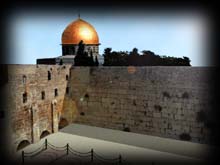
On the night of Israel's Independence celebration, Israelis and friends will be on the streets dancing, clunking plastic hammers on each other's heads and (the act of some irksome kids) spraying plastic string or, heaven forbid, foam, into each others eyes.
To be sure, fireworks will fill the sky all over the country.
On Independence Day, a gray haze will rest on the horizon and eyes will sting. The cause: the mass population migration to parks,back yards and balconies to barbecue.
All this marks a miracle. Israel is a land of resurrection. Yasser Arafat is the most recent. His Palestinian Liberation Organization was virtually dead. And look what Israel through the Oslo Accords did for him.
Israel, itself, was resurrected 53 years ago this week after almost 2,000 years. And that certainly was a miracle.
One man, Theodor Herzl, was the driving impetus, and Jews, themselves, did the job despite enormous obstacles.
Herzl was a suave Viennese-Jewish writer of comic plays and a journalist. In 1895, his newspaper sent the 35 year-old to Paris to cover the Alfred Dreyfus court-martial.
What he saw changed history and his life. Dreyfus, a totally assimilated Jewish officer in the French army, was accused, then convicted of treason and imprisoned.
Eventually, the persistence of such people as Emile Zola proved that Dreyfus was the innocent victim of a set-up.
But the trial shocked Herzl. Not only was Dreyfus publicly humiliated, but the crowds chanted, "Death to the Jews."
Herzl concluded that no matter how comfortable, how assimilated European Jews were, they had to have a country of their own, a country in which they could be safe.
It wasn't only a matter of Dreyfus, but Herzl could see around him incessant anti-Semitism often resulting in violence and fatal attacks on Jews.
He began the modern Zionist movement, a liberation movement. He said, "If you will it, it is not a dream."
The first Zionist Congress took place in Basel, Switzerland in 1897. Herzl predicted that there would be a new independent Jewish state in 50 years.
He died in 1904, before his dream became reality. The State of Israel's independence was declared on May 14, 1948. (It is celebrated in Israel in April this year, because that is the date according to the Jewish lunar-solar calendar.)
Even before that event, Jews in British Mandated Palestine were fighting for their lives.
The United Nations voted on Nov. 29, 1947 to divide what was left of Palestine between Jews and Arabs. Earlier, the British had lopped off some 75 percent of the area to create the future Jordan.
Jews weren't thrilled by the way the UN divided what was left but accepted the decision. The Arabs demanded, "The whole loaf or nothing," and began a war against the Jews fought by local Arabs and volunteers from elsewhere.
As Abba Eban said, "The Palestinians never miss an opportunity to miss an opportunity."
Back then, however, the people who called themselves "Palestinians," were the Jews. Most Arabs rejected that name in disgust.
Many Arabs, those of Haifa, especially, packed up and left, temporarily, they thought. Jaffa Arabs asked the British to evacuate them.
The British washed their hands of the area. The day they left, Israel declared its independence. It was a scary thing to do. Israel stood alone in the world.
With the British gone, armies of Egypt, Lebanon, Syria, Jordan and Iraq, joined by a contingent from Saudi Arabia, attacked the infant country – a country with only 600,000 citizens.
Israel not only won that war, but ended up with more territory than the UN had assigned to it. The future Palestinians got nothing for Jordan illegally occupied the remaining land. Jordan never made a move to turn that area over to its residents.
How could a brand-new country with so few people, fighting under an arms embargo, defeat five plus armies and local Arabs?
Some recent historians claim that Israel, despite all, was better equipped than the Arabs, had as much man-power and that the Arabs were disorganized.
Only Czechoslovakia, before the Iron Curtain fell, sold arms to Israel.
As for Israeli army personnel, many soldiers were Holocaust survivors, literally fresh off the boat from a Displaced Persons camp. A gun was pushed into their hands, and not knowing a word of Hebrew, often without training of any sort, they were sent to fight.
When the dust settled and armistices were signed, 6,000 Israeli civilians and soldiers had been killed. The fledgling, impoverished nation had lost 1 percent of its population.
Aside from who had what arms and how many soldiers, I think the only answer as to why Israel survived that war was because it had to. And so a Jewish homeland was reborn.
And now the big "if only." If only the Arabs said in 1947 what even today they can't say: "We accept compromise. They, too, could be having a celebration now.
I know of Israeli writers, poets and artists, scientists, fathers and mothers and children who wouldn't have died as they did or live now with no legs, hands, fingers. And the Arabs have their equivalent losses.
If they had been willing to compromise, I suppose local Arabs eventually would have decided to call themselves, "Palestinians," as they eventually did. And the land they accepted would have been called, "Palestine."
As the Palestine Authority, which now is home to more than 95 percent of Palestinians, received money from Arab countries, the World Bank, the European Union and the United States, that new country would have received help, at least from other Arab countries.
Today, its people could be living normal lives of work and building for the future, instead of living in self-induced misery. They, too, could be celebrating achievement and independence.
But they chose the path of battle and forced Israel to follow a path of defense -- both a dreadful waste.
And so, to me, every year at this time, it seems like a miracle that Israel has survived and, despite all, managed to flourish.
I go out on the streets, too, and dance, bop my plastic hammer with its cricket-like click in self-defense on the heads of kids who think I'm an easy target ("Gotcha! Ha! Fooled ya!) and watch in sheer pleasure fireworks cascading over my head.
And I dream that maybe there will be another miracle – that Palestinians will be able to accept the word, "Compromise" and understand that to compromise is a sign of strength, not disgrace.
For the Palestinians, there wouldn't be a resurrection. There never was an independent land called "Palestine." For them, it would be a birth.
Arlynn Nellhaus is a former Denver Post reporter now based in Jerusalem, and the author of Into the Heart of Jerusalem, and a freqent contributor to The Idler.


