Click Here To Download
The Idler's Mobile Version

The Idler's Home Page and Table of Contents
The Idler's email list
To advertise in The Idler
Write a letter to the editor

(www.the-idler.com)
Volume III, Number 81


Click here to download chapters from Finish High School At Home by Charlie Clark






POWER VACUUM IN SOUTHEAST ASIA: Indonesia, Regional Security, and the USA
By Theodore Friend
Twice in history the USA has intervened with force in Southeast Asian wars. Both were aberrations of policy and errors of strategy. We cut off the Philippine war for independence in 1898, and we cut into the Vietnamese civil wars in the 1960s. The first case put us on a bloody collision course with Japan, but we redeemed ourselves with forty years of benign colonial policy and early grant of Philippine independence. In Vietnam we achieved none of our goals, redoubling our efforts as we lost sight of our aims. We mourn the wasted valor of 60,000 war dead.
There is no war in Southeast Asia now. Everything suggests we should be attentively engaged for rule of law, spread of education and health, and business recovery. But the region is rife with violence, and a power vacuum is appearing. We should be thinking now -- and ten years ahead -- how to help minimize escalations and how to stay out of regional conflict ourselves.
POWER DIFFUSION AND REGIONAL INTEGRITY
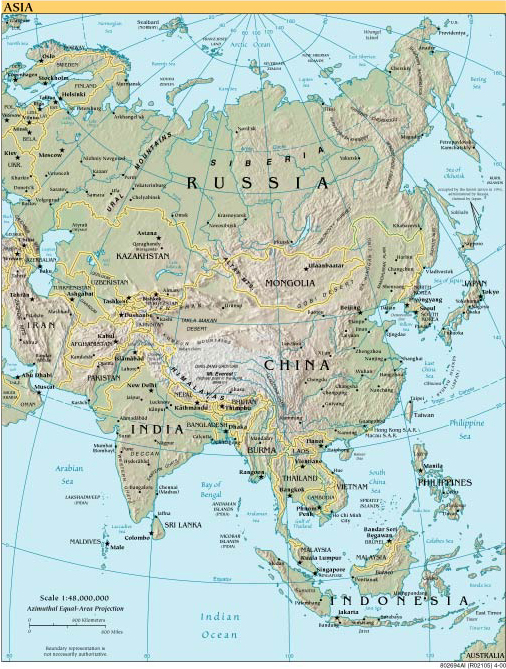
This area of more than half a billion people contains, in Indonesia, the world's largest Muslim nation, and the third largest democracy. But that crouching tiger has become a spastic dragon. For more than twenty years ASEAN (Association of Southeast Asian Nations) was the key to the region's stability, offsetting Vietnamese adventures in Cambodia. Indonesia, in turn, was the key to ASEAN. With over 200 million people (including more Muslims than all the Arab countries combined), and with the highest sustained GDP growth rate in the region (dancing around 7% from 1970 into the mid-1990s), it developed the confidence to be a constructive mediator in the Muslim secession problem of the southern Philippines.
But the Asian financial crisis beginning in 1997 weakened all countries in the region. ASEAN, in addition, has blurred its common focus by admitting to membership communist Vietnam, autarchic Myanmar (Burma), and anarchic Cambodia and Laos. Indonesia, formerly ASEAN's leader toward consensus, is itself torn by dissension and lacks clear developmental direction.
Long-term preoccupation with the Korean peninsula and the Taiwan Strait should not blind us to the power vacuum in Southeast Asia. Nor to the critical nature of the Strait of Malacca and other critical "chokepoints" in the Indonesian archipelago, where piracy is rapidly increasing. Through these passages comes half of the world's shipping. Between Singapore and Indonesia's island of Sumatra, specifically, travels a high percentage of Middle Eastern oil to our allies, Japan and Korea, and a significant percentage of our own imported oil. The chances that Muslim extremists would perpetrate something there, as in Aden, are slim, because the Islamic separatists in Aceh (North Sumatra) currently want our sympathy. But this vital sea lane, at its narrowest, is only 1.5 miles wide. Not far northeast of it are the Spratly Islands, subject of sovereignty disputes, oil hungers, and Chinese adventurism. Around these points cluster the ten nations of expanded ASEAN, some of them newly flammable.
Now is the time for far-sighted strategic explorations. Cobra Gold, the Thai-U.S. joint exercises, last year had the first participation of Singapore. Malaysia has agreed to join in the future. The Philippines, in Crow Valley, has an ideal gunnery range that with American help could be brought up to usable standards as an ASEAN facility, and a further catalyst for growing cooperation. Alert to national sensitivities about non-intervention, we should support and facilitate their own efforts to protect that principle. A standing regional peacekeeping force is the best long-term guarantee against foreign intervention.
INDONESIA: DYNAMICS AND DYSFUNCTIONS
Indonesia's internal dynamics are now the most perturbed in the area. While other nations have pulled up much faster from the Asian financial crisis of '97, Indonesia is seriously afflicted by slowed growth and increased poverty. Our two-way trade, nevertheless, at nearly $13 billion last year has returned to 95 percent of its level of 1997. Over 300 companies participate in American investment in Indonesia, now estimated at $10-15 billion. Long-term investors, weighing the risks, are going for new opportunities.
The democratic experiment in Indonesia should appeal to American values, and seize supportive Congressional attention. Reform pressures upon Suharto to resign in 1998, after 32 years in power, included students, middle class, and Muslim leaders; ultimately, power realists of his own cabinet and his own military. The popular election to parliament in 1999 was a marvel of participation and fairness. After forty-four years without such an opportunity, more Indonesians voted than in any American presidential election. The ensuing parliamentary choice of a president elevated Abdurrahman Wahid ("Gus Dur") to chief executive office, and Megawati Sukarnoputri, daughter of the only president preceding Suharto, to the vice presidency.
By now, however, we have a regrettable abundance of evidence that the Suharto years dried up what there were of pluralistic civil institutions in a ruthless "integralistic" state, and suppressed, without resolving, ethnic antagonisms, religious tensions, and latent class strains. Reform consciousness has not been able to cope with exposed weakness and uncorked angers, because divided in itself. Student attitudes are fractured, finding it was easier to oppose one man than an entire political elite. The middle class is proportionately the smallest in Southeast Asia, and still reeling from losses of jobs and income. Muslim leaders have toppled into pre-existing channels of difference among themselves.
The military is behaving in a chastened political manner and has put on the dress of reform. But with as much as three- quarters of its revenue coming from off-budget sources, the major force to persuade it to change is itself. The absence of any punishment for several major bomb attacks last year, culminating in 38 church bombings across Indonesia on Christmas eve, points to serious weaknesses in the state security apparatus. In light of failures and rogueries in the military-police structure, any carelessness or eccentricity in President Wahid's conduct of office is of minor significance.
Gus Dur, unfortunately, has confounded high hopes for his leadership. A cleric whose favorite novel is Chaim Potok's My Name is Asher Lev, he is still true to his beliefs in equity by gender, race, and religion; but he has not met his own promises of government by law and in transparency. Suharto, his kleptocratic family and cronies, are harried but not effectively prosecuted. Major scandals in banking are unresolved. A deep hole of debt, private and public, sucks away at confidence and initiative. The equivalent of a vote of censure passed the parliament in February, 394-4, with Wahid's party walking out. Secular forces behind Megawati and assorted Islamists see an opportunity to replace him. Impeachment proceedings are afoot, and should be resolved by August. Conceivably sooner. Wahid has often proved himself a Houdini, but this time he may have trouble finding the key to his own manacles. And even if he escapes, Indonesia needs far more than an illusionist in charge. America, in any case, should remain mute on Indonesian presidential politics.
Neither Gus Dur nor Megawati has yet shown policy initiative or healing solution for the prolonged Muslim-Christian riots in Maluku or the renewed Dyak-Madurese tribo-cultural slaughters in Kalimantan. Because Indonesian leaders themselves are passive and fatalistic about these "horizontal conflicts," common sense as well as respect for sovereignty dictate foreign non-intervention, despite gross violations of human rights.
Non-intervention also applies to the separatist movements in Aceh and Irian Jaya (Papua). These are serious and not easily solved situations. But they are categorically different from East Timor, where the UN had never recognized Indonesian annexation of the former Portuguese province in 1976. Aceh and Papua are within what are internationally recognized as Indonesian boundaries, rejected only by the separatists themselves. Human rights horrors have occurred and will occur there on both sides. Indonesia's much needed regional devolution law, recently passed, will take years in administrative shakedown, but may slowly help. What happens in those regions must have access to our consciousness, but should not tempt influence through force.
The United States has every reason to wish Indonesia well: as a hopeful democracy, even if low on accountability; as the largest Muslim nation, marked by an extraordinary degree of "civil Islam"; and as the central piece in the great mobile sculpture of Southeast Asia, with its many pieces of different shape and color. Just now, Indonesia's democratic experiment is accompanied by many dysfunctionalities. The mobile is jangling in wild apprehension and unseverable connection with its biggest piece. Singapore and Malaysia are fearful that many of Indonesia's one million internally displaced persons will seek them as refuge. The United States cannot be indifferent, but it must be diffident about its powers in the situation.
POISE AND INITIATIVE FOR THE USA
"Always remember," says a senior foreign affairs advisor in two recent Indonesian governments, "we are a poor country, and we think we are the center of the world." The major difference with the United States, of course, is that we are a rich country. Enjoined, as we have been, by the new President's inaugural "to live out our nation's promise through civility, courage, compassion and character," we have plenty before us in trying to do just that. Rightly restrained, we may even be able to radiate some of those qualities in practical ways to Indonesia, both by unselfconscious example and by specific help, if and when requested. Aside from being ourselves? Three matters of poise should concern us in systems renewals for Indonesia, and one of initiative in strengthening of ASEAN:
1. Constancy in support of consortiums of international lenders, and initiatives by our own agencies of public and private aid; technical help in public health, city management, coastal management, and other fields vital to Indonesia. The afflicted are many, and did not cause their own grief. We should not "pass by on the other side."
2. Steady support of new pluralism and greater openness in government. Democracy, as we know, is an ongoing experiment. This one is still in its earliest stages.
3. Intensive and augmented help to organizations with programs for rule of law, transparency, and advancing institutions of civil society.
4. Early initiative by our Secretary of State and Secretary of Defense to explore with Japan and Australia tripartite moral and logistical support of a standing ASEAN peacekeeping force of at least 10,000 troops. This must be done with simultaneous soundings among ASEAN nations. Indonesia should be the centerpiece of this effort, which could help indigenous attempts to reprofessionalize and reform its own military. Thailand, the Philippines, Singapore, and Malaysia could be imagined as especially helpful in the major objective: internal regional readiness to contend with a major blowup somewhere in its land- sea area. Those chances have been rising and continue to rise.
Theodore Friend is Senior Fellow at the Foreign Policy Research Institute, former president of Swarthmore College, and President Emeritus of Eisenhower Fellowships. He is now working on a history of Indonesia from 1950 to 2000, for publication by Harvard University Press. This essay originally appeared in FPRI's E-Notes. Reprinted by permission.


