The Idler's email list
To advertise in The Idler
Write a letter to the editor

(www.the-idler.com)
Volume III, Number 7

The Future of Music Policy Summit
January 10 - 11, 2001 - Washington, DC




The Coalition for the Future of Music Policy Conference: An Interview with Jenny Toomey
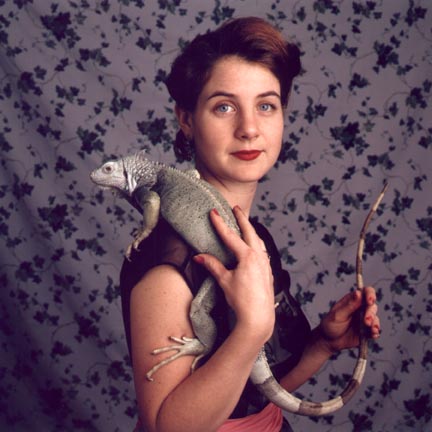
When dozens of musicians, recording industry executives, lawyers, lobbyists, government officials, academics and media descend on Washington DC’s Georgetown University for The Coalition for the Future of Music’s two-day policy conference on January 10th and 11th, it will mark the realization of a dream for Jenny Toomey.
Toomey is a 32-year-old musician turned activist whose credits range from touring Europe, to writing a The Mechanic's Book For Putting Out Records, to debating President Clinton’s lawyer, David Kendall (representing the big record companies), on NPR’s Diane Rehme show (she won, he lost). The fearless and dynamic Washington Metro Area native, an alumna of Bethesda-Chevy Chase High School and Georgetown University, performed in the band Tsunami as a singer and guitarist. From 1990 to 1998, she co-ran Simple Machines, an independent record label, wrote for The Machine, an online journal for musicians and their fans, and worked with the Low Power Radio Coalition, in order to develop more avenues of exposure and distribution for little-known musicians. It was a labor of love, and to make ends meet, she wrote ad copy for The Washington Post.
When Toomey learned that the Recording Industry Association of America was seeking to control the collection of music royalties over the internet, she was shocked. When she discovered no one else was challenging their bid to the Library of Congress, she took action. With a group of friends, Toomey helped write The Future of Music Manifesto, and joined with like-minded friends to found the Coalition for the Future of Music. Her colleagues can be found across the country: Seattle’s Michael Bracy, Boston’s Walter F. McDonough, the Bay Area’s Brian Zisk, Philadelphia’s Kristin Thomson, and the University of Michigan’s Peter DiCola.
Distributing the Manifesto over the internet, Toomey managed to draw attention to the plight of musicians, and the interest of many sectors of the music world that might be affected by the RIAA power-grab. One result of this internet-generated ferment is this week’s assembly of a roster of creative and legal talent rarely seen in Washington, DC; in an attempt to map out creative alternatives which might enable new technology to benefit smaller artists and independent labels. That is, they will no doubt develop the rules and regulations which will govern the production, distribution and reception of music over the internet. After the conference, Toomey hopes to establish a permanent music policy think-tank, and then resume her career as a recording artist, completing two albums she has in the pipeline.
Toomey took time out of her busy preparations for this week’s event to talk with The Idler about the Manifesto, the Conference and their implications for the Future of Music.
IDLER: How did you become involved with music policy?
JENNY TOOMEY: This all exploded about 6 months ago. It was imperative to have this event done, after I ran an independent record label for 8 years. I was a musician. Three years ago, my label went out of business -- in the black -- because some of my bands signed with major labels at that point. I did not want to sell out. We would never have sold our record label. I began by putting out our own records, with Kristin Thompson, a singer who played guitar in Tsunami, and when we got successful, we put out our friends’ records, and the genre of music we were playing became popular.
We were courted, but we never wanted to go through that system. Unless you sell over 500,000 copies you don't make money. The problem is that there's no musical middle-class, there's only bicycles and Rolls-Royces.
IDLER: What type of music did you like?
TOOMEY: My favorite bands were Dischord bands. It was a local label we modeled our label on.
IDLER: What were some of your bands?
TOOMEY: You can find them at www.Simple Machines.net.
I signed Scrawl, Superchunk, Unrest, IDA, and Beat Happening.
I was in Tsunami. Tsunami toured Europe and US for several years. We had music videos, some got played on MTV, one called "In a Name" might be at insound, I played the Black Cat, the 9:30 Club, the Iota in Washington. We were a punk rock, punk-pop band. I also do singer-songwriter stuff, and I’ve played in jazzier bands. I just recorded 2 albums, but they are not released yet. I worked on The Machine last year, and spent my free time playing music and recording these 2 records, I play guitar with a cellist. I’m excited about beginning to tour again. After the event, I would put my records out, and go on tour.
IDLER: Was it hard to run a small label?
TOOMEY: Before I had my label, I worked at Kinko's for 3 years. It was the only job that would take me back, as soon as I got back from tour. Most punk rockers have worked at Kinko's, because they all had fanzines. We believed in sharing information, so Kristin Thomson and I published a guide to putting out records. It explained how to put a record out. We gave out 10,000 copies for cost of postage.
IDLER: Was it difficult to publish on your own?
TOOMEY: The people who printed it for us found it was good advertising for them, so they printed it at cost for us. And the readers sent us postage. We saw it as a service to the community.
A year-and-a-half ago, we decided to do the same thing with the web. It is an inexpensive way to keep back catalog in print, and we contacted insound, to promote culture for independent musicians. We worked to publish content we would create, about what was happening in music technology, to begin working with theweb. There was no way to digest it all, it was happening too quickly. Last year it was Napster, for example.
IDLER: Did you study music in college?
TOOMEY: I went to Georgetown, majored in Philosophy. Foucault was my favorite. I started the band in my senior year of college, and sold 20,000 copies in 1980.
IDLER: How did this Conference come about?
TOOMEY: I had started to write an article for The Machine about the issue (insound, has all our articles). After 3 months forming opinions, and getting worried, because hardly any musicians were talking about it, I worried about the largest company in space asking for exclusive digital download contracts. I wrote an op-ed for the Washington Post, and began speaking at panels.
IDLER: How is a digital royalty different from other royalties?
TOOMEY: The Copyright Office created the digital royalty 2 1/2 years ago. Then the RIAA --'SoundExchange' -- tried to collect this royalty.
IDLER: What was wrong with that?
TOOMEY: I thought we could build a better system, with some public discussion.
IDLER: Why take on the Recording Institute of America?
TOOMEY: I do it out of love. I built an independent record label. It would be upsetting if I had to go the lobby group that represents the 5 major labels, to ensure a fair market for digital royalties.
IDLER: How did this Conference come out of that?
TOOMEY: After several months of being on panels, we said, "Let’s form an organization to represent independent artists."
Only 20 percent of the copyright go through major labels. 80 percent of copyrights are from independents. ASCAP, BMI, and CSAC collect the royalties for everyone, mechanical royalties for sales, performance royalties for playing the songs. Major labels dominate sales space, some 99 percent of records sold come from 5 major labels, WB, Universal, EMI, BMG, etc., but the vast majority of copyrights are created by independent labels.
And there is no reason that 5 labels must dominate sales. In England over 50 percent of sales are from independent record labels.
So the big labels represent 20 percent of the copyright holders. No one is representing the other 80 percent.
IDLER: What did you want to do?
TOOMEY: We said, "Let's put a Manifesto together, and put it on the web." We didn't need to start an organization without constituents. So we just sent out the Manifesto to listservs, from lists we had at insound. And the response was phenomenal.
IDLER: How did that lead to the Conference?
TOOMEY: After we discovered that we were representing some folks, we decided to put on a Conference.
IDLER: How did you get funding?
TOOMEY: We didn’t! I have worked without a salary for over 5 months. I took a leave-of-absence from my job in the ad department at the Washington Post as ad copywriter.
IDLER: How can volunteers put on a major policy conference in Washington?
TOOMEY: We're rockers, Kristin Thomson and I, and we represent musicians, from an experience of being musicians. The other coalition members are as at least as interesting as I am , Walter McDonough is a copyright attorney who has dealt with major labels, and understands intellectual property issues. Brian Zisk, our technology director, is connected to the Open Source movement. Michael Bracy, whom I met on the low-power radio issue, created that coalition, and who better than musicians can understand how important low-power radio is? We worked together for 3 years on that issue.
IDLER: So you are getting an education in the policy issues yourself?
TOOMEY: I feel like I'm doing a Ph.D. in music technology. Although I’ve had a lot of email, I haven't yet met our constituents in person.
IDLER: How come you don’t have more funding?
TOOMEY: At first I thought it would be easy to raise money, because when you put a conference together companies give sponsorship dollars to be associated with it. But the music technology space has had a tough year. Right now, venture capital is tight. And, the Napster and MP3.com lawsuits have made it dangerous for venture capitalists to invest in the sector. There are millions to pay in penalties.
IDLER: How are you going to make money from this?
TOOMEY: No one had to pay to get on a panel, that’s for sure. We are going to make our money just by selling tickets. (Tickets are $600).
If we can sell 200 tickets, I can be an activist on salary, full-time, to make sure that the artists’ voice isn't lost in the face of music technology. When we ran our record label, Kristin and I put on huge events, with 30 bands. If we could do that, we can do this. I ran my own label for 8 years, and I can't imagine a better way to learn skills than running your own business, because you have to do everything yourself.
The Coalition for the Future of Music Policy Conference takes place January 10th and 11th at Georgetown University's Gunston Hall.
