Click Here To Download
The Idler's Mobile Version

The Idler's Home Page and Table of Contents
The Idler's email list
To advertise in The Idler
Write a letter to the editor

(www.the-idler.com)
Volume III, Number 33






CUBAN AMERICAN VOICES BREAK THE SILENCE
By Agustin Blazquez with the collaboration of Jaums Sutton
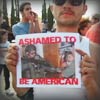
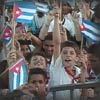
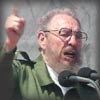
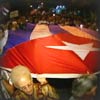
Scenes from Frontline's Saving Elian (Frontline website photos)
Several years ago, I produced and directed a documentary film about the way the American media demonize Cuban Americans while giving a false picture of Castro's corrupt dictatorship. I called my film Covering Cuba.
Response to Covering Cuba was gratifying, and not only from the Cuban American community. The American Film Institute selected it for the Kennedy Center. The event sold out to a standing room only crowd, including Congressional staff.
Yet, I was not surprised to find that I was unable to broadcast Covering Cuba on PBS. Pro-Castro projects receive generous grants and support from many foundations in the U.S., and the doors of PBS are wide open to them.
As I had demonstrated in my film, Cuban Americans are routinely marginalized and silenced by the American media. Unlike pro-Castro filmmakers, we receive little support from the major foundations. This lack of establishment support, indeed it is "anti-support," increases my personal struggle as a writer and filmmaker, and that of all Cuban American artists.
The documentary I am completing now, which I call Covering Cuba 2: The Next Generation gives the younger generation of Cuban Americans born in the United States an opportunity they lack in the establishment media, a chance to express their views and opinions for themselves. After seeing the PBS Frontline documentary Saving Elian written, produced and directed by Ofra Bikel, I am convinced that Covering Cuba 2 surely will not ever be shown on PBS.
Certainly, the American public became more misguided about the fate of Elian Gonzalez as a result of Frontline's Saving Elian. For people who have firsthand experience of Cuba under Castro, this documentary was nothing less than one more insult from PBS against the Cuban American community in the U.S.
Working on my new documentary leaves me little time to write articles, but after a disturbing evening, courtesy of PBS, I posed a question to some of the readers of my previous columns about Cuban American affairs. I asked via email, "Should I write about Frontline's Elian documentary?"
In my email, I received a resounding "Yes!"
I do not wish to express just my individual opinion. As I do in my documentaries, I want to voice some of the many responses I got from other Cuban Americans, and one Salvadoran, throughout the U.S.
So, with the help of my correspondents, I engage again in a struggle that is not deprived of historical precedence. Resentment and prejudice against the industrious and prone-to-prosper Cubans has existed in the U.S. for a long time.
On March 25, 1889, the 19th century Cuban patriot José Martí, exiled in the U.S., had to write to the editors of the New York Evening Post to complain of the degrading treatment that the Cuban exiles had received in their pages.
Here, in their own words, are the voices of Cuban Americans responding to Frontline:
"A very detailed analysis of why the program was totally biased is necessary. I would consider a case against PBS for defamation of Cuban Americans."
"The program was well calculated propaganda. While giving those unfamiliar with the issues surrounding Cuba the sense that it was fair and impartial, it was not. Those interviewed read like a who's who of the enemies of the Cuban exiles: Bernardo Benes, Max Castro, Alfredo Duran, Elena Freyre and even [Francisco] Aruca who was portrayed as a moderate! In reality, the program was not about Elian, it was just one more opportunity to knock the Cuban exiles; Elian was just the hook. The program quickly degraded to an attack on the Cuban exiles."
"With the constant use of words like ‘right-wing’ and the constant reliance on the testimony of Aruca (without any background information), it became nothing more than a hate-feast. How typical of PBS to produce programs like this (with our tax dollars, no less). Ultimately, we Cuban exiles are to blame for not having an anti-defamation league in place . . . that could take out ads in newspapers or sue PBS for the right to rebut this disgusting program."
"I always say that PBS is the ‘Politburo Broadcast Service.’ They showed Aruca, Benes, Max Castro, Lisandro Perez, Elena Freyre, etc., as if they were innocent victims of the Cubans in Miami! It is sad because Freyre has a brother-in-law who is a veteran survivor of the Bay of Pigs and another died asphyxiated inside a trailer with other prisoners of the invasion under the orders of Castro’s commander Osmani Cienfuegos. I have heard that Aruca is in the travel-to-Cuba business and that Benes was Castro’s banker. If that is true, it would expose the motive behind their stupid statements."
"My wife and I saw the program over channel 13 (here around New York). They are a bunch of leftists, in my opinion. This is why I do not send them donations, despite the fact that quite frequently they contact me for money. Their program criticized us for being hard headed, stubborn, fanatics, etc."
"My daughter who is a Ph.D. grad student at Georgia Tech University, called me tonight, only minutes after she watched ‘Saving Elian.’ She was raving and mad and sad, for this manipulation of the truth, as she was able to corroborate that this garbage is accepted by the American public as the truth."
"I am sorry I decided to watch it. I found it to be a one-sided documentary. It does not portray the feelings of Cuban Americans. It badmouths the Cuban American community. It made me sick. All those Peter Pan kids agreeing to send the Elian back . . .. How come they stayed here and didn’t go back themselves after they grew up? They all said they were afraid to express their feelings in Little Havana because they were afraid of the ‘Cuban Mafia’ . . .. I wonder why the people that were so afraid to express their feelings, like Elena Freyre, who was able to speak then and again now, are still so afraid . . .. The ‘Cuban Mafia’ has not hurt them, nor bombed them like stated in the documentary."
"I resent the insensitivity of some (most) Americans, blacks and Latin Americans. They will never understand the Cuban American community. Every country should fight for their freedom, should be free. But Cubans do not have that right. It only gave the other side's point of view. It defended Janet Reno, and President Clinton. It was OK to take the kid by force and send him back to Fidel."
"I watched with sorrow and disgust because they do not understand our tragedy. It was just a maneuver to attack the Cuban exiled community and justify people like Aruca, Janet Reno and Bill Clinton."
"Unfortunately, I did catch it. It's the same frustrating coverage we received when Elian was here. Now, not only are we a bunch of hothead fanatics, but we are also prone to terrorist acts as well! It sounded more like a documentary on organized crime."
"It was disgraceful. I don't understand why the press demonizes us in such a manner."
"In this post modernist era where we're told constantly that every individual's reality is just as valid as anybody else's of course, despotism is OK since that's what Cubans in Cuba want anyway. What insanity we are seeing these days."
"I tried to post something on their [PBS] forum, and surprise, surprise, they, just like the forums in Cuba, filter the content so that what one writes does not automatically appear. They pick and choose what opinions to post. Typical."
"I didn't see the whole thing but after I was told about the Pedro Pans that ‘wanted Elian to go back but we can't express that in Miami or we will be killed’ I turned it on. I was sick. They interviewed [Carlos ] Saladrigas, who was negotiating for Elian and he is a Pedro Pan but it was conveniently never mentioned. Yet, these productions get funding."
"They would rather believe Max Castro or Aruca than Elian's family. PBS is nothing but a hotbed of ancestors of Marxists who ask for your money every season because they hide behind the facade of ‘public educational’ TV. Up in NYC it is no mystery to the little Cuban American community remaining here that channel 13 has always favored the Castro regime. I can't tell you how many times during the 1980's they would put on Castro propaganda on PBS 13 and my parents and I would watch disgusted because we knew firsthand it was not true."
"I did not see it. I did see commercials for it a couple of weeks ago, but since the commercials gave a hint to the distortion within, I opted not to watch. I might go for it on the next run . . . sort of as a ‘know your enemy’ exercise."
"Did you see the PBS documentary titled ‘Saving Elian’? My goodness, I did not know that so many people hate us!"
"Did you see the shameful PBS Frontline's ‘Saving Elian’? Since the producers are in Boston its content did not surprise me. It was pure ‘babosadas’ (b . s .) as we say in El Salvador. They are always trying to divide the Cuban Community. It was the same as usual."
"I felt more indignant than ever after this compilation of distortions, half-truths and outright lies. To present Aruca as an ‘independent journalist’ is an outrage. To ignore the atrocity committed after it was publicly exposed the violations of the U.S. laws by Janet Reno, is incredible. I felt sorry for Sylvia Iriondo and other Cubans that were used in this farce pretending to be impartial. I know that I am wasting my time, but I would like to vent my frustration protesting to somebody, but I don’t know who. I have already protested to WETA TV of which I am a member."
And one of the people featured in this documentary, Rick de la Torre, even came forward and said, "You can write about how they misconstrued my interview. Never placed it on their website. In short, Frontline truncated the interviews of Cuban Americans that believed Elian should stay. Also, Frontline failed to explain the feelings of Cuban Americans during the bigoted, racial protests [during which the Cuban Americans in Miami were taunted by the use of the confederate flag]."
For if "education" was what PBS has in mind, Frontline should have presented excerpts and an analysis of the Constitution imposed upon the Cuban people by Castro after he discarded the legitimate Cuban Constitution of 1940.
In Castro’s Constitution it is very clear that parents do not have rights over their children, the state (Castro) does. Cuban Americans know this very well. That is why, before losing their rights over their children, between December 26, 1960 and October 22, 1962, Cuban parents sent to the U.S. 14,048 unaccompanied children between 6 and 18 years old. Known as "Operation Peter Pan" it was the biggest exodus of children ever recorded in the Western Hemisphere but remains largely unknown to Americans.
That is why Elisabet Broton risked her life and took her only son, Elian, in a perilous escape from Cuba, as well as many mothers before and after. Elisabet and other Cuban mothers’ wishes are to get their children to safety to be raised in a free country, saved from state oppression.
Cuban Americans are very much aware of that feeling. Culturally, Cubans have very close family ties and do not want to pull families apart. Castro does. Cubans did not want to separate Elian from his father. They wanted to unite them on free soil. And in Miami they opened their doors to Elian’s grandmothers to receive them with flowers. But Castro refused to allow that meeting.
The Miami relatives and the Cuban American community wanted to have a private family reunion between Elian’s father and his son. But when Juan Miguel was finally allowed to come to the U.S. -- very much under the control of Castro and his agents, and the National Council of Churches’ handlers -- Castro refused to permit that meeting, too.
That was not even mentioned in this PBS production.
However, Frontline twice showed footage of Cubans jumping a barricade. This incident was known to have been staged as a drill for the TV cameras. However, later it was used to report as if it was a real incident, to purposely discredit Cuban Americans once more.
Frontline's Saving Elian documentary, far from educating the public to the truth, fosters more hatred and division against a hard-working, law-abiding Cuban American community.
One must ask: Who are the truly intolerant ones?
Agustin Blazquez is produced and directed the documentary Covering Cuba, and is now completing Covering Cuba 2: The Next Generation. He is the author of Escape: A Memoir.


