Click Here To Download
The Idler's Mobile Version

The Idler's Home Page and Table of Contents
The Idler's email list
To advertise in The Idler
Write a letter to the editor

(www.the-idler.com)
Volume III, Number 28






COMPASSIONATE PEDAGOGY AND THE BELL CURVE
By Harvey Wheeler
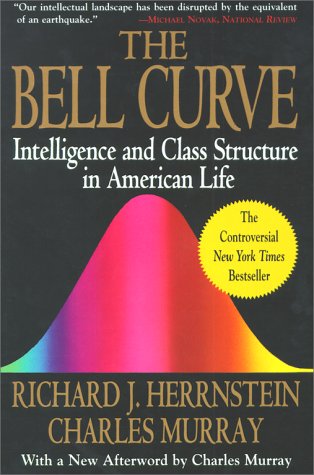
The emphasis on educational testing that has begun to flourish within the rubric of President George W. Bush's "compassionate conservatism" once again raises the specter of The Bell Curve. The Bell Curve is fraught with so many hidden imponderables it should not be made the basis of any important social policy without severe interpretive qualifications.
That book's projection of the results of intelligence tests -- specifically its conclusion that African-Americans test lower than do European-Americans and hence are intellectually inferior -- is one issue that has not yet been discussed in relation to the new administration's plans. Yet any educational testing program should take this into consideration, especially given the relatively low SAT scores and collegiate grade point averages, as disclosed by the media, of both candidates in the last Presidential election. ( The Washington Post reported President Bush's SAT total at 1206: 566 Verbal, 640 Math, with mixed grades as low as 71. Al Gore received one D, one C-minus, two C's, two C-pluses and one B-minus, although his SAT scores had totaled 1355: 625 Verbal, 730 Math.)
The Bell Curve's conclusion is absolutely false.
That hypothesis is scientifically flawed, and the racist interpretation of it is especially noxious. The Bell Curve was first published by R.J. Herrenstein and Charles Murray in 1994. Herrenstein died a month before publication. Its analysis rests on the "g" hypothesis by Charles Spearman in 1904, and on later factor analysis extensions by L. L. Thurstone.
The foundation work was by Arthur Jensen, published in 1980 as Bias in Mental Testing. Jensen was a leading authority in experimental psychology and held a Chair at UC Berkeley. The conclusions about intelligence became notorious when the racial implications were publicized by William Shockley, a Stanford Nobel Laureate.
I studied the Bell Curve phenomenon in testing, and related problems, off and on, for several years, first at the Hutchins Center for the Study of Democratic Institutions and later as editor and founder (with James F. Danielli, FRS) of the Journal of Social and Biological Structures.
Indeed, Jensen’s basic tests, using a standardized form of the "g" factor analysis, were given to American students with appropriate double blind procedures. (There was some comment that he may have personally held racial prejudices, but if so they were carefully hidden.)
It is true that "g" based tests produce lower scores for African-Americans than for European-Americans.
But these same tests also produce significantly higher scores for Asian-Americans than for European-Americans.
Yet, curiously, pointing this out to those who emphasized the lower scores of African-Americans seldom led them to conclude that European-Americans must be inferior to Asian-Americans. It would certainly be fair to twit Bell Curve proponents with the need to acknowledge the superiority of Asian-Americans over "Whites," and to stop wasting valuable educational resources on the European-American population.
One interpretive factor with Asian-American scores relates to their immigration -- and is applicable to immigrants in general, including West Indian and African immigrants to the United States.
An important factor to consider is that immigration is highly self-selective. Those who pull up stakes to leave bad conditions at home, and seek better conditions elsewhere, usually at great risk, tend to be more aggressively motivated and better "educated" (relatively) than those left behind; not compared to their home elites, but to less risk-taking lower classes.
Note that Frederick Jackson Turner's celebrated "Frontier Thesis" interpretation of American culture seldom mentions this self-selective, "progressive," character of those who migrate to new frontiers.
This aspect of Americanism was part of the attraction of JFK's "New Frontier." While attractive new geographical areas have now largely disappeared from American culture -- which is little discussed -- the attraction of America to Latinos and Asians, as well as African immigrants, is self-selective.
Moreover, intelligence tests measure only one kind of mental skill, the ability to take intelligence tests. Even considered in their most favorable light, they do not measure the other five or six types of intelligences identified by Howard Gardner of Harvard University.
Remember also that the Stanford intelligence tests by L. L. Thurstone and Lewis Termin showed a correlation between intelligence scores and good (standard) physique and health. This means -- but again this has rarely been emphasized -- that excellent athletes would tend to possess above average intelligence.
Furthermore, it is the conventional wisdom that standard intelligence tests like the SAT tend to "predict" the likelihood of success in standard academic subjects.
That is, they discriminate against those with non-English native languages (English as a Second Language) and lacking "standard" middle-class American neonatal acculturation, for example nursery rhymes.
This difference is especially true for those raised with "Black English" street talk, and within African-American myth systems. In the 1980's there was an effort in the Berkeley, California schools to get Black English accepted as an authentic language, and to treat African-American dialect as a special kind of English as a Second Language. While this effort was mocked in the press, such an ESL program might have affected test scores positively.
However, this also tends to be true of Asian-American immigrants. One additional factor in the better showings of Asian-Americans on tests relates to their native writing characters. They are complicated and numerous, with some languages even possessing distinct tonal domains. Acquisition of literacy is difficult and requires long and intensive years of rote memorization. This happens to produce superb childhood "ur-literacy" preparation - useful for example, in the later mastery of complex computer programming languages.
Cross-cultural multi-national tests by Rhoda Kellog of UCBerkeley in Analyzing Children's Art of neonatal scribbling showed that all children begin changing from random scribbles to ur-mandalic designs at about the same age - around 3 years.
At about age 3 American parents tend to train children away from mandalic designs toward stickfigure pictograms. Asian cultures tend to maintain mandalic "literacy". Mandalic designs were the basis for hunter-gathering site locations, calendars and pre-geometric architecture, as in palaces temples and cities. Segments of the mandala lend themselves readily to adaptation (symbolic transformation) as characters for non-alphabetic writing characters.
James Danielli’s wife Mary was an anthropologist who studied the "mandala" of several South Asian cultures. Danielli proposed that something comparable to her "standardized" mandala, made of lines and dots, could be a "projection" of the brain's neurological architecture.
These are only a few reasons it would be invalid to use Bell Curve-type test results, as measures of the comparative intelligence of our various ethnic population segments, for educational reforms proposed by the new administration.
Harvey Wheeler is co-author of Fail Safe, with Eugene Burdick, and a frequent contributor to The Idler.


