Read The Idler on your Palm Pilot
Click Here To Download

The Idler's Home Page and Table of Contents
The Idler's email list
To advertise in The Idler
Write a letter to the editor

(www.the-idler.com)
Volume III, Number 156


Click here to download chapters from Finish High School At Home by Charlie Clark







PLAYING WITH FREUD: An Interview With Sarah Boxer
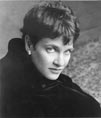
(Marion Ettlinger photo from Pantheon Graphic Novels website)
Sarah Boxer is a staff writer at the New York Times who has covered the cultural beat for the past few years, often with dry humor. In her career at the paper, she has done almost everything, from writing obituaries to working as an editor of the Book Review.
Her new paperback, IN THE FLOYD ARCHIVES: A PSYCHO-BESTIARY, is not a coffee table book, but a volume designed perhaps for the smaller kind of end tables to be found psychiatric waiting rooms.
By creating "Bunnyman" as a patient (and apparent alter-ego) seeing "Dr. Floyd," Boxer takes on classic Freudian concepts, lampooning (yet perhaps at a subconscious level paying tribute to) the power and influence of psychoanalytic thought and practice. In another sense, it is about the conflict between the rational Ego represented by Dr. Floyd, and the instinctual Id represented by Bunnyman, as well as a series of other animals.
If IN THE FLOYD ARCHIVES is comedy with footnotes, the type of clever novelty that might appeal to fans of early Woody Allen or Jules Feiffer, it is not surprising, since Boxer says she published her first cartoon at the precocious age of eleven, and read Freud as a teenager growing up in Denver, Colorado. There, she would leaf through her father’s copies of the New Yorker, no doubt reading the cartoons, her only direct exposure to East Coast intellectualism prior to the undergraduate degree in Philosophy from Harvard that resulted in her transplantation to the East. She currently divides her time between New York City and Cambridge, Massachussetts.
The Idler spoke with Boxer about Floyd, and Freud, and why she chose to publish a cartoon novel about psychiatry.
THE IDLER: IN THE FLOYD ARCHIVES: A PSYCHO-BESTIARY has just come out in paperback. It appears in a rather small size for a graphic novel. Each page crowded with many frames of drawings and text. Was this density intentional?SARAH BOXER: Actually, I wanted the book to be even smaller. I like small books. I like the intimacy of them. I didn't want it to look like a comic book or a children's book. That's one reason I wanted it small. In addition, I wanted people to be able to look at each page in one glance, rather than scan it.
IDLER: So the compact size was intentional. Does the small print make it difficult for some people to read?
BOXER: I wanted it to be intimate, but not unreadable, to be a novel-sized book.
IDLER: The drawings are also very light. Did you do them in pencil?
BOXER: I first sketched the cartoon in pencil. Then for the final version I drew it in pen and ink, but with a very thin nib, say a .01 or .005. I like a thin line because it reminds me of pencil. But pencil would have been unreadable. I wanted to use simple lines for the simple figures.
IDLER: Your characters are simple, but they also seem a little fuzzy. It is hard to tell whether they are male or female, at least at first glance. Was that your choice as well?
BOXER: Yes, there's a lot of sexual confusion in the drawings, the lamb and the wolf and rat-ma'am, it's true. You can't really tell at first glance what they are. One reviewer said they are like the drawings of R. O. Blechman. I use a shaky thin line to reflect the nervousness of the material.
IDLER: Why did you include footnotes for the cartoons, indicated by smoking pipes?
BOXER: There were a lot of overlaps with Freud's case histories, and in order to see where the real cases overlap the Floyd story, I counted them up. For example, Rat Ma'am's obsession with eyeglasses came from Freud's case of the Rat Man, and Mr. Wolfman's dream was straight out of Freud's case of the Wolf Man. I wanted to let people know. But I couldn't have numbered footnotes in the drawings. So I came up with the smoking pipes.
IDLER: So, is your tale fact or fiction?
BOXER: Definitely fiction. The cases were just touchstones. Just in case reader's didn't recognize them, the footnotes made them explicit.
IDLER: There have been novels with footnotes, for example the recent book by David Eggers. And poets like T.S. Eliot used footnotes. But have you ever seen a cartoon with footnotes before?
BOXER: No, I haven’t seen comics with footnotes before.
IDLER: Why did you choose a pipe as an icon, when Freud really smoked cigars?
BOXER: Well, the pipe symbolizes what analysts smoke. When you think of the cliche analyst, he has a pipe. The pipe is also a stand-in for Freud's cigar. Freud said sometimes a cigar is just a cigar. Also, it is a reference to Magritte's painting, "This is not a pipe."
IDLER: But do you ever show your character, Floyd, smoking the pipe?
BOXER: No, Floyd is never shown smoking. The smoking pipes are like smoking guns -- they indicate, "Freud was here."
IDLER: Were you ever psychoanalyzed?
BOXER: I tried psychotherapy for many years, with different therapists who were pretty much Freudian, but I never went five days a week.
IDLER: How much of this work is autobiographical, drawing on your experiences?
BOXER: It is not a memoir. It is not based on my experiences. It is based more on the reading of Freud that I did. I used to read Freud for fun, believe it or not.
IDLER: What was the first book by Freud you read?
BOXER: THE EGO AND THE ID was the first one. I read it when I was 15 years old, in Denver. I found it on my father's bookshelf.
IDLER: Was there a family connection to Freud?
BOXER: My sister is a psychologist.
IDLER: How did you come up with the characters for your book?
BOXER: I started with Bunnyman. I'd been drawing him for years, and then I got the idea of sending him to a psychiatrist for his anxiety.
IDLER: How long ago did you first draw Bunnyman?
BOXER: I came up with Bunnyman 20 years ago. About 10 years ago, I started this book, then put it down because of work, and then recently picked it up again.
IDLER: Why did you take such a long break?
BOXER: I needed to get some distance.
IDLER: And why is your main character a rabbit? What does he symbolize?
BOXER: I guess it's just one of those Harvey things. I just invented him one day. But he's not an imaginary friend.
IDLER: I get the sense there are things about your book that you are not telling me.
BOXER: It leaves you nothing to do if I tell you everything. It makes it boring.
IDLER: You seem to like keeping the point of your book a mystery. Are you repressing its meaning?
BOXER: Maybe I am, but I can't say what it is, if I am repressing it.
IDLER: Are your characters aspects of your personality, in disguise?
BOXER: There is a lot of disguise in the book.
IDLER: Why did you choose to use animals?
BOXER: These are animals with instinctual impulses, and animal fears. The wolf and the lamb and the rat have real problems, the wolf is trying to eat the bunny. And they run into the civilized world's cure for anxiety.
IDLER: So the book is about the problem of animal instinct versus human society?
BOXER: It is not about animal problems versus human society, it is about actual animal problems being treated in a human, "civilized" way.
IDLER: Would you say it is about the natural versus the conventional?
BOXER: More the natural versus the cultural, the human way, the psychological way.
IDLER: Do you keep pets?
BOXER: I had a pet poodle, Zooey, named after J.D. Salinger's FRANNY & ZOOEY, but he's dead.
IDLER: How have psychoanalysts reacted to your book?
BOXER: I'm going to speak about it with a psychoanalyst at a meeting of the American psychoanalytic society, at their conference in December.
IDLER: What will you discuss?
BOXER: We will be talking about the differences between Floyd and Freud, in the case histories.
IDLER: It would seem, from the humorous tone of the book, that you are taking Freud lightly, especially when compared with some of the writings of Frederick Crews, Jeffrey Masson and other critics.
BOXER: I do take Freud seriously. It's just that everything that can be said about Freud in a serious vein has been said.
IDLER: So you treat him as a joke?
BOXER: What I like about Freud is that he plays. He plays in dream interpretation, in puns, in his writing.
IDLER: So you see yourself playing with Freud?
BOXER: To play with Freud is to bring back some of the good stuff, his interpretations and finesse. But Dora and Emma Eckstein are some of his darker moments, and they are represented in the book.
IDLER: Would you say your humor and playfulness, what one might call comedy or comic sensibility, distinguishes you from other "graphic novelists" prominent today?
BOXER: My cartoon novel is not like MAUS or Ben Katchor's work. Most of the other authors are men. Their boyhoods were devoted to comic books. I was more interested in comic strips like Peanuts and Krazy Kat. The other Pantheon graphic novelists come from the darker crime-fighting tradition of Batman and Superman.
IDLER: Your drawings reminded me of Feiffer.
BOXER: Well, they are more like Feiffer than Spiegelman.
IDLER: Which cartoonists influenced your work?
BOXER: George Herriman, who did Krazy Kat, is the best. Other than that, I suppose New Yorker cartoonists like William Steig and Saul Steinberg. Also Charles Schulz. I got to write some of their obituaries for the New York Times. I also wrote an obituary for Bob Kane, who invented Batman.
IDLER: Any other influences?
BOXER: Ed Koren does a lot of those furry creatures.
IDLER: You grew up in Denver, in the West, yet you seem to have been influenced by the New Yorker and its literary sensibility. How did this happen?
BOXER: We had a subscription. There are people who read west of the Missisippi.
IDLER: Was your father a Freudian?
BOXER: He owned a steakhouse in Denver. It was called Boxer's. He sold it, and began a second career as an English professor at Metropolitan State College. My mom taught in the Head Start program.
IDLER: So you didn't grow up branding cattle. Did you go to prep school?
BOXER: I went to public school until 9th grade, when I entered Colorado Academy. I was in the first class that admitted girls.
IDLER: Were you a tomboy?
BOXER: Not exactly. I did mountaineering. I did mountain climbing. I did skiing almost everywhere in Colorado. And I also read books.
IDLER: Why did you go back East for college?
BOXER: I got into a great school.
IDLER: Are you working on a sequel to IN THE FLOYD ARCHIVES?
BOXER: I hope so. I'm playing around with some ideas.