 |
|
This article may be found in the
2004 January-March issue of Voices of Mexico magazine. The Ecology of the Tuxtlas Mountains Musings of a photographer, naturalist and birdwatcher
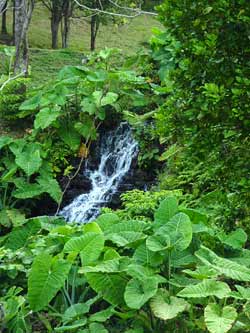
on the ecology of the Tuxtlas Mountains. Every time that I visit The Tuxtlas I am impressed by the scenic beauty
and diversity of the area. The Tuxtlas Mountains truly represents one of
Mexico’s natural treasures. In 1998 The Tuxtlas Mountains were designated by
then President Ernesto Zedillo as a special biosphere reserve. While at first look all appears lush green, the reality is quite a
different and disturbing story. The ravages of man are readily apparent in the
Tuxtlas Mountains. Within the area of the Tuxtlas biosphere many threatened
species of fauna exist. Here are a few examples of threatened species, ocelot, jaguar, white-lipped peccaries,
Baird’s tapir, northern ghost bats, jaguarundi, tayra. The Tuxtlas Mountains
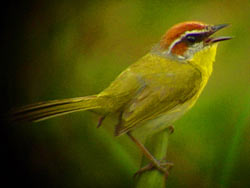
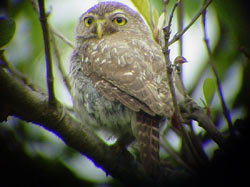
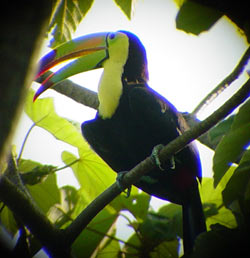
are a magnet for many nearctic and neotropic bird species. Endemic bird species and sub-species to be
found in the Tuxtlas include, Tuxtla quail dove, Long-tailed saberwing
(hummingbird), black-headed saltator and plain-breasted brushfinch. Three bird species--the king vulture, the harpy eagle, and the scarlet
macaw--have already been extirpated from Los Tuxtlas. As I see it there are three basic threats to the ecology of The Tuxtlas, they are as follows: 1.
DEFORESTATION
Deforestation is without a doubt the single largest threat to the
ecology of the Tuxtlas. Ninety percent of the original rainforest has been cut
and replaced by pasture for cattle grazing and/or sugar cane. (Most of this
deforestation has occured within the last 40 years) Some studies estimate that
with the current rate of deforestation
that the remaining rain forest could be diminished by 50% within the next 10
years. If this should occur the effects on the remaining fauna would be
devastating, with the possibility of many species being eliminated completely.
2.
UNREGULATED
USE OF HERBICIDES AND INSECTICIDES All along the roads in the region of the
Tuxtlas, nailed to the tree trunks of the “living fences” are numerous placards advertising the newest
herbicide/insecticide products. These products are being aggressively marketed
with some ranchers discovering that herbicides are especially useful in
clearing native vegetation from the land so that more pasture can be planted.
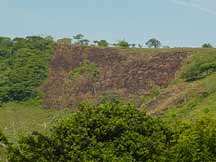
This spring (2003) while birding in the Tuxtlas I was able to witness how this
technique was employed. A rancher sprayed approximately one hectare of native
vegetation with herbicide, after several weeks when the vegetation was brown
the dry vegetation was torched and the land was effectively cleared for
planting of pasture grass. (please note the photo of the described process). I
believe that both herbicides and insecticides serve a purpose, however they
must be used responsibly. Herbicide and
insecticide runoff must be taken seriously as threats to wildlife species. DDT
(which was banned in the 1970’s in the United States) is still marketed and
used in much of Latin America without restriction. 3.
CAPTURE
AND ILLEGAL SALE OF BIRDS AND REPTILES
Unfortunately, the capture and illegal sale of birds and reptiles is still a
part of the landscape of the special biosphere reserve of the Tuxtlas. The Yellow-headed
parrot Amazona oratrix is in danger of extinction based on its capture
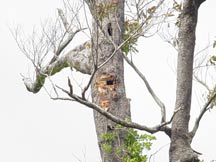
and sale for the pet trade. I took the following photo of a
parrots nest in a tree cavity that was robbed this spring (2003) just across
the road from the UNAM biological station. Much work remains to be done in
order to protect the illegal capture and sale of these exotic species. SOLUTIONSThe need for immediate action in the
Tuxtlas Biosphere to protect the remaining forest remnants is paramount. Here
are a few possible solutions based on my observations. ·
A
“buffer zone” surrounding particularly the peaks of San Martin and Santa Marta
needs to be established with a team of trained Tuxtlas Biosphere rangers which
would live in and actively patrol and protect the zones. ·
Establish
a program of dialog and education with
all residents and especially landowners of the Tuxtlas to reinforce and educate
the existent laws regarding water and
habitat. I feel that it would be particularly useful to utilize satellite map
technology with individual landowners to monitor possible deforestation abuses
on a monthly basis. ·
Researchers
and scientists who have spent many
years studying the area need to step
out from behind desks and research projects to assume a leadership role
implementing immediate practical, prioritized solutions working in
conjunction with existing government agencies.) Some possible projects could be
habitat resoration(tree planting), community conservation education to
establish a base for ecotourism, help local ranchers by introducing new strains
of pasture grasses to help increase cattle production on existing pasture lands
(helping to eliminate the continued deforest). The time is now and the need for conservation is immediate. The
Tuxtlas mountains are a national treasure, what remains is worth protecting.
What happens in the next few years will define the future of the Tuxtlas
Biosphere. The Tuxtlas Mountains
Basic information:
In November of 1998 the Tuxtlas
Mountains was given the designation as a special biosphere reserve. David McCauley David is photographer and birding
guide who resides in Tlacotalpan, Veracruz. |
 |
 |
 |
 |
 |
 |
 |
 |