I. Introduction to English 102
Submission: Assignments must be done in Microsoft
Word. Combine the writing assignments
for this section in single document titled “Introduction.” Include your name, class, and Course ID in
the paper heading. Save the Document as Introduction
Your Last Name. Then e-mail the assignments as an attachment to [email protected] .
Assignment 1:
Read “The Nature of Literature” in The Bedford Introduction to
Literature, pages 1-3. Then, read the following introduction and complete
writing assignments 2-4. These assignments are intended to be brief and
informal. Each assignment should be at
least 1 paragraph. There are no right or wrong
answers. Simply record your immediate responses.
Literature, like other art forms, is meant to be experienced. We may react to reading a literary work in various ways. The experience may give us pleasure, it may disturb us, or it may confuse us. A particular work may lead us to explore the meaning of an aspect of the work, it may cause us to examine our reaction to it, or it may motivate us to seek out the reactions of others. To experience the poem, “A narrow Fellow in the Grass” by Emily Dickinson, read it aloud until you feel comfortable with the way it sounds and the way the ideas and feelings flow.
![[Emily Dickinson]](dickinson.jpg)
A narrow fellow in the Grass
Occasionally rides –
You may have met Him – did you not
His notice sudden is –
The Grass divides as with a Comb –
A spotted shaft is seen –
And then it closes at your feet
And opens further on –
He likes a Boggy Acre
A floor too cool for Corn –
Yet when a Boy and Barefoot –
I more than once at
Have passed, I thought, a Whip Lash
Unbraiding in the Sun
When stopping to secure it
It wrinkled, and was gone –
Several of Nature’s People
I know, and they know me –
I feel for them a transport
Of cordiality –
But never met this Fellow
Attended, or alone
Without a tighter breathing
And a Zero at the Bone –
Assignment 2a: Write your response to the poem. Click on the following link for more on writing an initial response. Post your response in Discussion 1 on WebCT. To post your response, click on Discussion 1 icon on the WebCT course Homepage. In the Title box, click on Discussion 1. Then under Messages, click on Create Message. In the Subject box, enter "A narrow Fellow in the Grass." You can copy your response from your assignments and paste it into the Message box.
Assignment 2b: : Read the discussions looking for ideas that give you new or different insights into the meaning of the poem. List at least three (3) ideas that you consider the most helpful and revise your initial response based on these ideas.
For more information on "A narrow Fellow in the Grass," see the following sources: (1) An Introduction to Her Work on page 979 in the Bedford Introduction to Literature, (2) the Class Blog entries from June 29, 2006, Aug. 29, 2006, and Sep. 16, 2006.
Assignment 3:Read the following definition and
write down your response.
A snake is a limbless scaled reptile with a long tapering body and with salivary glands often modified to produce venom which is injected through grooved, tubular fangs.
You may notice that we respond differently to literature
than we do to other types of writing.
The definition may help us identify a snake by of its physical
characteristics, but the poem helps us recreate the experience of seeing a
snake.
The poem also uses sounds and rhythm to convey the experience. The short lines recreate the sudden and swift movement of the snake, and the “z” and repetition of the long “o” in the last line recreate the feeling of fear experienced by the speaker of the poem. The prose of the definition has its own rhythm, but the rhythm is designed to help us remember the concept not create musical patterns that appeal to the imagination.
The definition may make us recall pictures of snakes in a zoology text or snakes we have seen at the zoo, but the poem may suggest an association with the snake in the Garden of Eden, especially if we think of the fascination and fear with which the speaker describes his experience. We may even sense that this attraction and repulsion describes the speaker’s attitude toward nature, which is at once fascinating and dangerous. Compare this view of nature with the one expressed in the following poem by Robert Frost on page 1018 of The Bedford Introduction to Literature. Here the poet describes a spider trapping a moth on a small, white wildflower.
![[Robert Frost]](frost.jpg)
Design
I found a dimpled spider, fat and white,
On a white heal-all, holding up a moth
Like a white piece of rigid satin cloth –
Assorted characters of death and blight
Mixed and ready to begin the morning right,
Like ingredients in a witches’ broth -
A snow-drop spider, a flower like a froth,
And dead wings carried like a paper kite.
What had the flower to do with being white,
The wayside blue and innocent heal-all?
What brought the kindred spider to that height,
Then steered the white moth thither in the night?
What but design of darkness to appall? –
If design govern in a thing so small.
Assignment 4:
Write your response to this poem.
Both ‘A narrow Fellow in the Grass” and “Design” describe
simple experiences that suggest larger meanings. The speaker of “Design” might
have reacted to the spider in the same way that the speaker of
We might also notice that the tone of the poems, the speaker’s attitude toward the subject, is very different. The speaker of “A narrow Fellow in the Grass” recalls a boyhood memory that still has the power to delight and frighten him. The speaker of “Design” does not feel the same “A transport/ Of Cordiality” toward nature’s creatures, but sees the spider, moth, and flower as “Assorted characters of death and blight.” The speaker’s bitter tone, indicated by the reference to the spider carrying the dead moth as a way to “start the morning right,” colors his or her perception of the world and ultimately leads to questioning whether this small scene reflects the “design” of the universe. Click on the following link to read a commentary on "Design."
Our experience of reading the two poems depends on the message the poet sends and the way in which we receive and interpret the message. Because both processes are complex, there is no right or wrong interpretation. We have no way of actually determining what Frost or Dickinson “meant” by their poems. Even if we could ask them, it is not likely that they could explain what they meant since the process of art takes place in the imagination, which brings together both conscious and unconscious thoughts and feelings. Poets express themselves using language in the same way that artists use color and musicians use sound. Our own responses to the poems are also conscious and unconscious and therefore not easily explained. If we are attracted to a particular work of literature, our response to it may deepen over time just as our understanding of life experience grows and deepens over time.
Assignment 5: Read “Reading
Your initial reading of a poem, a story, or a play is important. The Russian director, Constantine Stanislavski, had his actors read the play in private first so they could be alone with the text and let their subconscious minds form impressions.
![[Constantine Stanislavski]](stanislavski.jpg)
They often leave
a permanent mark on the work of an actor.
They are unpremeditated and unprejudiced. Unfiltered by any criticism, they pass freely
into the depths of an actor’s soul, into the
wellsprings of his nature, and often leave ineradicable traces which
will remain as the basis of a part, the embryo of an image to be formed.” (Stanislavski
3)
Reading literature like viewing art or listening to music is a meditative process. As we read, we form instinctive connections to characters just as we form connections to people in real life. Our first reading of a story, however, may tell us more about ourselves than about the story. The sample paper, “Differences in Responses to Kate Chopin’s ‘The Story of an Hour,’” (pages 20-22) shows that different readers have different responses based on their ideas, beliefs, values, expectations, life experience, age, and gender. The writer of the paper sympathizes with Mrs. Mallard’s need for independence, but feels that she should have tried to improve her marriage. His view is shaped by contemporary beliefs about marriage, one being that the partners in a marriage can work to improve the relationship. The writer’s father, however, sees the story as a classic battle of the sexes in which Mrs. Mallard fails to communicate her feelings to her husband. He believes that Mr. Mallard is the victim because he loses his wife without knowing why. The father views marriage as an irreconcilable conflict caused by gender differences. In contrast, the grandmother believes that Mrs. Mallard is trapped in an unhappy marriage by social values and pressures which cause her to repress her feelings and desires. The writer concludes that the way each reader responds to “The Story of an Hour” reveals his or her own ideas about marriage, society, and gender.
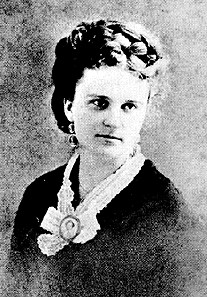 The paper indicates that there is no single correct interpretation of a literary work.The writer and his grandmother sympathize with Mrs. Mallard but for different reasons and in different ways. Their views stand in sharp
contrast to the father’s view that Mr. Mallard, not Mrs. Mallard, is the
victim. However, all three views provide valuable insights that can broaden our reading of the story. It is possible that both Mrs. Mallard and Mr.
Mallard are villains and victims. Kate Chopin indicates this in paragraph 13 when she says, “There would be no powerful will binding hers in that blind persistence with which men and women believe they have the right to impose a private will upon a fellow creature. A kind intention or cruel
intention made the act no less a crime…” (Chopin 13). Literature is subjective rather than objective. Rational thought and logic do not always
apply to the world of the imagination. Mrs. Mallard may be a victim of society and her husband’s will, but she may victimize her husband by not communicating her thoughts and feelings and by withdrawing into her own world. Characters in fictions like people in life can be very complex and
exhibit conflicting emotions and traits.
The paper indicates that there is no single correct interpretation of a literary work.The writer and his grandmother sympathize with Mrs. Mallard but for different reasons and in different ways. Their views stand in sharp
contrast to the father’s view that Mr. Mallard, not Mrs. Mallard, is the
victim. However, all three views provide valuable insights that can broaden our reading of the story. It is possible that both Mrs. Mallard and Mr.
Mallard are villains and victims. Kate Chopin indicates this in paragraph 13 when she says, “There would be no powerful will binding hers in that blind persistence with which men and women believe they have the right to impose a private will upon a fellow creature. A kind intention or cruel
intention made the act no less a crime…” (Chopin 13). Literature is subjective rather than objective. Rational thought and logic do not always
apply to the world of the imagination. Mrs. Mallard may be a victim of society and her husband’s will, but she may victimize her husband by not communicating her thoughts and feelings and by withdrawing into her own world. Characters in fictions like people in life can be very complex and
exhibit conflicting emotions and traits.
Assignment 6:
Read “The Story of an Hour” again and follow the events of the plot closely,
paying attention to the smallest details.
Write a summary of the story. Has
your initial response to the story changed?
(This writing assignment is more formal and should be written in
paragraph form. The summary be at least
1 paragraph long and contain specific details of the plot. Explain your response in a separate
paragraph.)
Assignment 7:
Read Hamlet’s instructions to the players in The Bedford
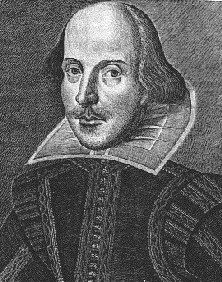 Hamlet instructs the players to act naturally, as they would in real life. He tells them that purpose of art is “to
hold…the mirror up to nature.” This is
an interesting image because it seems to emphasize realism, but the image in a
mirror is not real. It is a reflection
of reality. We can, however, reflect
reality by holding the mirror at different angles, by using different kinds of mirrors,
or even by bending the mirror. On one
end of the spectrum of art, we have Hamlet’s mirror, the one that reflects
reality as exactly as we can. On the
other end of the spectrum, however, we have art that distorts reality in an
attempt to show us something we would normally overlook or not ordinarily
see. In fiction we have realism at one
end of the spectrum and fantasy on the other end.
Hamlet instructs the players to act naturally, as they would in real life. He tells them that purpose of art is “to
hold…the mirror up to nature.” This is
an interesting image because it seems to emphasize realism, but the image in a
mirror is not real. It is a reflection
of reality. We can, however, reflect
reality by holding the mirror at different angles, by using different kinds of mirrors,
or even by bending the mirror. On one
end of the spectrum of art, we have Hamlet’s mirror, the one that reflects
reality as exactly as we can. On the
other end of the spectrum, however, we have art that distorts reality in an
attempt to show us something we would normally overlook or not ordinarily
see. In fiction we have realism at one
end of the spectrum and fantasy on the other end.
![[J.R.R. Tolkien]](tolkien.jpg) "The Story of an Hour” is an example of realism. The characters and events in the story conform to our ideas about whatconstitutes the real world. The story
focuses on the personalities and behavior of the characters and the social
context within which the events take place.
Chopin tells us that this is what life is like. At the other end of the spectrum of fiction
is fantasy. J.R.R. Tolkien’s
The Lord of the Rings is an excellent example of fantasy. The characters are not real people but
Wizards, Hobbits, Dwarves, Elves, Orcs, and Ents. They do not
live in the real world but a place called Middle Earth. They are not involved in real events but
rather in the struggle against the evil forces of Saron. The story, while not real, depicts the
struggle between good and evil, and the characters, while not human, display
good and evil human characteristics. Tolkien does not show us how life really is, but rather how
it someday could be.
"The Story of an Hour” is an example of realism. The characters and events in the story conform to our ideas about whatconstitutes the real world. The story
focuses on the personalities and behavior of the characters and the social
context within which the events take place.
Chopin tells us that this is what life is like. At the other end of the spectrum of fiction
is fantasy. J.R.R. Tolkien’s
The Lord of the Rings is an excellent example of fantasy. The characters are not real people but
Wizards, Hobbits, Dwarves, Elves, Orcs, and Ents. They do not
live in the real world but a place called Middle Earth. They are not involved in real events but
rather in the struggle against the evil forces of Saron. The story, while not real, depicts the
struggle between good and evil, and the characters, while not human, display
good and evil human characteristics. Tolkien does not show us how life really is, but rather how
it someday could be.
![[The Old Guitarist by Pablo Picasso]](picasso.jpg)
Many writers, artists, and musicians distort reality to focus our attention on aspects of life we might not see or hear. “The Old Guitarist” is a painting from Picasso’s Blue Period. This painting would lie somewhere in the middle of our spectrum between realism and fantasy. The figure in the picture is recognizable as an old man, but the painting is not realistic. The blue palette, the flatness of the figure and guitar, and the contorted pose are all distortions of reality. These distortions focus our attention on the sorrow of the artist, his dejection, isolation, and poverty. The image of the guitarist is contrasted with the guitar. Its mellow browns and gentle curves suggest that the sound of his music is full of rich, deep tones and beautiful harmonies.
Assignment 8:
Read “The Handsomest Drowned Man in the World” below. List the elements of the story that are real and those
that are not.
The Handsomest Drowned Man in the World
By Gabriel Garcia Marquez
1968
A Tale for Children
The first children who saw the dark and slinky bulge approaching through the sea let themselves think it was an enemy ship. Then they saw it had no flags or masts and they thought it was a whale. But when it was washed up on the beach, they removed the clumps of seaweed, the jellyfish tentacles, and the remains of fish and flotsam, and only then did they see that it was a drowned man.
They had been playing with him all afternoon, burying him in the sand and digging him up again, when someone chanced to see them and spread the alarm in the village. The men who carried him to the nearest house noticed that he weighed more than any dead man they had ever known, almost as much as a horse, and they said to each other that maybe he'd been floating too long and the water had got into his bones. When they laid him on the floor they said he'd been taller than all other men because there was barely enough room for him in the house, but they thought that maybe the ability to keep on growing after death was part of the nature of certain drowned men. He had the smell of the sea about him and only his shape gave one to suppose that it was the corpse of a human being, because the skin was covered with a crust of mud and scales.
They did not even have to clean off his face to know that the dead man was a stranger. The village was made up of only twenty-odd wooden houses that had stone courtyards with no flowers and which were spread about on the end of a desertlike cape. There was so little land that mothers always went about with the fear that the wind would carry off their children and the few dead that the years had caused among them had to be thrown off the cliffs. But the sea was calm and bountiful and all the men fit into seven boats. So when they found the drowned man they simply had to look at one another to see that they were all there.
That night they did not go out to work at sea. While the men went to find out if anyone was missing in neighboring villages, the women stayed behind to care for the drowned man. They took the mud off with grass swabs, they removed the underwater stones entangled in his hair, and they scraped the crust off with tools used for scaling fish. As they were doing that they noticed that the vegetation on him came from faraway oceans and deep water and that his clothes were in tatters, as if he had sailed through labyrinths of coral. They noticed too that he bore his death with pride, for he did not have the lonely look of other drowned men who came out of the sea or that haggard, needy look of men who drowned in rivers. But only when they finished cleaning him off did they become aware of the kind of man he was and it left them breathless. Not only was he the tallest, strongest, most virile, and best built man they had ever seen, but even though they were looking at him there was no room for him in their imagination.
They could not find a bed in the village large enough to lay him on nor was there a table solid enough to use for his wake. The tallest men's holiday pants would not fit him, nor the fattest ones' Sunday shirts, nor the shoes of the one with the biggest feet. Fascinated by his huge size and his beauty, the women then decided to make him some pants from a large piece of sail and a shirt from some bridal brabant linen so that he could continue through his death with dignity. As they sewed, sitting in a circle and gazing at the corpse between stitches, it seemed to them that the wind had never been so steady nor the sea so restless as on that night and they supposed that the change had something to do with the dead man. They thought that if that magnificent man had lived in the village, his house would have had the widest doors, the highest ceiling, and the strongest floor, his bedstead would have been made from a midship frame held together by iron bolts, and his wife would have been the happiest woman. They thought that he would have had so much authority that he could have drawn fish out of the sea simply by calling their names and that he would have put so much work into his land that spring would have burst forth from among the rocks so that he would have been able to plant flowers on the cliffs. They secretly compared him to their own men, thinking that for all their lives theirs were incapable of doing what he could do in one night, and they ended up dismissing them deep in their hearts as the weakest, meanest, and most useless creatures on earth. They were wandering through that maze of fantasy when the oldest woman, who as the oldest had looked upon the drowned man with more compassion than passion, sighed:
"He has the face of someone called Esteban."
It was true. Most of them had only to take another look at him to see that he could not have any other name. The more stubborn among them, who were the youngest, still lived for a few hours with the illusion that when they put his clothes on and he lay among the flowers in patent leather shoes his name might be Lautaro. But it was a vain illusion. There had not been enough canvas, the poorly cut and worse sewn pants were too tight, and the hidden strength of his heart popped the buttons on his shirt. After midnight the whistling of the wind died down and the sea fell into its Wednesday drowsiness. The silence put an end to any last doubts: he was Esteban. The women who had dressed him, who had combed his hair, had cut his nails and shaved him were unable to hold back a shudder of pity when they had to resign themselves to his being dragged along the ground. It was then that they understood how unhappy he must have been with that huge body since it bothered him even after death. They could see him in life, condemned to going through doors sideways, cracking his head on crossbeams, remaining on his feet during visits, not knowing what to do with his soft, pink, sea lion hands while the lady of the house looked for her most resistant chair and begged him, frightened to death, sit here, Esteban, please, and he, leaning against the wall, smiling, don't bother, ma'am, I'm fine where I am, his heels raw and his back roasted from having done the same thing so many times whenever he paid a visit, don't bother, ma'am, I'm fine where I am, just to avoid the embarrassment of breaking up the chair, and never knowing perhaps the ones who said don't go, Esteban, at least wait till the coffee's ready, were the ones who later on would whisper the big boob finally left, how nice, the handsome fool has gone. That was what the women were thinking beside the body a little before dawn. Later, when they covered his face with a handkerchief so that the light would not bother him, he looked so forever dead, so defenseless, so much like their men that the first furrows of tears opened in their hearts. It was one of the younger ones who began the weeping. The others, coming to, went from sighs to wails, and the more they sobbed the more they felt like weeping, because the drowned man was becoming all the more Esteban for them, and so they wept so much, for he was the most destitute, most peaceful, and most obliging man on earth, poor Esteban. So when the men returned with the news that the drowned man was not from the neighboring villages either, the women felt an opening of jubilation in the midst of their tears.
"Praise the Lord," they sighed, "he's ours!"
The men thought the fuss was only womanish frivolity. Fatigued because of the difficult nighttime inquiries, all they wanted was to get rid of the bother of the newcomer once and for all before the sun grew strong on that arid, windless day. They improvised a litter with the remains of foremasts and gaffs, tying it together with rigging so that it would bear the weight of the body until they reached the cliffs. They wanted to tie the anchor from a cargo ship to him so that he would sink easily into the deepest waves, where fish are blind and divers die of nostalgia, and bad currents would not bring him back to shore, as had happened with other bodies. But the more they hurried, the more the women thought of ways to waste time. They walked about like startled hens, pecking with the sea charms on their breasts, some interfering on one side to put a scapular of the good wind on the drowned man, some on the other side to put a wrist compass on him, and after a great deal of get away from there, woman, stay out of the way, look, you almost made me fall on top of the dead man, the men began to feel mistrust in their livers and started grumbling about why so many main-altar decorations for a stranger, because no matter how many nails and holy-water jars he had on him, the sharks would chew him all the same, but the women kept piling on their junk relics, running back and forth, stumbling, while they released in sighs what they did not in tears, so that the men finally exploded with since when has there ever been such a fuss over a drifting corpse, a drowned nobody, apiece of cold Wednesday meat. One of the women, mortified by so much lack of care, then removed the handkerchief from the dead man's face and the men were left breathless too.
He was Esteban. It was not necessary to repeat it for them to recognize him. 10 If they had been told Sir Walter Raleigh, even they might have been impressed with his gringo accent, the macaw on his shoulder, his cannibal-killing blunderbuss, but there could be only one Esteban in the world and there he was, stretched out like a sperm whale, shoeless, wearing the pants of an undersized child, and with those stony nails that had to be cut with a knife. They only had to take the handkerchief off his face to see that he was ashamed, that it was not his fault that he was so big or so heavy or so handsome, and if he had known that this was going to happen, he would have looked for a more discreet place to drown in, seriously, I even would have tied the anchor off a galleon around my neck and staggered off a cliff like someone who doesn't like things in order not to be upsetting people now with this Wednesday dead body, as you people say, in order not to be bothering anyone with this filthy piece of cold meat that doesn't have anything to do with me. There was so much truth in his manner that even the most mistrustful men, the ones who felt the bitterness of endless nights at sea fearing that their women would tire of dreaming about them and begin to dream of drowned men, even they and others who were harder still shuddered in the marrow of their bones at Esteban's sincerity.
That was how they came to hold the most splendid funeral they could conceive of for an abandoned drowned man. Some women who had gone to get flowers in the neighboring villages returned with other women who could not believe what they had been told, and those women went back for more flowers when they saw the dead man, and they brought more and more until there were so many flowers and so many people that it was hard to walk about. At the final moment it pained them to return him to the waters as an orphan and they chose a father and mother from among the best people, and aunts and uncles and cousins, so that through him all the inhabitants of the village became kinsmen. Some sailors who heard the weeping from a distance went off course and people heard of one who had himself tied to the mainmast, remembering ancient fables about sirens. While they fought for the privilege of carrying him on their shoulders along the steep escarpment by the cliffs, men and women became aware for the first time of the desolation of their streets, the dryness of their courtyards, the narrowness of their dreams as they faced the splendor and beauty- of their drowned man. They let him go without an anchor so that he could come back if he wished and whenever he wished, and they all held their breath for the fraction of centuries the body rook to fall into the abyss. They did not need to look at one another to realize that they were no longer all present, that they would never be. But they also knew that everything would be different from then on, that their houses would have wider doors, higher ceilings, and stronger floors so that Esteban's memory could go everywhere without bumping into beams and so that no one in the future would dare whisper the big boob finally died, coo bad, the handsome fool has finally died, because they were going to paint their house fronts gay colors to make Esteban's memory eternal and they were going to break their backs digging for springs among the stones and planting flowers on the cliffs so that in future years at dawn the passengers on great liners would awaken, suffocated by the smell of gardens on the high seas, and the captain would have to come down from the bridge in his dress uniform, with his astrolabe, his pole star, and his row of war medals and, pointing to the promontory of roses on the horizon, he would say in fourteen languages, look there, where the wind is so peaceful now that it's gone to sleep beneath the beds, over there, where the sun's so bright that the sunflowers don't know which way to turn, yes, over there, that's Esteban's village.
In the “The Handsomest Drowned Man in the World” Marquez has distorted physical reality on purpose to explore the nature of myth. The plot of the story is extremely simple. Children find a drowned man washed up on a village beach. They play with the body until the adults find him. The adults try to identify the man, but are unsuccessful. They then decide to bury the man. As the women prepare him for burial, they fall in love with him and project onto him a sad past and self-effacing personality. The men, who are jealous at first, come to share the women’s fascination with the dead man. They give him an elaborate funeral with much mourning and bury him at sea.
From the beginning, however, the story has a fairytale quality. The story is subtitled, “A Tale for Children,” and is written in the simple style of a children’s story. The children see the body floating in the water and immediately imagine it to be an enemy ship. As the body comes closer to shore, they think it is a whale. It is only after they clean away the debris covering the body that they realize it is a drowned man. They play with the body, burying it in the sand and digging it up again, until the adults find them and take the body away. Their behavior is not real. Children would not play with a dead body in this way. Their behavior may be read symbolically, however. If we are familiar with mythology, we might recall stories in which the gods are drowned or killed or buried, and then resurrected. These myths are based on the cycle of nature, the cycle of death and rebirth.
We might think of “The Handsomest Drowned Man in the World,” as being a Christ-like figure. His appearance brings new life to the people of the village. The narrator tells us that the villagers “were going to paint their house fronts in gay colors to make Esteban’s memory eternal, and they were going to break their backs digging for springs among the stones, and planting flowers on the cliffs…” (Marquez 246). Unlike Christ, the drowned man brings no message of his own. Instead the people of the village create their own myth of Esteban. The women fantasize about him because he is the largest and most beautiful man they have ever seen. They imagine that he lived an unhappy life, took pity on him, and gave him an elaborate funeral. At the moment they return him to the sea, they imagine him to be an orphan and “chose a father and mother from among the best people, and aunts and uncles and cousins, so that through him all the inhabitants of the village became kinsman” (Marquez 246). The distortions of reality in the story may be confusing, but lead us to focus on the mythical quality of the story rather than to seek rational explanations. We may find ourselves captivated by the story without understanding why. Part of us shares in the children’s fascination with the dead man at the beginning of the story. While we know the behavior of the villagers makes no sense, our fascination with death and its power to make us focus on the meaning of life keeps us involved in the story. In this way Marquez points to our need to create myth and participate in its rituals to find and renew meaning in our lives.
Assignment 9:
Read the excerpt from A Secret Sorrow in The Bedford
Introduction to Literature, pages 30-38.
As you read the excerpt, keep track of your expectations. What do you want to happen when Kai demands
to know why Faye can’t marry him? When
Faye tells Kai that she can’t have children? When Faye leaves Kai and drives
home? When Kai follows her and asks her
to marry him? What are your feelings
toward Faye? Toward
Kai? How do you feel at the end
of the story?
The excerpt is an example of “formula” or popular fiction. The novel is written to specific guidelines and uses familiar characters and a standard plot which are designed to meet the readers’ expectations about “how things should happen.” These expectations are based on traditional beliefs and values that are reinforced through popular fiction, films, music, and the media. The object of these works is to leave the readers feeling good about themselves by reinforcing their beliefs about love, romance, marriage, and family. In a formula romance, the plot always involves a hero and heroine who find true and lasting love after going through a series of complications. The heroine is self-reliant, yet vulnerable. Her focus is on love, marriage, home, and family. The hero is usually older, very masculine, successful, affluent, sophisticated, sensitive, understanding, and kind. He may be living under the shroud of a past experience that is not his fault. During the story they engage in several passionate scenes, but “complications, misunderstandings, and interruptions should keep them from actually making love until they have a firm commitment to each other” (Meyer 24). Popular romantic films often follow the same pattern. Normally in romantic comedies like You’ve Got Mail or Sleepless in Seattle, the hero and heroine appear to be total opposites who are drawn together by love. We know they should be together, but their differences cause them to experience two reversals, events that interfere with the course of their relationship, before they finally commit to each other or marry. The moment of reconciliation or commitment is often hailed by applause in the film itself – a stadium full of expectant fans applaud the couple as they kiss on the pitcher’s mound.
Assignment 10:
Read: “A Sorrowful Woman” in The Bedford
![[Gail Goodwin]](goodwin.jpg) If you answered the above question by assuming that something was indeed wrong
with the woman in the story, you may have been writing about why she does not
meet your expectations. After all,
shouldn’t the woman be happy? There
doesn’t seem to be any explanation for her behavior in the story. She must be depressed. It couldn’t be that being a wife and mother
is not fulfilling for her. Romantic
novels and films, the media, and politicians who support family values tell us
that marriage and family is the happy culmination of romantic love.
If you answered the above question by assuming that something was indeed wrong
with the woman in the story, you may have been writing about why she does not
meet your expectations. After all,
shouldn’t the woman be happy? There
doesn’t seem to be any explanation for her behavior in the story. She must be depressed. It couldn’t be that being a wife and mother
is not fulfilling for her. Romantic
novels and films, the media, and politicians who support family values tell us
that marriage and family is the happy culmination of romantic love.
The man in the story seems to be the ideal husband. When the woman begins her withdrawal from the family, he takes care of her by making drinks to help her sleep. He eventually assumes responsibility for the household, and hires a nanny to help raise their child. At the end of the story both the husband and the child are happy that the woman has assumed her role as wife and mother. They delight in the clean house and the food she has prepared. Though she seems to understand her and support her, he does not understand her death anymore than the son, who thinks that she is sleeping.
Because we place so much emphasis on the individual in our society, we often place the blame for problems on the individual rather than the society, its social institutions, or the government. Despite the fact that the divorce rate is over 50%, we still would like to believe in romantic ideas about love, marriage, and family. We blame individuals for “not making it work” while we ignore the external social and economic pressures on the nuclear family that contribute to its instability. If we were to ask the question, what is wrong with marriage, we might see that the wife’s role is so narrowly defined that her only value is as a wife and mother and not as a person.
In the story, the husband tries to preserve their traditional marriage by continuing to live in the same way despite the fact that the woman no longer is able to participate. He is oblivious to her suffering, and is unaware that he contributes to the problem. They treat her “sickness” as something that she will eventually get over, and they expect her to return to her duties as soon as she gets better. The husband and the son only value her when she begins performing her wifely duties again, despite the fact that she remains separate from them.
Literature, like the other arts, often questions strongly held beliefs and values. We may expect the books we read, the paintings we see, or the music we hear to support our views of the world rather than challenging them, or we may expect that these works will provide us with the answers we are looking for rather than posing more questions. The poet William Blake said, “Without conflict, there is no progression.” We would not know much about ourselves or the world or be able to survive long without the knowledge and understanding that comes from conflict between our expectations of how things should be and our experience of how things are.
Conclusion: In the introduction to the course, we introduced important ideas about literature. The following is a summary of key ideas:
· There is no one correct interpretation of a literary work.
· Our experience of literature may range from understanding to confusion and from pleasure to anger.
· Literature ranges from works that are very realistic to works that are pure fantasy.
· Literature often questions traditional beliefs about people, society, and the world.
Works Cited
Chopin, Kate. “The Story of an Hour.”
The
Marques, Gabriel Garcia. “The Handsomest Drowned Man in the World.” The
Meyer, Michael. The
Stanislavski, Constantine. Creating a
Role. Trans. Elizabeth Reynolds Hapgood.