
Any variation of liver and white is acceptable as coloration in the US German Shorthair (black is acceptable as a coat color everywhere outside the US) though a mainly ticked coat is the most common. The disadvantage of this Shorthair coloration, that can be difficult to see in cover, is also one of it's main advantages when it comes to waterfowl work. Some hunters that focus primarily
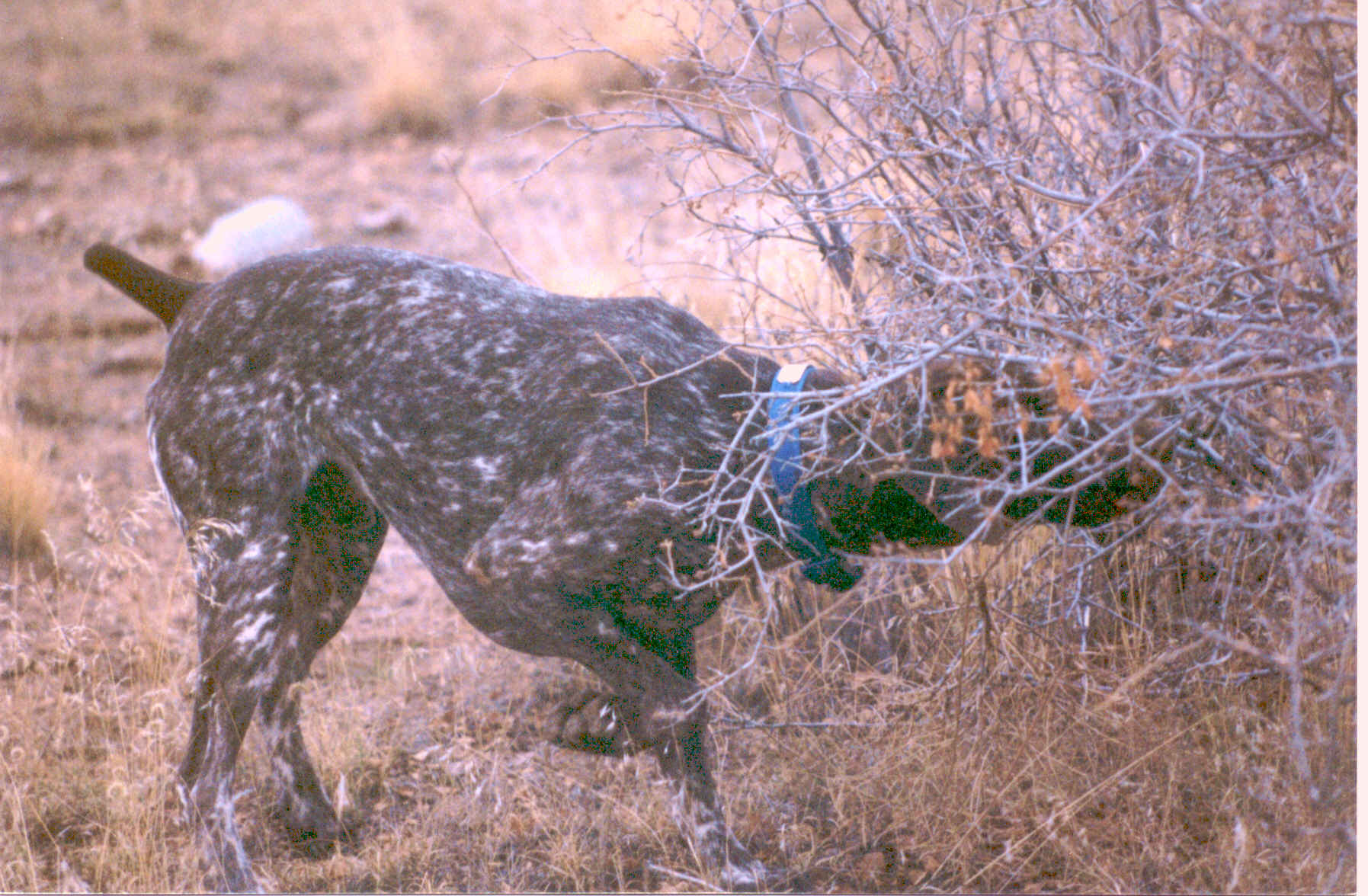
What those early breeders wound up with after almost fifty years of selective breeding was a versatile hunting dog designed to give excellent performance on land as a pointing dog for feathered game, as well as a tracking dog for big game and a gamekeeper's dog able to kill vermin such as foxes and badgers. It was also designed to be an outstanding retriever on land and in water, as evidence of which it is one of the few pointing breeds to have webbed feet for swimming, like a retriever. Finally, it was designed carefully with a calm temperament that would make it a good, loving family dog but still keep the courage to be a good watchdog and gamekeeper's dog.
As word spread of the remarkable qualities of these dogs, interest in them spread to the United States. While it is certain that some German immigrants brought their German Shorthairs with them to the US at the end of the 19th century - credit for being what might be termed the father of the German Shorthair in the US is given to Dr. Charles Thornton of Missoula Montana. In 1925, Dr. Thornton, impressed with the versatile qualities of the dog, bought a pair of German Shorthairs from the outstanding Hohenbruck kennels in Austria. The bitch, Senta, was pregnant at the time. Unfortunately, the Sire was killed by a car the day of shipment. Senta had the first litter of German Shorthairs known to be born in the US - a bunch of yankee doodle dandies born on July 4, 1925. Dr. Thornton was so impressed with the performance of the dogs, which he used not only for upland hunting and waterfowl, but also as herding dogs and hounds with which to hunt Coyotes and other predators, that he imported some other dogs and began breeding them in the US.
In 1930, he and others formed the German Shorthair Pointer Club of America, and successfully lobbied the AKC for recognition of the breed as the German Shorthaired Pointer rather than just the German Shorthair that the AKC proposed. Seventy years later, many feel that this may have been a mistake. C. Bede Maxwell - the most respected English language historian of the breed wrote,"In arbitrarily dubbing the breed a Pointer, there is issued to the unthinking, the ignorant, a strong incentive to 'try monkeying around with English Pointer crosses'." Nevertheless, as word of the qualities of these dogs spread among hunters, others imported dogs and began breeding. Soon they spread to Nebraska, Wisconsin, Minnesota, Michigan, California and Washington.
These early dogs were sold primarily to hunters, and the pattern of expansion is interesting. From the earliest times they were popular with American hunters that hunted pheasant and grouse (both prairie and forest), as well as waterfowl. As they moved to the west coast, they became popular with those hunters that also pursued Western Quail and Chukar. To an extent, it can be said that their initial popularity tended to follow these game birds, and they spread throughout the West, Midwest, and mid-Atlantic.
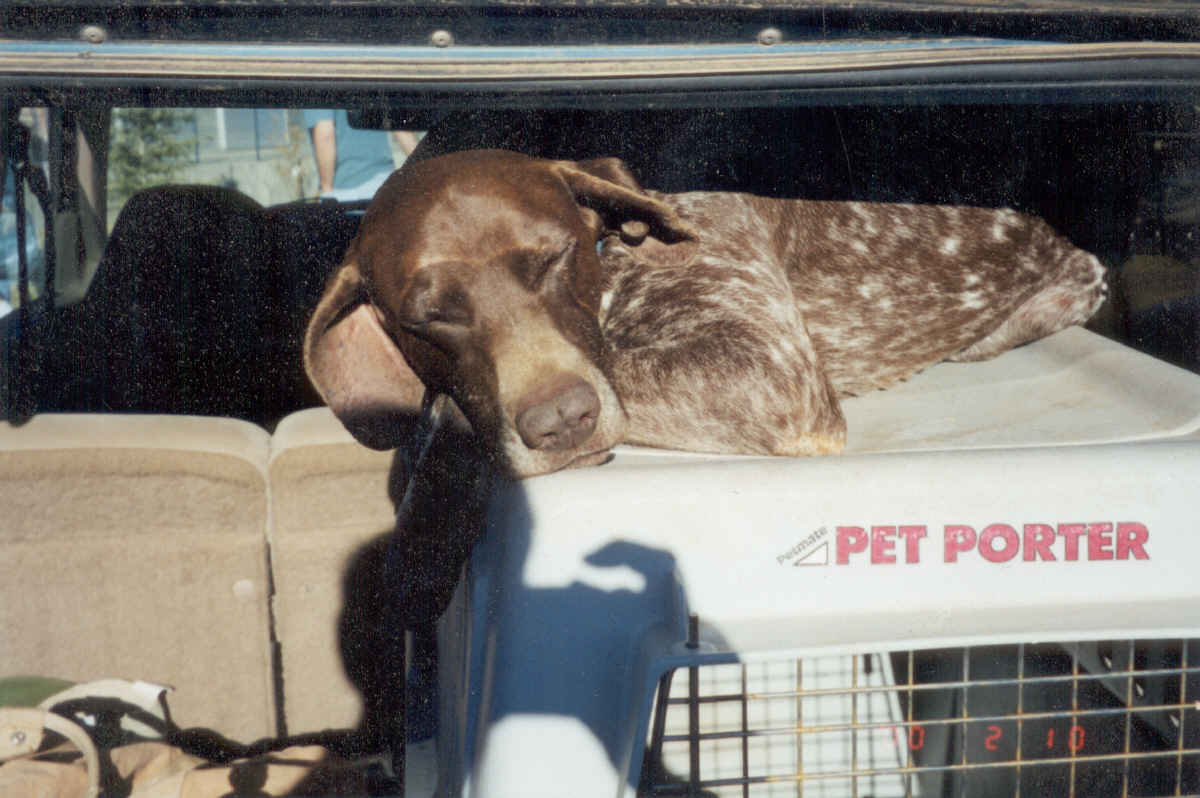
Well bred traditional Shorthairs generally possess strong natural instincts to point and retrieve that make them fairly easy to train. They also possess a remarkable scenting ability that is one of the characteristics for which the breed is valued. Because of this, their lively intelligence, and a forgiving temperament that makes them shrug off many trainers mistakes - they are widely recommended as a good dog for the beginning trainer. Their friendly and affectionate disposition also makes them good family dogs that require human affection and are better in the house than the kennel.
Over the last two decades, variation in the breed has increased noticeably, and to many hunters who have been with the breed for some time, alarmingly. In particular, the field triallers have been breeding German Shorthairs that look and work so much like English Pointers that they have widely been accused of crossbreeding. These big running field trial lines are bred to handle off of horseback, and generally lack the nose, biddability, calmness, and bird handling instincts that made the traditional shorthair so popular with hunters. There are also a few show lines bred without regard to hunting ability, and a great deal in between. What this means is that a hunter has to be careful to buy a dog from lines with qualities he values. The best way to do this is to watch the parents hunt, paying careful attention to temperament, range, and ability, and to check references from hunters that own pups from previous litters. Once you've found this litter, and picked your pup, you'll find out what so many US hunters have learned over the last seventy five years: the German Shorthair is an outstanding, versatile, hunting dog as well as a loving friend and companion.