by
David Gowdey
Copyright 2002 by David Gowdey all rights reserved
The first thing to recognize is that the animal shelters are filled with unwanted dogs - many of them pointing breeds. The world has no need for more litters of badly bred puppies. So unless you are willing to devote the time and effort necessary to breeding superior pups - you are better off not starting at all. Get the bitch spayed.
STARTING OUT
Every good litter and line starts with a good brood bitch. Most experienced breeders will tell you that the bitch is the most important part of the mix. In golf they say you drive for show but you putt for dough. In breeding the sire�s for show, the dam�s for dough. However, not every female makes a good brood bitch. The hallmark of a good breeder is the ability to make a ruthlessly realistic assessment of a bitch to determine whether she should be bred at all.
To do this requires some time. Only outstanding bitches should be bred. In this regard, pedigree is no substitute for performance. To know whether a bitch is outstanding takes at least two or three seasons in the field or on the trial grounds. Many bitches have come on during their first year like they were going to be in the hall of fame, only to backslide during their sophomore year and turn out to be mediocre at best. Waiting until your bitch is at least two before breeding gives you a chance to make a reasonable assessment of her strengths and weaknesses. These strengths and weaknesses are the expressed characteristics of her genes � the genes she will pass to her pups. If she passes the assessment, if she�s worth breeding, then the fun begins.
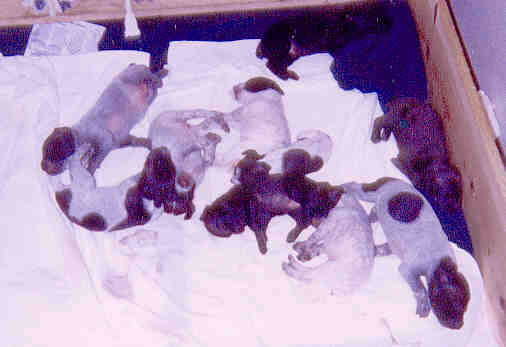
Genes are collections of molecules and other goodies that link together to form DNA, the building blocks of life. It is DNA lined up on chromosomes that organizes protoplasm and gunk into Playboy centerfolds or German Shorthairs (pretty amazing, huh!), and genes are the instructions on the DNA about what goes where and does what. There are a few things that are important for the novice breeder to know about genes.
- Genes are � the functional and physical unit of heredity passed from parent to offspring.�
- Genes are always found in pairs on chromosomes (VERY IMPORTANT).
- Genes are dominant or recessive. A dominant gene will always override its pair partner to express a characteristic, but a recessive gene must be paired with another recessive gene to express its characteristic.
- Genes are often linked �so the gene for black hair is always associated with the gene for a black nose in a purebred Labrador for example. Genes are also often interactive, working together in combination to produce expressed characteristics.
- A dog (or human) gets one half of its genes from its sire, and one half from its dam which are combined in the chromosomes of each new fetus. How these genes pair determines what characteristics the dog will have.
(Billy is at top left, Rosie in center)