 |
|
|
|
|
|
|
|
|
|
|
|
|
|
|
|
|
|
|
|
|
|
|
|
|
|
|
|
|
|
|
|
|
|
|
|
|
|
|
|
|
|
|
|
| Not long before I wrote this article for Anderson & Lembke's website in November 1996, I became acquainted with the work of Howard Gossage. Feel free to e-mail your reactions to me, at [email protected]. Or click here to return to my portfolio. |
|
|
|
CHANNELING GOSSAGE |
|
 |
|
|
We are not so far removed from Halloween that I can�t pull down the shades and rattle a few chains. So come, dear Reader, come close to the fire; steel yourself against that sudden shiver, that prickling flesh, those icy fingers lingering upon your spine. For I am about to tell you a ghost story. |
|
|
|
It is an advertising ghost story. |
|
|
|
The subject, as is usually the case, is a dead man�long dead, these past 27 years, and long forgotten by a business whose collective memory is but slightly longer than a mayfly�s. Yet this particular dead man still comes tapping, tapping at our chamber door, trying to get his message across from somewhere Out There. |
|
|
|
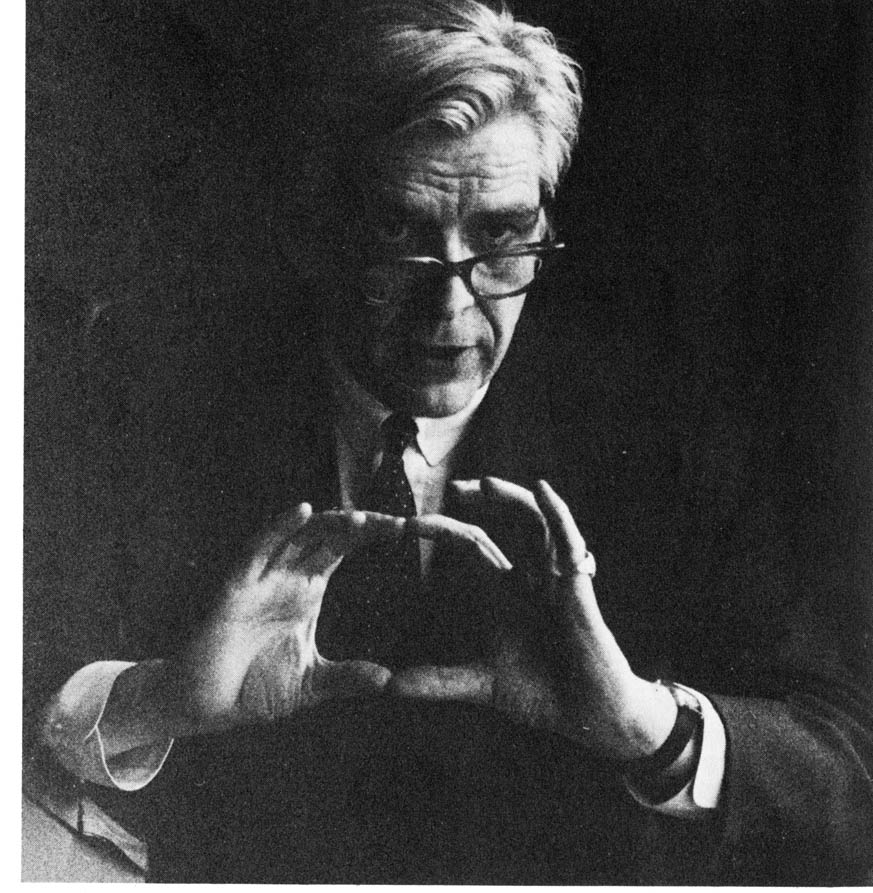
His name: Howard Luck Gossage. |
|
|
|
|
Nominally, Howard Gossage was a copywriter. A Hall of Fame copywriter, in those misty Hyperborean years when giants like Burnett and Bernbach walked the earth. He invented Beethoven sweatshirts and The Paper Airplane Book, brought Stan Freberg�s humor into advertising, wrote the most successful ad in the history of the New Yorker, and created ads with a hip irony 30 years ahead of his time. |
|
|
|
But more important, Gossage was the man David Ogilvy called �Advertising�s most articulate rebel.� |
|
|
|
For various reasons, I�ve been thinking about Gossage quite a lot lately. And if you�re in advertising, maybe you should too. |
|
|
|
Close your eyes and swallow |
|
|
|
This all started a couple of weeks ago, when I turned on the Six O�Clock News. Seventeen minutes into the broadcast I had been treated to: a) an expose of automotive rustproofing scams; b) a feature on electrolysis for removal of unwanted hair; and c) a smarmy preview of the hundredth episode of �Married With Children.� |
|
|
|
I was literally speechless. |
|
|
|
After three years living abroad, maybe I�m just far enough out of touch right now to react as a consumer first, cynical ad guy second. But for God�s sake, this was the news! And news means politics and crime and business, followed by weather and sports. The show wasn�t half over and we poor dumb demographs were being torpedoed by everything from Al Bundy to the pre-sell for �Space Jam.� |
|
|
|
I was still sputtering out demands for Rupert Murdoch�s deportation a couple of days later, when I saw a quote from Bill Brown of Mezzina/ Brown�they gave the world Joe Camel, by the way�in the November 13 edition of USA Today. He was opposing the Initiative on Tobacco Marketing to Children, a recently formed coalition of ad agencies that are against targeting cigarette ads at kids. |
|
|
|
�This has to do with commercial freedom of speech and the efforts by some to erode it,� Brown was quoted as saying. �I don�t see how anyone in the ad community can do that. |
|
|
|
Gossage speaks |
|
|
|
Well, I folded my indignation into a neat bundle and went to the bookshelf. There I aimlessly grabbed The Book of Gossage, a tribute by Gossage fans which I�d purchased last year. And then from the Other Side, a quote leaped out at me. |
|
|
|
�What good is freedom of the press if there isn�t one?� Gossage asked, railing against the death of a newspaper because its advertisers (not its readers) had decided it was unnecessary. |
|
|
|
I smiled at the coincidence and read on. And I kept reading, charmed by a man who never managed to reconcile his genius for making great ads with his distaste for the industry�s excesses. |
|
|
|
Hear him now: |
|
|
|
The real fact of the matter is that nobody reads ads. People read what interests them, and sometimes it�s an ad .... |
|
|
|
The buying of time or space is not the taking out of a hunting license on someone else�s private reserve but is the renting of a stage on which we may perform. Advertising is not a right, it is a privilege. Our first duty is not to the old sales curve, it is to the audience ... |
|
|
|
[A consumer is typically seen] as an anthropomorphic being designed to use whatever it is you have to sell�it will therefore be a grotesque on the order of the monsters of Hieronymous Bosch or Artzybasheff: all mouth or belly, but in these days of automatic drive, just one foot.* |
|
|
|
The copywriter as heretic |
|
|
|
Gossage, you see, spared no one. He blasted advertising groupthink about billboards�in the middle of a Rover ad. He challenged the highly profitable 15% agency commission with a tongue-in-cheek ad that was rejected by Advertising Age, announcing a new company that would place ads for anyone and rebate 10% to all clients. And�heresy of heresies!�he even blasted the industry�s public service campaign with Smokey the Bear. |
|
|
|
If you asked him why, he called it �a simple matter of kicking sleepingdogs awake.� He was always kicking the industry (not always under the table), reminding his peers that title to the airwaves and newspapers must alway revert back to the original owners: the public. |
|
|
|
Now, you might take umbrage at all this and ask, with some indignation, why didn�t he get the hell out of the business if he didn�t like it? |
|
|
|
A fair question. As near as I can figure, it�s because Gossage had a deep-down, naive belief that advertising could do a lot of good, if you just went about it right. After all, here�s a guy who spent his own money to introduce Marshall McLuhan to the American public. A guy who helped the Sierra Club prevent the flooding of the Grand Canyon with a single ad. A guy who defended the little Caribbean island of Anguilla from invasion by the British Navy, again with a single full-page newspaper ad. |
|
|
|
I think a lot of us in this business have the same hope, but not the same level of belief. Which may be why the money is so plentiful, but the public respect is so rare. |
|
|
|
Eventually, Gossage got out of advertising the hard way, dying of leukemia in July 1969. He left behind some of the most distinguished friends you can imagine�McLuhan, John Steinbeck, Tom Wolfe. And his obituary ran not just in Advertising Age, but in the Atlantic Monthly and Newsweek. |
|
|
|
Not bad for the co-owner of a 13-person shop with no big clients to speak of. |
|
|
|
Are you listening, Joe Camel? |
|
|
|
One reason I call this little column a ghost story is because it�s partially inspired by the ghosts of my own past. |
|
|
|
At 33, I�m old enough to remember a time when television stations began their programming day not with an infomercial, but with the First Amendment; a time when late nights and early mornings were filled with TV courses and community forums, not Thighmasters and psychic hotlines; a time when advertising, whatever Gossage�s misgivings, tried to pay its way with crying Indians and firefighting bears and messages about trying to love one another. Those messages stay with me to this day. |
|
|
|
But all that�s gone now. Caveat emptor. |
|
|
|
So when I think about Howard Gossage, the message that still resonates�27 years after his ashes were scattered across the San Francisco bay�is that our business would not be the least diminished if we were to take a harder look at what we do and what we say. All of us are responsible to the public for our work, both as advertising professionals and as fellow members of the audience. |
|
|
|
A haunting message? It ought to be. |
|
|
|
*All quotes in this article are taken from The Book of Gossage (Bruce Bendinger, ed., 1995), with the kind permission of The Copy Workshop, a division of Bruce Bendinger Creative Communications, Inc., 2144 N. Hudson, Chicago 60614. If you�d like to get a copy, call 312-871-1179, or fax 312-281-4643. |
|