

Sir Francis Galton, a cousin of evolutionist Charles Darwin, began to formulate ideas on eugenics during the 1860s and 1870s. In what would later be known as Galton's theory, he proposed that human societies get rid of their protection of the weak species and progress toward the real goal of extinction of these weak people. He did not come up with any selection methods, but merely hoped that society would understand the importance of breeding and take on the process. Galton helped develop a statistical approach that described hereditary traits. But, as Mendel's laws of heredity emerged, it isolated two groups of supporters: statisticians and biologists. Eugenics eventually became the practice of selectively reproducing children with desirable traits by influencing birth rates. These policies took two different forms: positive eugenics and negative eugenics. Positive eugenics meant increasing the reproduction of desirable offspring, while negative eugenics involved inhibiting reproduction of undesirable offspring.
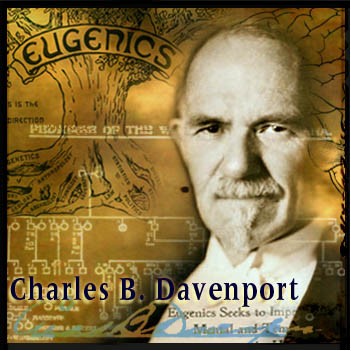
After Galton, many other prominent figures supported some form of eugenics during the early 1900s. Alexander Graham Bell took data from Martha's Vineyard, MA and concluded that the large rate of deafness was hereditary. Therefore, he pushed for a marriage prohibition for the deaf population because he was afraid that they would overpopulate. Even though eugenics is commonly associated with racism today, advocates like W.E.B DuBois once supported eugenics as a way to improve the lifestyle of the African American race. Perhaps the most common form of eugenics took place in Germany during the Holocaust. Hitler attempted to create a perfect "Aryan" race, and therefore went to all measures in order to exterminate all undesirable people. They sterilized many people, but furthermore, they ended up killing hundreds of thousands of these "unfit" subjects. They performed a method of positive eugenics, rewarding Aryan women for having multiple children. The United States also began to incorporate eugenics. In the late 1800s, multiple states passed marriage laws that prohibited those with undesirable traits from marrying. By 1910, the Eugenics Record Office had opened and Charles B. Davenport and Harry H. Laughlin had begun to promote it. These men did extensive research and concluded that these unfit people came from the impoverished areas. They began to think of ideas to rid the country of these species, and though their ideas are viewed as very erroneous now, these men's findings were very respected back then.
The passage of the Immigration Act of 1924, which reduced the number of abroad immigrants to 15 percent of what it had been, attempted to control the "inferior" population from eastern and southern Europe. This act also strengthened laws against race mixing in the United States. Another groundbreaking event occurred in 1927, when the Supreme Court ruled in Buck vs. Bell that Virginia had permission to sterilize anyone it deemed to be unfit. Between 1907 and 1963, over 64,000 people were sterilized under legislation in the US. These practices helped Germany to justify what they were doing in the Holocaust so much that during the Nuremburg trials, they used the United States eugenics practices as evidence.
Following their predecessors, nations such as Canada, Sweden, Australia, Norway, France, Finland, Denmark, and Switzerland all began incorporating some form of eugenics into their structure. The most common form used was sterilization. Many historians have debated the motives behind the United States restrictions on immigration during the 1920s. Many believe that it was out of eugenic interest that the US laid down these laws. But others argue that it was out of mere desire to preserve the cultural integrity of the nation. No one will know for sure what the true motives behind these laws were. Click to Continue