 View Page Stats View Page StatsSee who's visiting this page. |
|
 |
||||||
 |
 |
 |
 |
 |
||
 |
||||||
 |
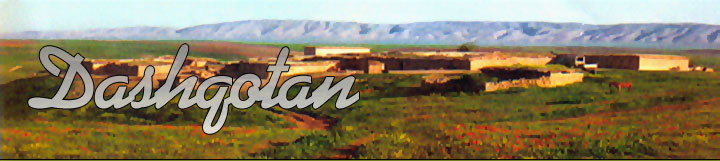
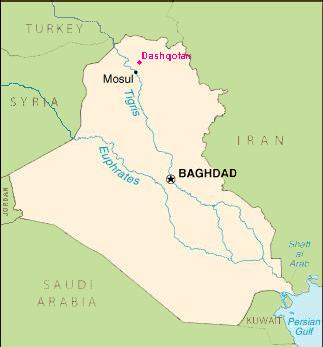
LOCATION Dashqotan is a small Assyrian village located in northern Iraq about 40 km north of Mosul and 15 km east of Alqosh. Dashqotan is centered between four other Assyrian villages Aenbaqre, Karanjok, Perozawa and Germawe.
POPULATION
LAND
AGRICULTURE HISTORYAccording to the local sources the Yzedes lived in Dashqotan for around fifty years leaded by the head of the village Phaqer Gendy. They left the village in 1955 because of disputes between the people and the landlord of the village Gabriel Aphende over land tax.In 1915 during World War II many Assyrians of Hakkari were forced to flee their villages by the Turkish army. They escaped to Iran and later in 1918 they returned back to Iraq and after spending couple of years in refugee camps of Bagoba and Manden they returned to Hakkari to rebuild their destroyed villages. However again they were forced by the Turkish army to flee their villages and since then they were never allowed to return back so they started a new life of nomads in Kurdistan (northern Iraq) moving from place to place searching for good pasture for their sheep. In 1956 those Assyrian families were looking for a place to settle in permanently and when they heard that the landlord of Dashqotan village Gabriel Aphende was looking for new tenants they went to see him to discuss the possibility of their settlement in Dashqotan. After agreeing for the settlement those families moved to live in Dashqotan and later many other families followed. Iraq became republic in 1958 and many land laws and tax systems changed and people of Dashqotan became the real owners of nearly 90% of the land. Number of families grew in 1959 and still Dashqotan had no running water, no electricity, no paved roads and no school. Children had to travel over one hour to reach primary school in near by Yezedes village of Jarraheia. After many meetings and discussions between all five Assyrian villages over where to build a primary school a decision was finally reached to build a primary school in Dashqotan because of its prime location in the centre of all the other four Assyrian villages. Kurdish/ Iraqi war broke out in 1961 and Dashqotan was affected because of its location close to the Kurdish controlled zone, many families went to Telkef and lived there for few years but they returned after declaring the area a safe zone. Primary school in Dashqotan was complete and officially opened in 1965 and students came to study from all other neighboring Assyrians villages. In 1968 hailstorm hit the area and Dashqotan village was the most effected. Hailstorm completely destroyed all farmer's crops, and killed many wild birds and animals, but no one was seriously injured. People stared to immigrate out of the village because of the Iraq/ Iran war situation which started September 1980 and ended 8 August 1988. Many village men were killed in action during the war. In 1986 around 80 people fled to Iran escaping the war and soon after other families fled to other neighboring counties and now most of them are living in Australia, Canada, USA and New Zealand. In 1989 electricity arrived in Dashqotan and people's life started to improve a little. Since 1990 the villagers are living under difficult circumstances because of the forced sanction on Iraq. Life is very difficult for them so many are fleeing the village. Currently there are about 80 people who are living in Dashqotan and still farming is their source of food and income. Some villagers have a second house in the town of Telkef to be close to hospitals and also to send their kids to high school.
|
 | ||||
 |
||||||
 |
|
|
|
|
|
|
