|
|
|
Reduce the supply of motivated offenders Protect and educate suitable targets
Limit opportunity
Anomaly awareness and subsequent detection and restriction of anomalies. Cited in A. Graycar and R. Smith (2002). |
Preventing commercial and corporate crime will rely on three principles. These are, reducing the supply of motivated offenders, protecting and educating suitable targets and limiting the opportunities for crimes to be carried out (Graycar & Smith, 2002). To further the methods of prevention includes an analysis of areas related to three
factors. These are behavioural, statistical and organizational anomalies (Graycar & Smith, 2002). Anomalies refer to bizarre out of the ordinary dimensions that would not usually occur. Technically they are related
|
The deterioration of superfical
charm. Cartoon
by M. Wiley (2002) Oct, 5th. |
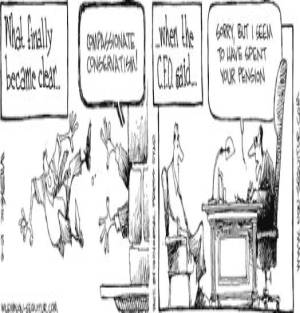
to how the operational components of a crime are deteriorated from best practice and realistic behaviour. For example and internal auditor may notice unusually large profits, abnormal growth, and unusually large expenses
in the company accounts or company individuals living beyond their means. Those things are generally considered extrodinary behavioural occorences. To identify anomalies allows for better investigation procedures and better construction of compliance programs to protect against crimes. This has led to better accountability of activities which may result in reduced company liability and more direct individualized liability were incidents can be labelled as isolated rather than holding a whole company liable (IOMA, 2002a).
Crime can be seen as a never-ending story and prevention must keep up to date with the evolution of Modus Operandi (MO). For example it may be necessary for auditors to lobby for segreagation of duties in a compliance program to make sure that off the books transactions such ash the ones at Enron can not easily be perpetrated. The MO of any offender is important to developing methods to prevent crime. For example a key method that is identified for white collar crime is that it occurs over a long period of time which is strongly related to high levels of complexity at the investigation level (O’Gara, cited in IOMA, 2002b). Being alert to mistakes that are made at the early stages of implementing a strategy for fraud is an important consideration to detecting breaches of compliance to corporate regulations, however authorization and segregation of responsibility may allow for mistakes to be noticed at the early stages of a planned fraud though that is covered later in this paper. A key factor of MO is that methods take time to evolve and develop.
|
Illustration: C. Bok, cited in Cayle
(2002). |
|
Varying degrees of modus operandi: the methods at Enron vary from the methods at Anderson. |

Methods take time to evolve and develop. Preventing offences will thus require asking; What capacity would be needed to make offences complete? And how is access to the opportunity to offend gained? These questions relate to personality assessment that may uncover motives for individuals gaining information through courses or libraries for the purpose of offending (Turvey, 1999). Secondly the identity of overly trusted individuals can be a warning sign for fraud. Gaining trust is the method of concealing intention. For example some individuals build trust beyond reproach, which is used as a method for facilitating fraudulent acts. In some instances it has been seen as the de-evolution of modus operandi such as superficial charm and “coercive persuasion”(Ajzen, 1992). Persuasion is defined as “communication designed to influence another’s cognition or overt behaviour in which the recipient has some measure of free choice” (Moghadam, p. 180, 1998). As mentioned before the operational variable that deteriorates often gives a clue to the identification of an offender. For example Ajzen (1992) defined a manipulative (aka aggressive) form of persuasion known as the coercive persuasion theory that simply states that individuals take orders based on a reward for compliance and a punishment for non-compliance. The element of coercion replaces free choice in the coercive persuasion theory. It can be seen that concealing intention will be difficult over time with personality assessments and compliance in place.
Reducing the supply of motivated offenders is a difficult task. Individuals
|
Paycuts
and Layoffs sometimes lead to less than desired consequences and
repercutions. M Wiley (2002) Oct, 4th. |
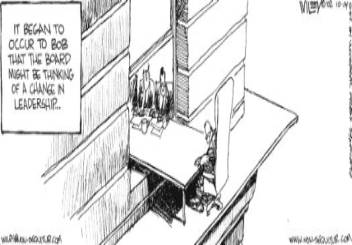
however offenders have been known to rationalize criminal acts against there own company as precautionary act of vengeance from fear of pay loss or job loss or as anger against increased workloads due to staff cuts(IOMA, 2001; IOMA, 2002c). Mostly however the direct motive is profit. There are many documented cases that say that offenders who are profit motivated posses certain personality traits that allows for fraud to be rationalized. One of these is the narcissistic personality type. This is an aspect of behavioural anomalies. There is evidence to suggest high levels of financial and resource responsibility. This idea can also be compared to similar precautions for employment with firearms etc.
|
Illustration:
Author not identified yet Development factors for white collar crime is a topic that needs research (ie development of the ?fledgling White Collar Criminal). However those individuals are most likely hidden and protected until after a Major White Collar crime has been committed. The research may need to consist of similar research as that done with “Successful Psychopaths”. (Ishikawa, Raine et al, 2001; Scully, 2002a) |
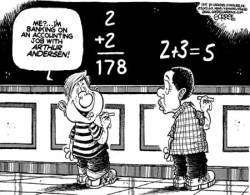
Due to the fact that white collar criminals tend to have higher levels of protective variables in adolescence (Lerner & Galambos, 1998; Mounts, 2001; Steinberg and Morris, 2001) they are less likely to be identified by the usual law enforcement agencies. White-collar criminals will thus be difficult to identify through risk assessment with the usual background checks, which they may well pass. Although not much is available on assessing the risk, there is some recent research that allows for associations to be checked.
Tracking individuals associations is knows as collusion detection (IOMA, 2002d). Collusion detection is done by a computer system that can link the names and addresses of people in positions of authority and responsibility to individuals with an identified grudge against a company or other known criminals or high risks such as competition from other companies (IOMA, 2002d). The basic principle is that conspiracies are very difficult to prove, and in the case of white-collar crime the evidence is very well concealed when an actual offence is committed. If the risk is detected early at the least, internal or external auditors can monitor dodgy individuals closely or the risk can be assessed as too great a risk to take and the possibility of fraud can be eliminated. This is important because prevention will demand detection as Auditors will be purposely excluded from shonky affairs (IOMA, 2002). Further more the state of the relationships with known offenders may reveal information that does not show up on official records.
The issue of background checks is important though the usual background checks may not reveal histories associated to white-collar crimes and fraud (IOMA, 2002e). This is related to the unique development of white collar criminal as opposed to the development of street criminals. The working party team and Blaintiff have suggested that investigating can include background checks on loans, mortgages (etc) (Working party team, 1992; Blaintif, 1993). To help detect deception it would be good that a submission from prospective employees or potential directors applying for licences (etc) provide a personal financial history that included any loans or debts and this may be cross referenced against intelligence gathered from public registers (etc) that discloses information about bad debts. Egger and Champion (1989) have stated that things such as smoking, and alcohol reduce fitness however bad debts also reduce fitness. As a risk and a combination of anomalies Debts may give an indication that individuals can not resist external pressure form aggressive or manipulating individuals or that they possess a disregard for the value of money or resources. Therefore a combination of personality assessments, lifestyle assessments as recorded in a physical fitness appraisal, plus collusion detection and background checks (both official records and other sources) have been shown to assess the hidden risks associated with individuals with an inclination to white collar crime. These strategies combined can reduce the likely-hood of fraud, however it is to be noted that methods inevitabley evolve.
Protecting individuals and companies from corporate and commercial crime is
extremely difficult although detection is becoming swifter and punishments are becoming more likely (Scully, 2002b). Further more as Preventitive methods(Scully, 2002b) improve
|
The CIA’ intervention on the Fledgling White Collar Criminals has already begun to prove its swift campaign against corporate corruption. Illustration:
M. Wiley (2002) Oct-12. |

so do the methods used by offenders. This is termed as the evolution of modus operandi (Turvey, 1999). Similarly in an information age e-commerce is becoming a prevalent from fraudulent activity. It is necessary for individuals to be aware of the dangers associated to e-commerce. Even when using a reputable licensed Internet company it is possible for hackers to access credit information etc. Law enforcement is frequently requested to develop methods to prevent and detect possible electronic crimes. The use of technology is an extremely prominent form of Modus Operandi and as such it is extremely important to maintain strong control factors of technology.
Limiting the opportunity to offend is similar to reducing the supply of motivated offenders. Buckhoff (2001) has stated that reducing opportunities can minimize fraud. Perhaps Buckhoff has said minimized, because there is a constant supply of motivated offenders and the evolving methods of offending will mean that not all fraud can be prevented. This would mean that prevention, detection and
|
The
IOMA has suggested that internal auditors need to be aware that they can be
kept out of touch on some transactions intentionally so they would need to be
looking for such occurrences (IOMA, 2002i). This is well demonstrated in the
Anderson document destruction Fiasco. |

Investigations have a separate roll that may or may not be possible to combine though all three are necessary functions. A combination of the three would be likely the best option as White Collar criminals have reputation to conceal there crimes.
Limiting opportunity has a focus on an effective system of controls (IOMA, 2002a; IOMA, 2002b; IOMA, 2001; IOMA, 2002f; Buckhoff). Controls must be difficult to manipulate. One example of how controls are lax is that companies have a handpicked board of directors that is chosen by the CEO. In the case of a CEO committing fraud there is often a behavioural anomalies known as “sycophant association” (Duffield and Grabowski, 2001). This is were a CEO surrounds himself with extremely loyal and easily persuaded individuals who may be easily persuaded and coerced into cooking the books or destroying documents even if they are aware of the risk involved. For example Robin Greenberg of the Western Women’s Group Pty, ltd (Brown, 1998) had manipulated her employees who were all believed to be in denial about the nature of Greenburgs acts (Scully, 2002c).
After the Enron Fiasco the American association of corporate directors conducted a survey on 2150 executive officers of companies with the intention of examining wether or not any of these companies were aware or involved in similar practices at there establishments (IOMA 2002h). One issue was wether or not company external auditors had independence form the company or not. Of those surveyed 47 % stated that accounting practices were to easily abused and need to be improved, yet only 17 % had risk control policies and practices in place. [Ioma 2002h]. Due to the fact that many companies are now using both internal and external auditors it has been suggested that internal auditors need to keep up with the more strict inquisitiveness of external auditors and other external investigation companies (IOMA, 2002i). This may be vital as it is apparent that an inside job can do extreme damage to the reputation of a company. For example both Enron and Anderson have lost investors and clients as the news about the fiasco was released to the public. (Ioma, 2002b). The corporate accountability and listing standards committee of the New York stock exchange have outlined some of the problems associated to the current hierarchy of company directors and auditing teams (IOMA, 2002j). A number of recommendations were made including, requiring that directors have no relation ship to the company at least 5 years prior to taking the roll of director (IOMA, 2002j). This may create a bi partisan and impartial relationship between the members of the board. The internal audit committee must also consist of characteristically similar individuals, though there should be a requirement that the individuals posses accounting and financial expertise (IOMA, 2002j). The audit committee under the direction of the CEO must implement a compliance program to prevent fraud and monitor risks. They must also ensure that compliance is met. These factors must also be reviewed annually [IOMA, 2002j]. Therefore and important aspect of preventing fraud is a continual review an upgrade of controls and compliance.
Compliance allows to show fraud or other crimes as isolated though Kaseno (cited in Ioma, 2002a) states that controls must be firm. Kaseno (cited in Ioma, 2002a) state's that controls should incorporate a healthy psychological environment that promotes a moral sense that will make standards more likely to be upheld.
|
|
|
The five steps to compliance. |
|
Obtain a board resolution authorising the development of the compliance program
Conduct a legal Audit review of applicable laws and regulations
Interview key employees to ascertain their understanding of existing policies and procedures
Perform a documents review
Report and Review the first four steps and make a final draft for distribution among the company
|
Kaseno has outlined a 5 step Process see chart. Buckhoff (2001) has clearly stated that many of the above named prevention strategies are essential to a compliance however he has also stated that paramount to the issue of compliance is the aspects of “proper authorization and segregation of duties”. This theory bears resemblance to the constitution and the separation of the executive arms of government. Implied in authorization and segregation is that separate departments handle only one consecutive function of each business transaction. One department can authorize payments and transactions once a consecutive number of departments have followed a course that allows for ordering, receiving or delivering of goods and services including stocks to be done separately. This would have the effect of disallowing any off the books transaction by one individual as to get authorization they would have to be known by separate departments who would be aware of the unethical standard that that would constitute. If a compliance program were in place then the individual's in the know would not continue, as that would be breaching compliance regulations. This idea has the ability to easily spot collusion or isolate any single individual attempting to defraud a company for personal gain at the expense of a whole company, investors and customers.
Ajzen, J., (1992) Persuasive communication theory in social psychology: A historical perspective. USA: University of Massachusetts. Available: http://www-unix.oit.umass.edu/~psyc661/pdf/persuasion.pdf
Blaintif, R. (1993) Conducting criminal
investigations of white-collar crimes. In Complete manual of white-collar crime
detection and prevention. Ch. 16. p, 455-457. New Jersey: Prentice Hall.
Brown, B. (1998) Scams and
Swindlers: Investment disasters and how to avoid them: True stories form the
ASIC. Australia: Australian print group.
Buckhoff, T., A., (2001) The CPA Industry:
Preventing Employee Fraud by minimizing opportunity. The CPA Journal (may), p.
64-65.
Duffied, G., and Grabowsky, P.,
(2001) Trends & Issues in Crime and Criminal
Justice: (number 199) The Psychology of Fraud. Canberra: Australian Institute of
Criminology Available: http://www.aic.gov.au/publications/tandi/tandi199.html
Egger, G., and Champion,
N., (1989) The fitness leader’s handbook. 3rd ed. NSW Kangaroo press.
Graycar, A., & Smith, R., (2002) AIC Identifying and responding to corporate fraud in the 21st century Australian Institute of Criminology: Canberra
Available: http://www.aic.gov.au/conferences/other/graycar_adam/2002-03-fraud.html
IOMA (2001) Case in point: Wining, dining & Celebrating on the company’s money. The Institute of Management and Administration: Report on Preventing Business Fraud. (Dec) p. 4-6. Available: http://www.newslettersonline.com/user/user.fas/s=219/fp=3/tp=35?T=open_non_issue,689,3&P=non_issue
IOMA (2002a) Take these steps to create a
compliance program with teeth. The Institute of Management and Administration:
Report on Preventing Business Fraud. (Jan) p. 6 & 8. Available: http://www.newslettersonline.com/user/user.fas/s=219/fp=3/tp=35?T=open_non_issue,689,3&P=non_issue
IOMA (2002b) Full
disclosure of internal controls helps to deter fraud. The Institute of
Management and Administration: Report on Preventing Business Fraud. (May) p.
11-14. Available: http://www.newslettersonline.com/user/user.fas/s=219/fp=3/tp=35?T=open_non_issue,689,3&P=non_issue
IOMA (2002c). How to
minimize the risk of Fraud during a layoff. The Institute of Management and
Administration: Report on Preventing Business Fraud. (Feb.) p. 10 – 13.
Available: http://www.newslettersonline.com/user/user.fas/s=219/fp=3/tp=35?T=open_non_issue,689,3&P=non_issue
IOMA (2002d). Using collusion
detection to spot employee fraud The Institute of Management and
Administration: Report on Preventing Business Fraud. (Apr) p. 2 –3.
Available: http://www.newslettersonline.com/user/user.fas/s=219/fp=3/tp=35?T=open_non_issue,689,3&P=non_issue
IOMA (2002e). Are you
still making these errors in your background checks? The Institute of
Management and Administration: Report on Preventing Business Fraud. (Mar) p.
6-8 Available: http://www.newslettersonline.com/user/user.fas/s=219/fp=3/tp=35?T=open_non_issue,689,3&P=non_issue
IOMA (2002f). Special
Report on the Enron Meltdown. The Institute of Management and Administration:
Report on Preventing Business Fraud. (April) section 3. Available: http://www.newslettersonline.com/user/user.fas/s=219/fp=3/tp=35?T=open_non_issue,689,3&P=non_issue
IOMA (2002g). When
internal Audits is the last to know about a CIA. The Institute of Management
and Administration: Report on Preventing Business Fraud. (Feb.) p.13 Available:
http://www.newslettersonline.com/user/user.fas/s=219/fp=3/tp=35?T=open_non_issue,689,3&P=non_issue
IOMA (2002h). After
Enron: a new study looks at the next steps. The Institute of Management and
Administration: Report on Preventing Business Fraud. (Mar) Available: http://www.newslettersonline.com/user/user.fas/s=219/fp=3/tp=35?T=open_non_issue,689,3&P=non_issue
IOMA (2002i). New fraud
standard to expand guidance for external Auditors. The Institute of Management
and Administration: Report on Preventing Business Fraud. (Apr) p. 3 Available: http://www.newslettersonline.com/user/user.fas/s=219/fp=3/tp=35?T=open_non_issue,689,3&P=non_issue
IOMA (2002j). NYSE says
listed companies need internal auditing The Institute of Management and
Administration: Report on Preventing Business Fraud. (Jul) p. 6,8 & 10.
Available: http://www.newslettersonline.com/user/user.fas/s=219/fp=3/tp=35?T=open_non_issue,689,3&P=non_issue
IOMA (2002k). The
Institute of Management and Administration: Report on Preventing Business
Fraud. () p. Available: http://www.newslettersonline.com/user/user.fas/s=219/fp=3/tp=35?T=open_non_issue,689,3&P=non_issue
Ishikawa, S.S., Raine, A., Lencz, T. Bihrle, S., & Lacasse, L. Autonomic stress reactivity and executive functions in successful and unsuccessful criminal psychopaths from the community. Journal or abnormal psychology v 110, 3. p 423-432.
Lerner, R. M, & Galambos, N. L. (1998) Adolescent development: challenges and opportunities for research, programs, and polices. Annual Review of Psychology 49-1, p. 413-447
Moghadamm,
F., B,. (1998) Social Psychology: Exploring universals across cultures. NY: WH
Freeman and Co
Mounts,
N. S., (2001): Young adolescents perceptions of parental management of peer
relationships Journal
of Early Adolescence, Journal of early adolescence 21, 1, p. 92-122
Scully, D. (2002a) Stalking Fastow. Unpublished
University Paper Edith Cowan University- Commercial and Organized Crime.
Available http://www.geocities.com/darragh_scully/my_fraud_investigation.html
Scully, D. (2002b) Some concepts of the Psychopath. Unpublished University paper. Edith Cowan University. Criminal Behavior available: http://www.geocities.com/darragh_scully/some_concepts_of_psychopathy.html
Scully, D.,(2002c) White collar crime: a new
era in theory. Unpublished University Paper- Edith Cowan University- Commercial
and White collar crime Available: http://www.geocities.com/darragh_scully/corrections/white_collar_crime/white_collar_and_commercial_crime_a_new_era_in_theory.htm
Steinberg, L., Sheffield Morris, A., (2001): Adolescent development. Annual Review of Psychology 52, 83-110
Turvey, B. (1999) Criminal profiling and introduction to behavioural evidence analysis: Understanding Modus Operandi. Ch 13 p. 151-158 California: Academic Press.
Working party
team (1992). Streamlining the investigation and preparation of briefs of
evidence in complex white-collar crime cases. Paper presented at the national
complex white-collar crime conference. (p. 10-35).