Jewish and Ethnocratic: Discussion at the National Israeli Council for Planning Construction
Dar ElHanoun Committee, 14 July 2008, Haokets PRINT VERSION
When it comes to racism and discrimination against the Arab citizens of Israel, dispossession mechanisms manage at times to break their own records. In February the Israeli government decided to approve the the military outpost Mitzpe Ilan (in its previous name – Mitzpe Iron) as a new locality in Wadi Ara, Israel. This decision managed to do the impossible: an area that had supposedly been kept for preservation because of its unique “scenic qualities”, suddenly became suitable for a Jewish locality. The Jewish residents came there only in 2005, illegally but using governmental support. This is while the nearby Arab village of Dar ElHanoun, whose residents are all Israeli citizens and whose houses predate the State of Israel, remained in the status of “unrecognized”. The Israeli ministry of Internal Affairs has so far refused to recognize the old village and provide it with elementary facilities. According to the ministry, such recognition may harm – how surprising – the unique “scenic qualities” of the area. It turns out that according to the aesthetic values of the Israeli ministry officials, the beauty of the landscape is not only determined by the eyes of the viewer, but also by the ethnic origin of the people who reside in it.
Last month, the Israeli National Council for Planning Construction followed the government decision to recognize Mitzpe Ilan as a new Jewish locality in Wadi Ara. The speakers at the council meeting confirmed all the claims we made here in February against the government decision. According to the officials of the Ministry of Internal Affairs, it becomes clear that they had well known that Dar ElHanoun predates the planning construction law of 1965 that failed to recognize the Arab village. At the same time, the representative of the Israeli Ministry of Justice proclaimed that the help given to Mitzpe Ilan by governmental offices had been an illegal procedure, and against the opinion of legal authorities within the Israeli government. The head of the planning authority added to those claims, and asserted that the Israeli government had also persistently ignored all the environmental arguments and planning considerations that were made against Mitzpe Ilan. This does not prevent the Ministry of Internal Affairs from using the same arguments against recognizing Dar ElHanoun. By doing so, the ministry imposes irrelevant considerations on the National Council for Planning Construction.
The discussion in the national council should have only concerned the recognition of Mitzpe Ilan. Representatives of Dar ElHanoun were not invited to the discussion and the problem of the Arab village was not on the official agenda. However, it seems that the council representatives could not avoid feeling some sense of inconvenience. They repeatedly came back to the question of Dar ElHanoun’s lack of recognition (cf. “the voice of your brother’s blood is crying to me from the ground”, Genesis 4:10). All attempts of senior officials from the ministry of internal affairs to make false accusations against the residents of Dar ElHanoun and their supporters only showed the depths of racism with which Arab citizens of Israel have to cope.
For those who are interested in the discriminatory mechanisms of the planning authorities in Israel, we add selected extracts from the discussion in the national council, together with annotations by the Dar ElHanoun committee. The whole discussion (in Hebrew) can be found at the committee site.
Extracts from the discussion at the Israeli National Council for Planning Construction, 3 June 2008, with annotations by the Committee for Dar ElHanoun
Mr. Yigal Shahar, responsible for the Haifa district in the Ministry of Internal Affairs:
“I wouldn’t suggest anyone to bring Dar ElHanoun as an example. It is not an example, it is misguidance. We have examined aerial photographs regarding Dar ElHanoun’s claims (for existence of) 80 and 100 years: isra-bluff. The first houses, booths, huts, that we recognize in Dar ElHanoun are from after the 1950s. So stop it, this is demagogy. So put Dar ElHanoun aside. It is a collection of houses, never recognized […] There is a group of people that is, somebody is leading it, somebody is sponsoring it, somebody is. Leave it, not here at least, not in this committee.”
Response of the Committee for Dar ElHanoun:
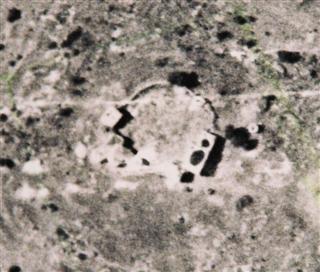
Mr. Shahar knows well that stone house had existed in Dar ElHanoun long before the Israeli rule of planning construction was enacted in 1965. One of the aerial photographs to which Mr. Shahar refers appears in the Dar ElHanoun website, and shows the falsity of his claims:
http://geocities.com/dar_elhanoun/DarElHanoun1956.jpg
The nicknames “booths” and “huts” that Shahar attributes to old stone houses in a traditional style are meant to support the eviction process planned by the ministry of internal affairs. The houses in Dar ElHanoun have never been recognized only because the planning law from 1965 ignored them. From the complaint of Mr. Shahar that the residents of Dar ElHanoun (to whom Shahar refers as “a group of people”) are organized and determined to stay on their land, one can only infer about the status that Shahar considers appropriate for Arab citizens of Israel – helpless subjects unaware of their rights. The only value of these claims is that they point to the racist origins of the discrimination against Dar ElHanoun.
Representatives of green organizations:
The representative of the Society for the Protection of Nature in Israel, Mr. Nir Papai, referred to the statement of the Attorney General of Israel according to which Mitzpe Ilan was illegally inhabited, and without proper planning procedures. He demanded to know how the national council could approve Mitzpe Ilan whose Jewish residents moved to it only two years ago, whereas the same council refused to recognize Dar ElHanoun, which has been inhabited by its Arab residents for decades. Mr. Papai claimed that Dar ElHanoun was not recognized because of the importance of the “open area” in which it is located, where Mitzpe Ilan also resides. Mr. Papai expressed his concern that recognizing Dar ElHanoun may promote the recognition of Dar ElHanoun, while his preferred option is declaring the whole area as a nature reserve.
Ms. Iris Hann, representative of the roof organization for the green bodies in Israel, repeated similar claims to those of Mr. Papai’s: :If we approve Mitzpe Iron we would in retrospect need to give very hard answers. I do not see where they are, why we discriminated between the two cases, this is the way I see things, why in one place we rejected and here we do not”.
Response of the Committee for Dar ElHanoun:
The comparison between Dar ElHanoun and Mitzpe Ilan only comes to show the blatant discrimination between the two localities. We wonder about the attempt of the green organizations’ representatives to create an imaginary “equality” between an old Arab locality existing before the State of Israel, and a new Jewish locality that was illegally constructed. We call upon all green organizations, who are struggling for preserving the nature for the benefit of the citizens of Israel, to demand unequivocally that Dar ElHanoun be recognized, as part of an advanced conception of preserving the environment for mankind. We expect the green organizations to oppose the state’s attempts to evict an old village.
Mr. Erez Kamenich, Ministry of Justice representative:
Mr. Kamenich confirmed Mr. Papai’s claims, according to which Mitzpe Ilan was illegally populated. Mr. Kamenich claimed that “those things were said in real time, and yet it was decided to inhabit the military outpost by citizens”.
Response of the Committee for Dar ElHanoun:
The Committee for Dar ElHanoun condemns the decision of the council to approve Mitzpe Ilan despite the announcement of the Ministry of Justice representative that the outpost was inhabited illegally. On the one hand, the state of Israel refuses to recognize an old Arab village, turns innocent citizens into “construction criminals”, and then relies on this alleged “illegality” in order to persecute the Arab residents. On the other hand, the state takes proclaimed illegal measure in order to inhabit a Jewish locality, only 3 Km. away from Dar ElHanoun.
Architect Shamai Assif, head of the planning authority:
“We have here on the scales, on the one hand an existing situation of residents [in Mitzpe Ilan] who arrived there guided, let us say, supported by the state, guided by the state, with state investment of labor, etc. With investment of state funds. And this has been done clearly and consciously and now we are in a situation that is an existing situation, we cannot ignore it. That is, if we had to approve a settlement in this place without those opening conditions, I estimate that we would not have approved this locality in this place. And there are enough reasons, and I could give them from now until further announcement”.
Response of the Committee for Dar ElHanoun:
Mr. Assif fully admits that Mitzpe Ilan was populated in disagreement with proper planning considerations, with full support of the state of Israel. While Mr. Shahar complains about the “funding” received by Dar ElHanoun residents, and refers to small donations from private individuals – peace seeking people from Israel and abroad who support the struggle of the village – Mr. Assif points out the massive funding that Mitzpe Ilan has received from national funds of the state of Israel, against the law (as said by Kamenich) and basic planning principles (as said by Assif).
Mr. Arie Bar, director general, ministry of interior expressed equivocal statements regarding the importance of democracy, together with the need “not to lose the country”. Mr. Bar did not fail to mention the importance he attributes to the independence of the national council, while stressing the right of the government to push forward planning procedures against the opinion of the council: “I am not of those who say that the national council should be a rubberstamp of government decisions. But I am of those who say… that the government is the ruling authority. […] There is a government and it has the right to make decisions. It does not need an authorization from anybody of those who are sitting here. The planning issue is a subjective matter, not an objective one.”
“Those who don’t see that should have a look on the map. It is not for nothing that there are [voices] heard that want autonomy in Wadi Ara. […] This area, we live in the state of Israel, it has Jewish population, which is the majority, as well as the Arab population. There should be equal opportunity to all. But at the same time, it is not allowed to lose this country.”
Response of the Committee for Dar ElHanoun:
The committee for Dar ElHanoun considers these remarks by Mr. Bar to reveal a clearly discriminatory and racist outlook. From Mr. Bar’s statements it clearly follows that the aim of the government is to strengthen Jewish settlements on the expense of the Arab citizens of Israel. Mr. Bar openly admits that according to his view, the planning authorities should first of all serve the Jewish population in Israel, and not the Israeli citizens as a whole.
Mr. Arie Bar also referred directly to Dar ElHanoun:
“There have been hundreds of family who passed through Dar ElHanoun. It was like a transit station: people arrive, receive compensation from the Israel Land Administration, and move to one of the Arab localities. But there has always remained a nucleus in order to preserve the transit. This is not the place. In Dar ElHanoun, there are here people from the [Land] Administration and they can tell you how much money they gave in order for people to move, and they moved.”
Response of the Dar ElHanoun Committee:
Mr. Bar’s statement is an outright lie. The residents of Dar ElHanoun have been living there since childbirth or since their marriage to a resident of the village. The residents are determined to stay on their land despite endless persecutions by the ministry of internal affair’s officials, and they will also endure the wild false accusations of Mr. Bar.
The whole discussion is available online (in Hebrew):
http://geocities.com/dar_elhanoun/MI-artsit-minutes-3.6.08.pdf
http://www.geocities.com/dar_elhanoun