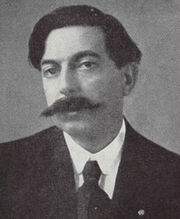
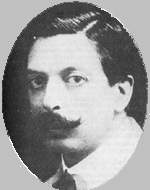
Composers : Enrique Granados |
||||||
|
||||||
| No. | Song Name | No.of pages | Transcription by | MIDI |
| 1 | Danza Espanola No02 Oriental (Solo Guitar) | 4 | ||
| 2 | Danza Espanola No02 Oriental (Two Guitars) | 5 | Pujol | |
| 3 | Danza Espanola No04 Villanesca | 4 | ||
| 4 | Danza Espanola No10 Danza Triste | 8 | ||
| 5 | Danza Espanola Op37 No5 Andaluza (Playera) | 6 | Jean Francois Delcamp | |
| 6 | Dedicatoria | 1 | Dirk Meineke | |
| 7 | Internezzo from the opera Goyescas | 5 | Jose de Azpiazu | |
| 8 | La Maja De Goya | 4 | Miguel Llobet | |
| 9 | La Maja De Goya | 3 | Eythor Thorlaksson | |
| 10 | Spanish Dance No2 Oriental | 3 | Stanley Yates | |
| 11 | Spanish Dance No5 | 4 | Eythor Thorlaksson | |
| 12 | Valses Poeticos | 6 | Robert Brightmore |
Enrique Costanzo Granados y Campiña (July 27, 1867 – March 24, 1916) was a Catalan pianist and composer of classical music; he is commonly considered to be a representative of musical Nationalism, and as such his music is in a uniquely Spanish style. He was also a talented painter in the style of Goya.
He was born in Lleida (in Castillian Lérida), Catalonia (Spain). As a young man he studied piano in Barcelona, where his teachers included Francisco Jurnet and Joan Baptista Pujol. In 1887 he went to Paris to study, returning to Barcelona in 1889. His first successes were at the end of the 1890s, with the zarzuela Maria del Carmen, which earned the attention of King Alfonso XIII.
In 1911 Granados premiered his suite for piano Goyescas, which became his most famous work. It is a set of six pieces based on paintings of Goya. Such was the success of this work that he was encouraged to expand it; he wrote an opera based on the subject in 1914, but unfortunately the outbreak of World War I forced the European premiere to be canceled: it was performed for the first time instead in New York City on January 26, 1916, and was a huge success for the composer. Shortly afterward he was invited to perform a piano recital for President Wilson.
Unfortunately the delay incurred by accepting the recital invitation caused him to miss his boat back to Spain. Instead, he took a ship to England, where he boarded the Sussex for Dieppe, France. On the way across the English Channel, the Sussex was torpedoed by a German submarine, as part of the German unrestricted submarine warfare policy during World War I. In a failed attempt to save his wife Amparo, whom he saw flailing in the water some distance away, Granados jumped out of his lifeboat, and drowned. Ironically, he had a morbid fear of water for his entire life, and he was returning from his first-ever series of ocean voyages at the time of his death.
Granados wrote piano music, chamber music (a piano quintet, music for violin and piano), songs, zarzuelas, and an orchestral tone poem based on Dante's Divine Comedy. Many of his piano compositions have been transcribed for the classical guitar and are generally considered as some of the most beautiful music in the guitar repertoire: examples include Dedicatoria, Danza No. 5.
Granados was an important influence on at least two other important Spanish composers and musicians, Manuel de Falla and Pablo Casals.