Composers : Domenico Cimarosa
|
|
|
|
A B C D
E F G H
I J K L
M N O P
Q R S T
U V W X
Y Z
|
No. |
Song Name |
No.of pages |
Transcription by |
MIDI |
|
1 |
Sonata |
2 |
Dirk Meineke |
|
|
2 |
Sonata I |
2 |
Julian Bream |
|
|
3 |
Sonata II |
3 |
Julian Bream |
|
|
4 |
Sonata III |
2 |
Julian Bream |
|
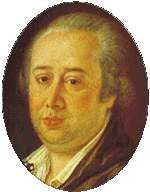
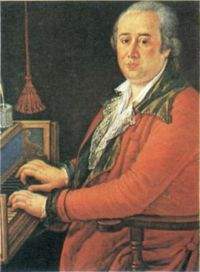
Domenico Cimarosa (17
December 1749, Aversa
– 11
January 1801, Venice)
was an Italian opera
composer.
Early life and education
His parents were poor, but anxious to give their son a good education. After
moving to Naples, they sent him to a free school connected with one of the
monasteries in that city. The organist of the monastery, Padre
Polcano, was struck by the boy's intellect, and voluntarily instructed him
in the elements of music, and also in the ancient and modern literature of his
country. Because of his influence, Cimarosa obtained a scholarship at the
musical institute of Santa
Maria di Loreto in Naples, where he remained for eleven years, chiefly
studying the great masters of the old Italian school. Niccoló
Piccinni, Antonio
Maria Gaspare Sacchini, and other musicians of repute are mentioned among
his teachers.
Early career
At the age of twenty-three, Cimarosa began his career as a composer with an opera
buffa called Le stravaganze del conte, first performed at the Teatro
del Fiorentini at Naples
in 1772. The work met with approval, and was followed in the same year by Le
pazzie di Stelladaura e di Zoroastro, a farce
full of humour and eccentricity. This work was also successful, and the fame of
the young composer began to spread all over Italy. In 1774 he was invited to Rome
to write an opera for the stagione of that year; and there he produced
another comic opera called L'italiana in Londra.
Mid-life
Over the next thirteen years, Cimarosa wrote a number of operas for the
various theatres of Italy, living temporarily in Rome, in Naples, or wherever
else his vocation as a conductor of his works happened to take him. From 1784 to
1787 he lived in Florence,
writing exclusively for the theatre of that city. The productions of this period
of his life are very numerous, consisting of operas, both comic and serious, cantatas,
and various sacred compositions. The following works may be mentioned, among
many others: Cajo Mario; the three Biblical
operas, Assalone, La giuditta and Il sacrificio d'Abramo;
also Il convito di pietra; and La ballerina amante, a comic
opera first performed at Venice
with enormous success.
Around 1788, Cimarosa went to St.
Petersburg by invitation of Empress Catherine
II. He remained at her court for four years and wrote an enormous number of
compositions, mostly of the nature of pièces d'occasion. Of most of
these not even the names are on record. In 1792 Cimarosa left St. Petersburg,
and went to Vienna
at the invitation of Emperor Leopold
II. Here he produced his masterpiece, Il
matrimonio segreto, which ranks among the highest achievements of light
operatic music. In 1793 Cimarosa returned to Naples, where Il matrimonio
segreto and other works were received with great acclaim. Among the works
belonging to his last stay in Naples may be mentioned the charming opera Le
astuzie femminili.
This period of his life is said to have been embittered by the intrigues of
envious and hostile persons, among whom figured his old rival Giovanni
Paisiello. During the occupation of Naples by the troops of the French
Republic, Cimarosa joined the liberal party, and on the return of the Bourbons,
was, like many of his political friends, condemned to death. By the intercession
of influential admirers his sentence was commuted to banishment, and he left
Naples with the intention of returning to St. Petersburg. But his health was
broken, and after much suffering he died in Venice on 11
January 1801,
of inflammation of the intestines.
The nature of his disease led to the rumor of his having been poisoned by his
enemies, which, however, a formal inquest
proved to be unfounded. He worked till the last moment of his life, and one of
his operas, Artemizia, remained unfinished at his death.
Main works
- Le stravaganze del conte (carnival 1772 Naples Teatro San Giovanni
dei Fiorentini) [Le magie di Merlina e Zoroastro; Le pazzie di Stelladaura e
Zoroastro]
- La finta parigina (carnival 1773 Naples Teatro Nuovo)
- I sdegni per amore (1.1776 Naples Teatro Nuovo)
- I matrimoni in ballo (carnival 1776 Naples Teatro Nuovo)
- La frascatana nobile (winter 1776 Naples Teatro Nuovo) [La finta
frascatana]
- I tre amanti (carnival 1777 Rome Teatro Della alla Valle) [Le gare
degl'amanti]
- Il fanatico per gli antiche Romani (spring 1777 Naples Teatro San
Giovanni dei Fiorentini)
- L'Armida immaginaria (summer 1777 Naples Teatro (San Giovanni) dei
Fiorentini)
- Gli amanti comici, o sia La famiglia in scompiglio (1778? ?Naples
Teatro (San Giovanni) dei Fiorentini; carnival 1796 Crema) [Il matrimonio in
commedia; La famiglia stravagante, ovvero Gli amanti comici]
- Il ritorno di Don Calandrino (carnival 1778 Rome Teatro Della alla
Valle) [Armidoro e Laurina]
- Le stravaganze d'amore (1778 Naples Teatro San Giovanni dei
Fiorentini)
- Il matrimonio per industria (1778? Naples?) [?]
- La contessina (summer 1778 Bologna) [?] [+ G. Astaritta, F.L.
Gassmann]
- Il matrimonio per raggiro (1778/9? Rome?; carnival 1802 Rome Teatro
Della alla Valle) [La donna bizzarra]
- L'italiana in Londra (carnival 1779 Rome Teatro Della alla Valle)
[La virtù premiata]
- L'infedeltà fedele (summer 1779 Naples Teatro del Fondo)
- Le donne rivali (carnival 1780 Rome Teatro Della alla Valle) [et
al.]
- Cajo Mario (carnival 1780 Teatro delle Dame)
- I finti nobili (carnival 1780 Naples Teatro San Giovanni dei
Fiorentini)
- Il falegname (1780 Naples F) [L'artista]
- L'avviso ai maritati (1780? ?Naples Teatro San Giovann) dei
Fiorentini) [?]
- Il capriccio drammatico (1781? Turin?; 1794 London)
- Il pittor parigino (carnival 1781 Rome Teatro Della alla Valle) [Le
brame deluse]
- Alessandro nell'Indie (carnival 1781 Rome A)
- L'amante combattuto dalle donne di Punto (1781 Naples Teatro San
Giovanni dei Fiorentini) [La biondolina; La giardiniera fortunata]
- Giunio Bruto (aut.1781 Verona)
- Giannina e Bernardone (aut.1781 Venice SS) [Il villano geloso]
- Il convito (carnival 1782 Venice SS) [Der Schmaus]
- L'amor costante (carnival 1782 Rome Teatro Della alla Valle) [Giulietta
ed Armidoro]
- L'eroe cinese (13.8.1782 Naples SC)
- La ballerina amante (1782 Naples Teatro San Giovanni dei Fiorentini)
[L'amante ridicolo]
- La Circe (carnival 1783 Milan S)
- I due baroni di Rocca Azzurra (carnival 1783 Rome Teatro Della alla
Valle) [Dve nevesty; I due baroni; La sposa in contrasto; Il barone deluso]
- La villana riconosciuta (1783 Naples Teatro del Fondo) [La
villanella rapita]
- Oreste (13.8.1783 Naples SC)
- Chi dell'altrui si veste presto si spoglia (1783 Naples F) [Nina e
Martuffo]
- Il vecchio burlato (1783 Venice) [?]
- I matrimoni impensati (carnival 1784 Rome Teatro Della alla Valle)
[La bella greca]
- L'apparenza inganna, o sia La villeggiatura (spring 1784 Naples F)
- La vanità delusa (spring 1784 Florence P) [Il mercato di
Malmantile]
- L'Olimpiade (10.7.1784 Vicenza)
- I due supposti conti, ossia Lo sposo senza moglie (aut.1784 Milan
S) [Lo sposo ridicolo]
- Artaserse (26.12.1784 Turin TR)
- Il barone burlato (1784 Naples Teatro Nuovo) [rev. Il pittor
parigino] [+ F. Cipolla]
- Li finti conti (spring 1785 Turin, Gallo-Ughetti) [?]
- I fratelli papamosche (spring 1785 Turin, Gallo-Ughetti) [?]
- Le statue parlante (1785 Correggio) [?]
- Il marito disperato (1785 Naples F) [Il marito geloso; Die
bestrafte Eifersucht]
- La donna sempre al suo peggior s'appiglia (1785 Naples Teatro Nuovo)
- Il credulo (carnival 1786 Naples Teatro Nuovo) [La baronessa
stramba; Il credulo deluso]
- Le trame deluse (1786 Naples Teatro Nuovo) [L'amor contrastato; Li
raggiri scoperti]
- L'impresario in angustie (1786 Naples Teatro Nuovo) [Die
theatralischen Abenteuer]
- La baronessa stramba (1786 Naples Teatro Nuovo) [rev. I matrimoni
in ballo] [Il credulo]
- Gli amanti alla prova (1786 Naples) [?]
- L'impostore punito (1786/7 Turin C) [?]
- Volodimiro (carnival 1787 Turin TR)
- Il fanatico burlato (1787 Naples Teatro del Fondo) [La burla felice;
Der adelsüchtige Bürger]
- La felicità inaspettata (3.1788 St Petersburg E)
- La vergine del sole (1788? ?St Petersburg E; 6.11.1789 St
Petersburg BK)
- La scuffiara (1788) [?]
- La Cleopatra (8.10.1789 St Petersburg E) [Cleopatra e Marc'Antonio]
- Il
matrimonio segreto (7.2.1792 Vienna B), score
- Sophie et Dorval () [rev. Il matrimonio segreto]
- Il matrimonio per susurro () [?]
- La calamità dei cuori (1792/3 Vienna B) [?]
- Contrattempi (1793 Bonn) [?]
- Amor rende sagace (1.4.1793 Vienna B)
- I traci amanti (19.6.1793 Naples Teatro Nuovo) [Il padre alla moda,
ossia Lo Sbarco di Mustanzir Bassà; Gli turchi amanti; Les amants turcs]
- Le astuzie femminili (26.8.1794 Naples Teatro (San Giovanni) dei
Fiorentini)
- La pupilla astuta (1794 Naples Teatro del Fondo) [?]
- La serva innamorata (1794 Naples F) [?]
- Penelope (carnival 1795 Naples Teatro del Fondo)
- Le nozze in garbuglio (1795 Messina)
- L'impegno superato (1795 Naples Teatro del Fondo)
- La finta ammalata (1796 Lisbon)
- I nemici generosi (carnival 1796 Rome Teatro Della alla Valle) [Il
duello per complimento]
- Gli Orazi ed i Curiazi (carnival 1797 Venice F)
- La morte di Assalonne (? Florence, Oratorio) [rev. Gli Orazi ed i
Curiazi]
- Achille all'assedio di Troja (carnival 1797 Rome A)
- L'imprudente fortunato (carnival 1797 Rome Teatro Della alla Valle)
- Artemisia regina di Caria (summer 1797 Naples SC)
- Attilio Regolo (carnival 1797 Reggio) [?]
- Le nozze di Lauretta (1797? Turin) [?]
- L'apprensivo raggirato (1798 Naples Teatro San Giovanni dei
Fiorentini)
- Il secreto (aut.1798 Turin C)
- Semiramide (1799 Naples F) [?]
- Il conte di bell'amore () [?]
- L'arte contro l'arte (carnival 1800 Alexandria) [?]
- Artemisia (carnival 1801 Venice F)
- Il nuovo podestà (spring 1802 Bologna) [?]
- Tiro Vespasiano (1821 Lisbon) [?]
- La discordia fortunata () [?]
- L'ajo nell'imbarazzo () [?]
- Le donne vendicate () [?]
- Il cavalier del dente () [?]
- La Molinara (inc) [?]
Reference
External links