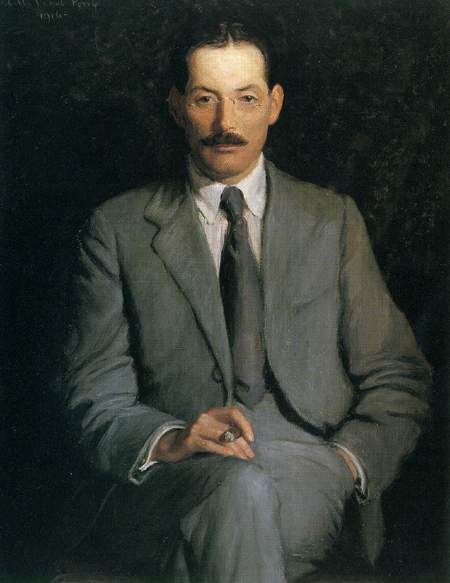
� During those two decades one voice spoke out with an authentic and cotemporary American accent; Edwin Arlington Robinson
� The things that distinguish Robinson are his native voice an his wise and ironic view of the human behavior
� His realism informs everyone of his carefully wrought poems
� In some of his poetic portraits he anticipates by a decade the more loosely drawn portraits found in Edgar Lee Master�s Spoon River Anthology
� Robinson sees Robert Frost�s gift for bending the strictly counted line to accommodate the ease and flow of vernacular speech
� He was a Yankee from the rocky coast of Maine
� Born at Head Tide in 1859. Lived the there for twenty-seven years in the town of Gardiner
� Attended 2 years at Harvard as a special student
� Gardiner became the Tilbury Town of his poems, the home of some of his most famous characters
� When he was born during his late 20s, he moved to New York City
� Published his first book while in New York
� Supported himself at various jobs, including one as a timekeeper in a construction site for the new subway system that was being built during his time
� After a year of work, his fortune took a surprising turn for the better
� A reader of his work was no other then the President of the United States; Theodore Roosevelt
� When Roosevelt learned about Robinson, he admired it and was barely scraping by on a laborers salary
� Roosevelt arranged to have New York Customs House hire him as a clerk, a position that Robinson held for almost five years
� One year after Robinson resigned, he published The Town Down the River(1910) and he dedicated this volume to Theodore Roosevelt
� Another form of assistance came in an invitation from the famous MacDowell Colony in Peterborough, New Hampshire.
� This colony is for composers, artists, and writers, which was established by the widow of the American Composer; Edward MacDowell
� Robinson spent a long time working there
� Working summers for the greater part of his life
� Robinson, a loner by temperament, became a popular poet. Even in the modernist age
� His poetry which was traditional in form, continues to be read and admired, and he was awarded a Pulitzer Prize three times
� At the time of his death, his reputation has survived the tide of modernism that had once threatened to wash it away