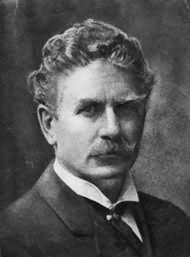
� His dark vision of life is on the warfare and the cruel joke it plays on humanity
� This assures Bierce�s place in our literature history
� Ambrose Bierce was born in 1842, the tenth of thirteen children
� His dad is an eccentric and unsuccessful farmer named Marcus Aurelius Bierce
� The Bierce�s lived in a log cabin in Meigs County, Ohio
� He was educated mainly in exploring his fathers small library
� At nineteen he joined the Ninth Indiana Volunteers and saw action at the bloody Civil war battles of Shiloh and Chickamauga
� He was part of General Sherman�s march to the sea in 1864
� He was severely hurt once and was cited for bravery no fewer tan fifteen times
� At the end of the war, he reenlisted but several years in the peacetime army left him discouraged about his prospects
� He decided to leave the army and join his brother Albert to work at the contribute caustically witty, short pieces to the city�s weeklies
� Making a reputation as a muckraking reporter he brought Bierce the editorship of the San Francisco News Letter and the acquaintance of the literary community which included Mark Twain
� When Collins P. Huntington asked Bierce�s price for the silence on the railroad�s tax fraud case, it is said that Bierce responded, �My price is about seventy-five million dollars, to be handed to the Treasurer of the United States.�
� Bierce got married and moved to England in 1871
� He spent the next four years editing and contributing to humor magazines and started making his very first attempt in fiction
� When he returned to San Francisco in 1876 he wrote a regular column
� This was the most active and fruitful time of his life
� He became the witty scholar and literary dictator of the West Coast but he never earned wide recognition for his stories
� The Devils Dictionary was first published in 1906 as The Cynic�s Word Book, which was more successful
� In his dictionary he offered a collection of definitions filled with irony and sardonic humor
� He defined war as a �by-product of cheating between two periods of fighting�
� A cynic person was a person who �sees thins as the are, not as they ought to be�
� In 1913 when he was lonely and weary, he asked two of his few friends to �forgive him in not perishing where he was�
� He went to Mexico to report on or join in on its revolution
� �Good-bye,� he wrote. �If you hear of my being stood up against a Mexican stone wall and shot to rags please know that I think it a pretty good way to depart this life. It beats old age, disease, or falling down the cellar stairs.�
� No words were ever heard from him ever since