Paris - France
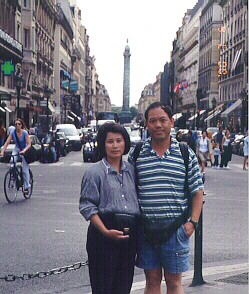 |
The Vendome column with relief which narrate the feats of Napoleon with
the statue of the emperor on top.
|
|---|
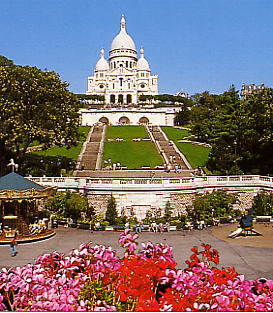
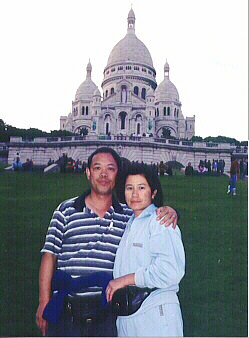
Sacre-Coeur, erected 1876, with a bell 19 tons, one of the biggest in the world.
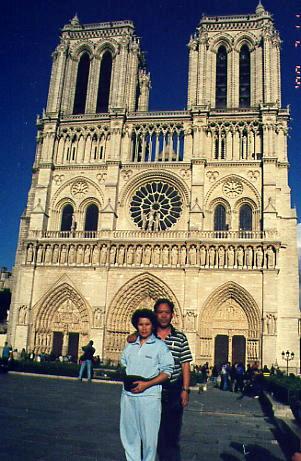 |
Notre Dame, built 1163 - 1245. It became even more famous after a movie "Hunchback of Notre Dame",
which was set in this cathedral. The movie was made after French noted novelist Victor Hugo's same title epic novel (1831).
|
|---|
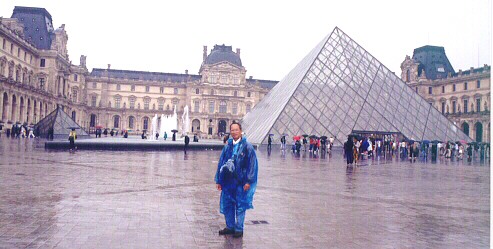 |
Louvre Museum, a royal fortress built by Philip II in 1200. Glass Pyramid,
designed by I.M.Pei, opened 1989.
|
|---|
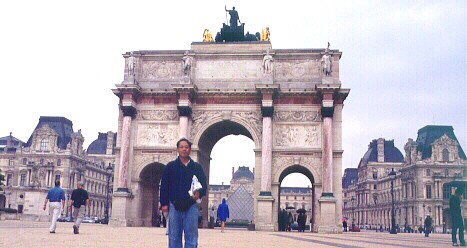 |
The Arch of Triumph of the Carrousel, was erected to celebrate Napoleon's
victories in 1805.
|
|---|
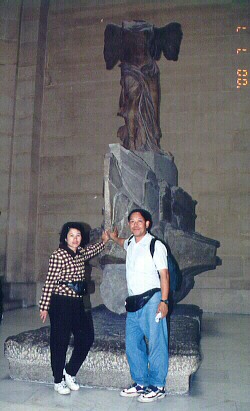 |
Victory or Nike of Samothrace built with marble in 190 BC.
|
|---|
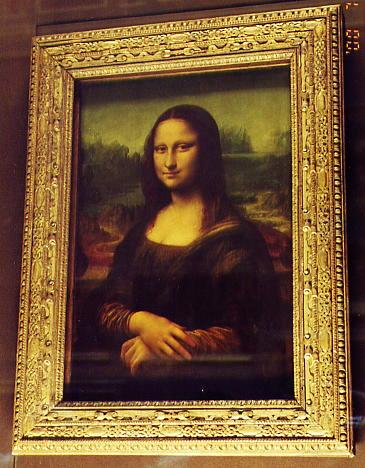 |
We stood in front of the world famous portrait Monna Lisa by Leonardo
Da Vinci (1452-1519).
|
|---|
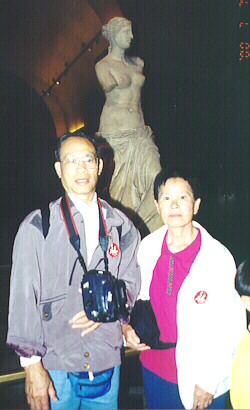 |
Venus of Milo late 2nd century BC. Discovered by a peasant in 1820 on the
island of Milo in the Cyclades, Greece. The statue became the prototype of
Greek female beauty.
|
|---|
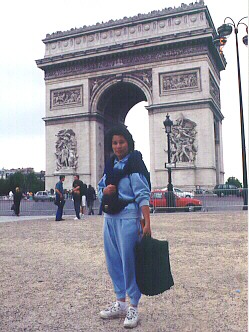 |
The Arch of Triumph ordered by Napoleon as a memorial to the Great
Army, at the end of the Champs-Elysees, at the top of the Chaillot hill, is
the large place de Gaulle. Construction began 1806, completed 1836. On
the part facing the Champs, depicting the departure of the volunteers in
1792 and called the "Marseillaise".
|
|---|
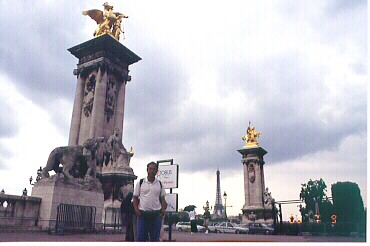
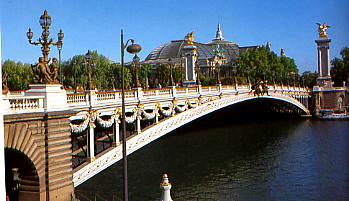
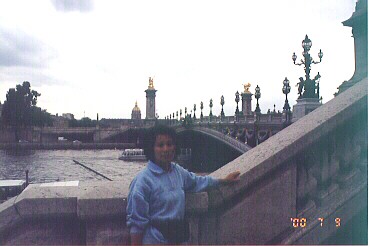
Pont Alexandre III, one of Paris's many bridges, this
joins Champs- Elysees. Built from 1896 to 1900. Named
after Czar Alexander III, whose son, Nicholas II
inaugurated the bridge, which was built to celebrate the
creation of the alliance between Russians and the
French.
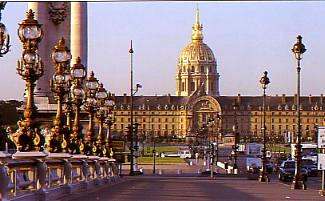
Besides Pont Alexandre III, directly under the dome of
Les Invalides is the entrance to the crypt which contains the
tomb of Napoleon Bonaparte died 5/5/1821 on St. Helena,
but not until 7 years later were the French able
to obtain permission from England to bring back the
remains of him to his country.
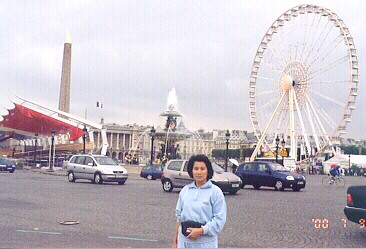 |
Place de la concorde. In the center stands the Egyptian
obelisk from the temple of Luxor, donated to Louis
Philippe in 1831 by Mehmet-Ali. Erected in 1836, it
covered with hieroglyphics which illustrate the glorious
deeds of the pharaoh Ramses II.
|
|---|
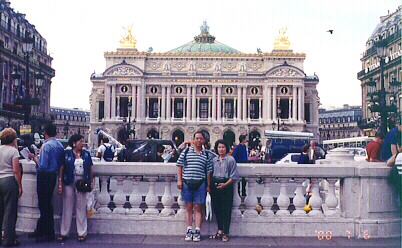 |
Opera House in Paris |
|---|
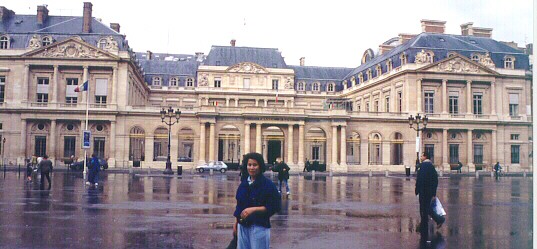
Palais Royal, palace built 1624 - 1645, now seat of Council of State.
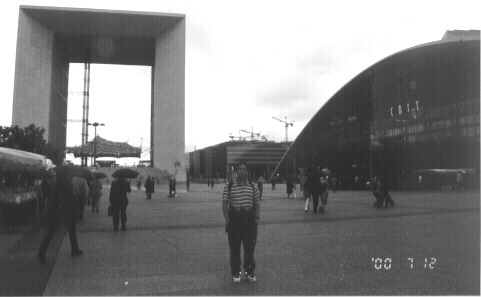
The Grande Arche at La Defense. Designed in 1982, and inaugurated
in July 1989. Of all the modern buildings characterized by pure,
geometric shapes at La Defense, the number one attraction is the
CNIT Building, where fairs are held every year. Built in coats of
concrete, it has the audacious shape of an overturned shell
resting on only three points of support. The Hotel Sofitel, where
we stayed at the first two nights during our visit to Paris, is in
the building.
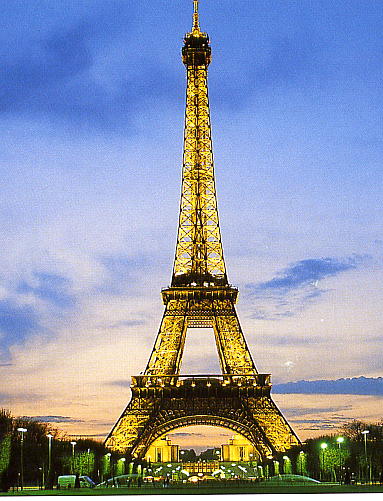
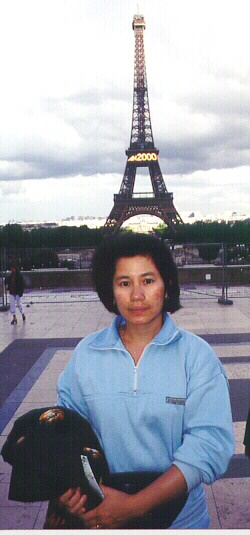
The symbol of Paris. It was designed by engineer Alexandre-Gustave Eiffel for the Centennial Exposition of 1889. There are four levels the tourists can go up. The first level is under "AN2000"(Year2000). We stayed on the second level which is right above Year2000 for sight seeing.
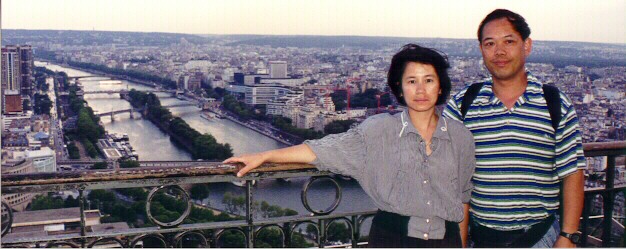
From one side of the Eiffel Tower, Seine River is below us. We had cruise
at night on the river where we saw buildings with delicate designs, Golden
Eiffel, and statue of liberty which is identical to, but the size is much
smaller than the one in New York. France gave it to America as a gift to
celebrate the anniversary of the New World.
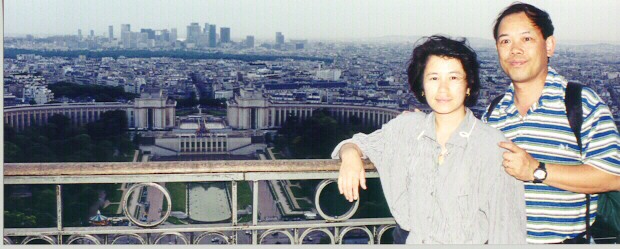
From the other side of the Eiffel Tower, we see the Trocadero Gardens and the equestrian statue of
Marshal Foch which stands at the center of the Place du Trocadero.
