
 ESPAŅOL
The N-1 rocket was the Soviet counterpart of the American Saturn-V, both having almost the same size. With this rocket, the Soviets tried to beat the U.S. in the Moon race first, and then put huge space stations into orbit. There were four launches, two in 1969, and other two in 1972: all of them failed.
Total Mass: 2,682,650 kg.
Liftoff Thrust: 4,414,909 kgf.
Total Length: 76.6 m.
Total cost: $600 million
Engines:
First stage: 30 NK-15 (Lox/Kerosene). Thrust (vacuum): 1544kN.
Second stage: 8 NK-15V (lox/Kerosene). Thrust (vacuum): 1648 kN.
Third stage: 4 11D54 (Lox/Kerosene).
Fourth stage: 1 NK-19 (Lox/Kerosene).
Total Mass: 2,896,895 kg.
Liftoff Thrust: 3,440,313 kgf.
Total Length: 84.7 m.
Total cost: $681.50 million
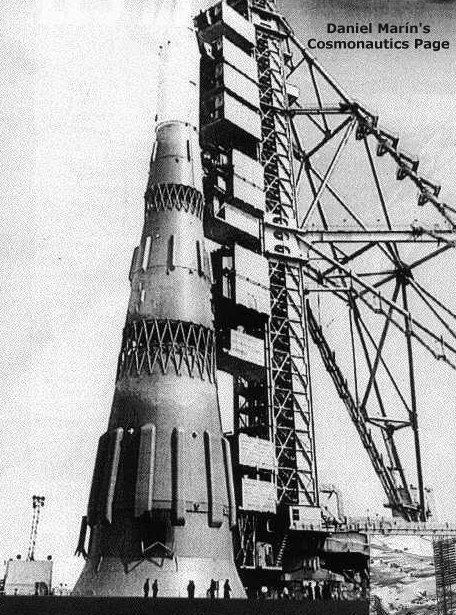
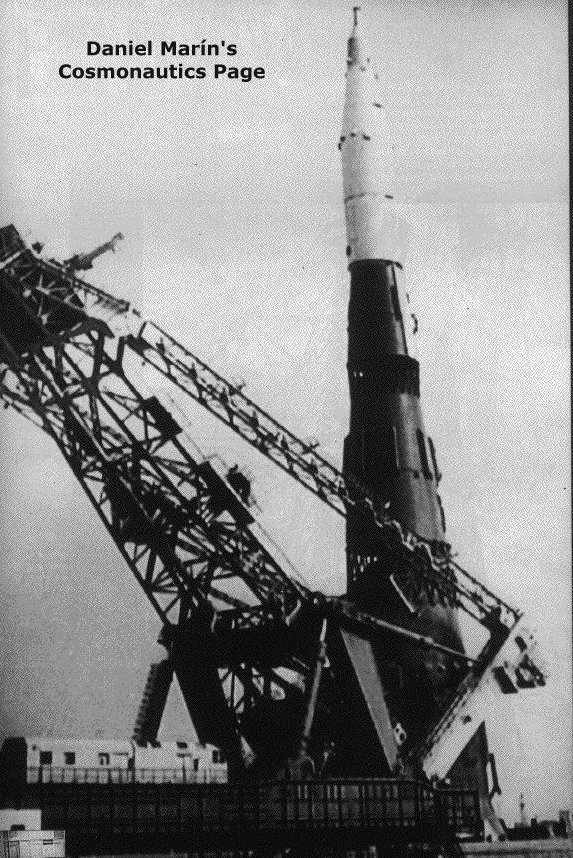
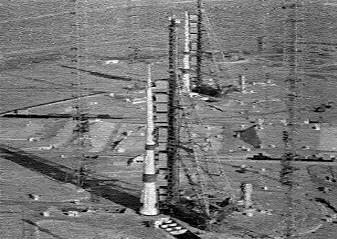
N-1 3L (maybe 1L or 2L) on pad.
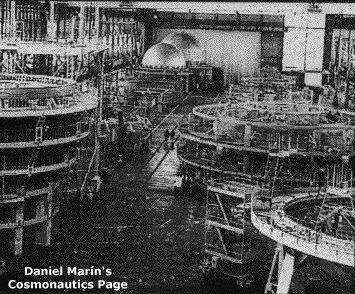

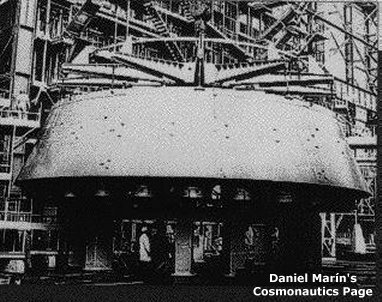
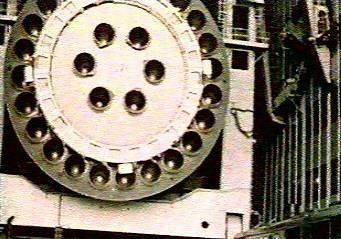
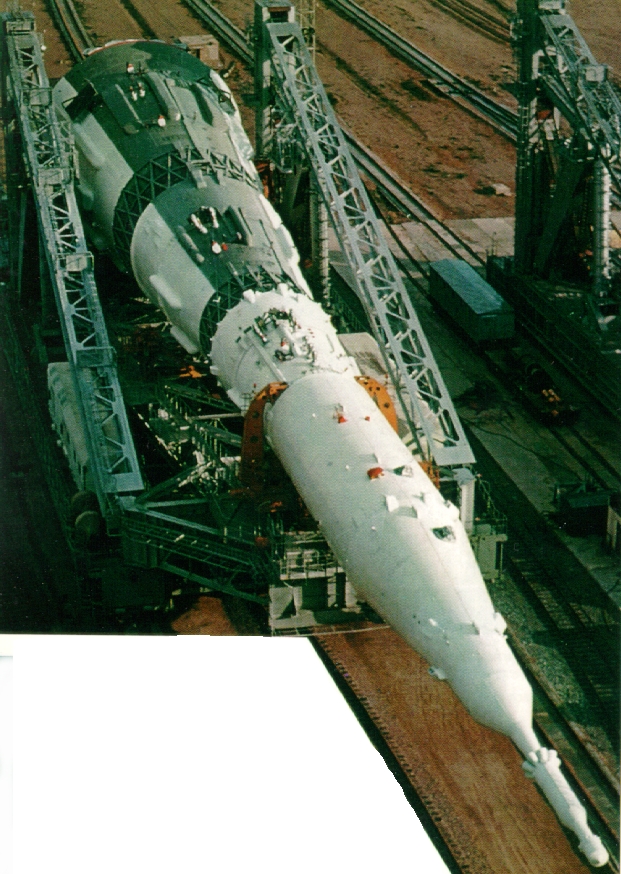
N-1 first stage assembly.
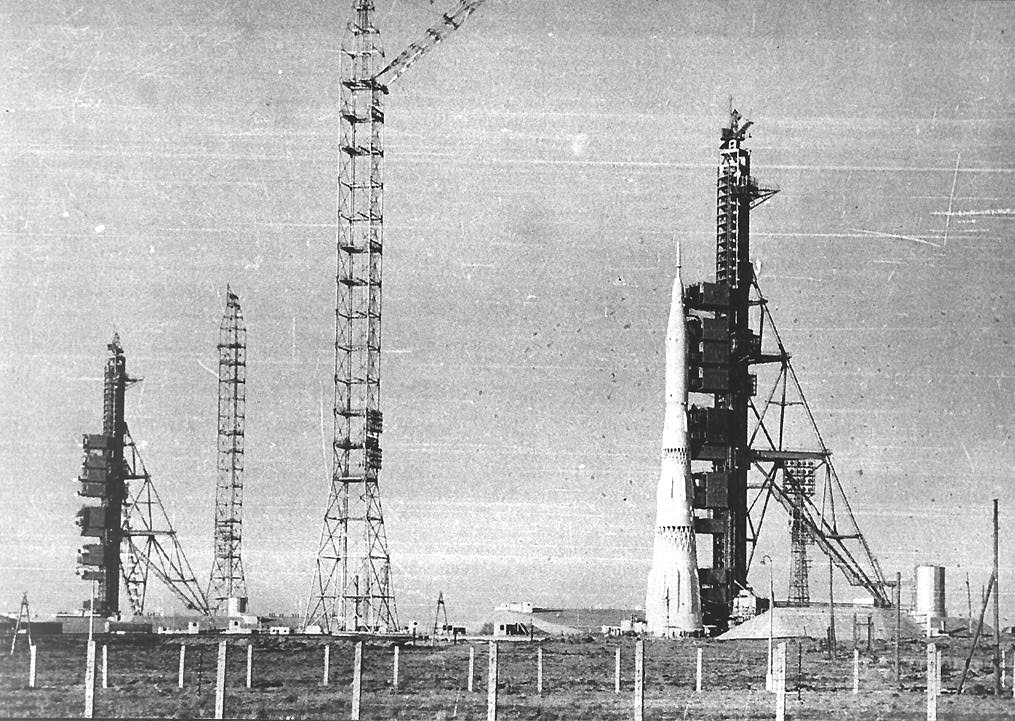
N-1 rocket serial 7L, ready for launch on pad number 2, November 1972, (last launch of the N-1).
(Photo courtesy Ed Cameron).
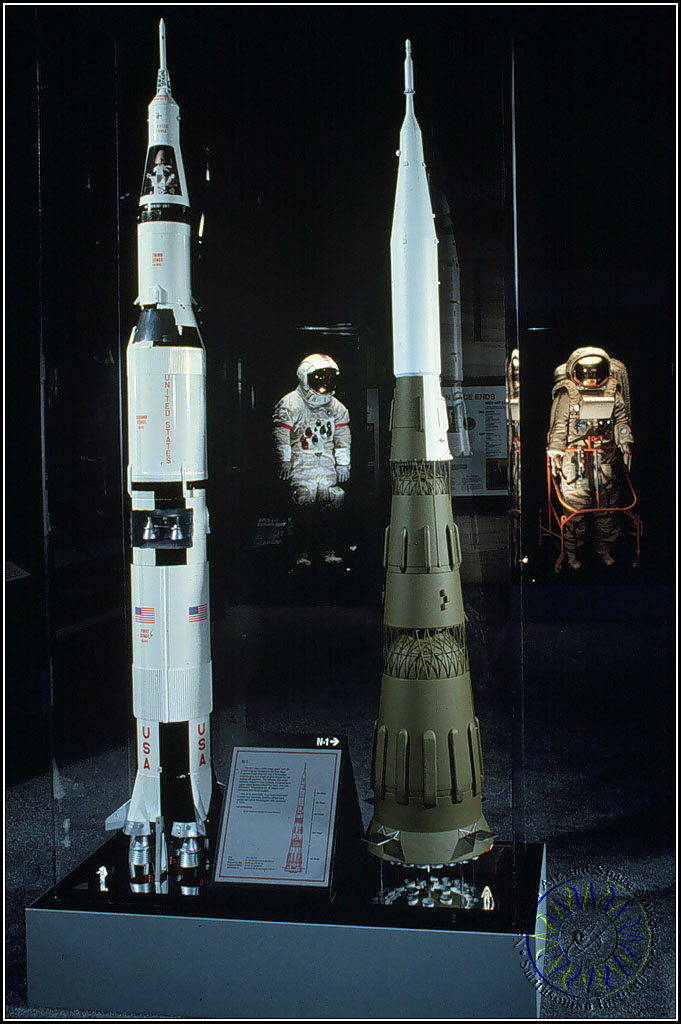
The N-1 and Saturn-5 together at the same scale.Photo from the National Air and Space Museum.
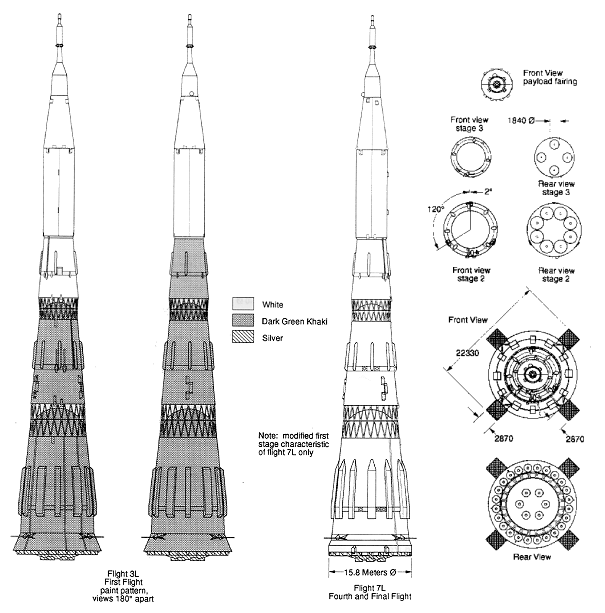
N-1 variants. The white color of the last models was due to thermal control.
Author: Peter Always.
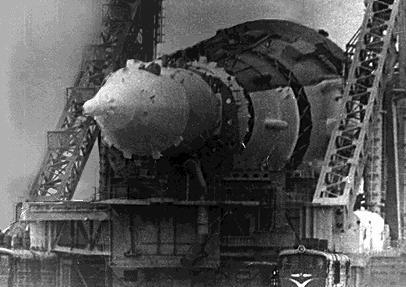
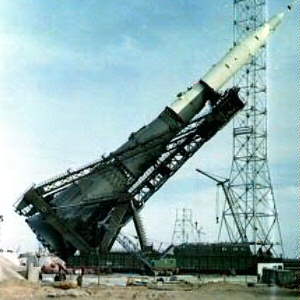
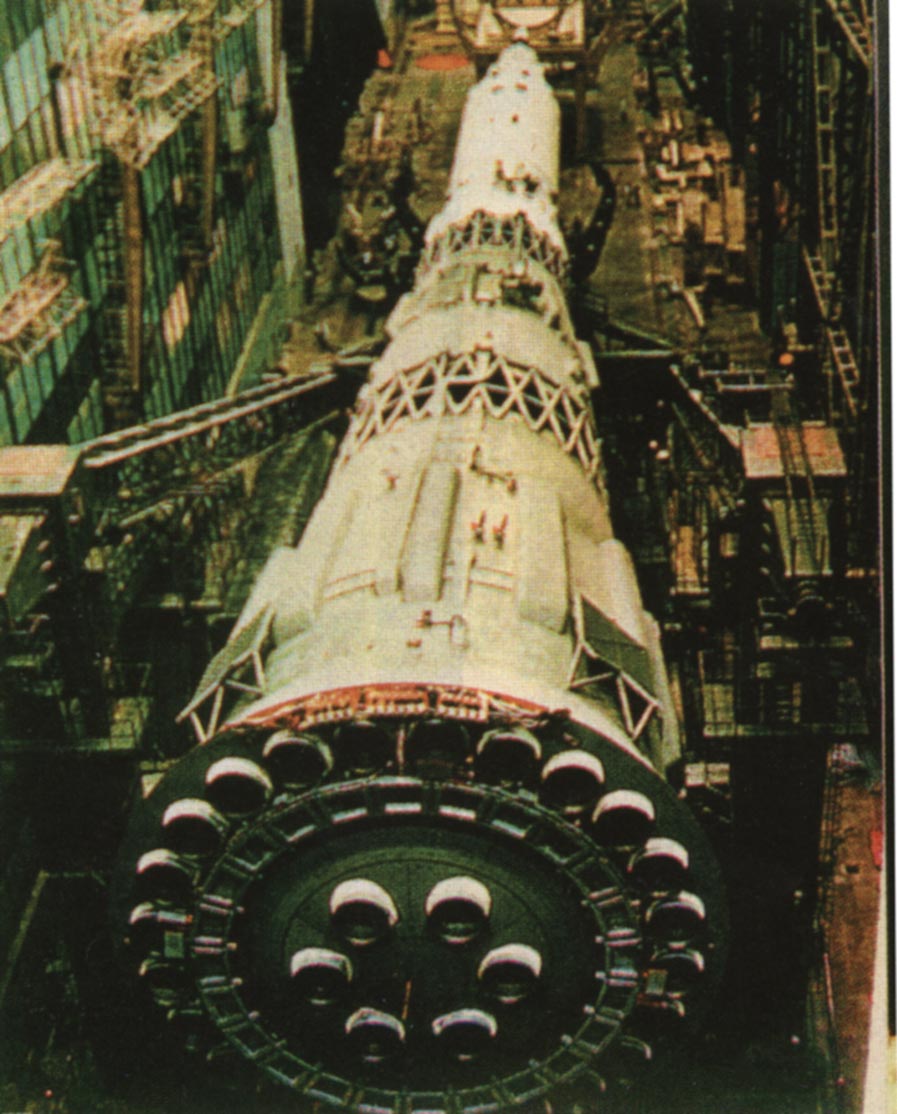
Above: N-1 5L rollout, 1969.Below: N-1 3L being located on pad. Fall 1968.
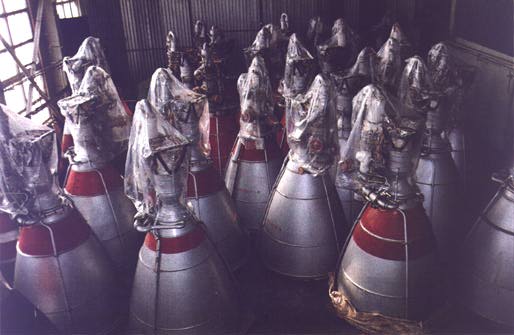
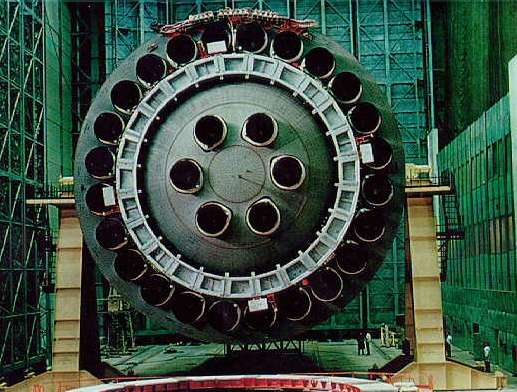
NK-15V second stage engines. The N-1 clustered a lot of those engines (30 in the first stage and 8 in the second).
This augmented design complexity and failure probability. Furthermore, no tests of the entire stages were conducted,with all the engines working at the same time. The use of a larger engine was impossible, because Glushko, who was the most experienced rocket engine builder, refused to colaborate with Korolyov, so he had to use a non experienced builder like Kuznetzov.
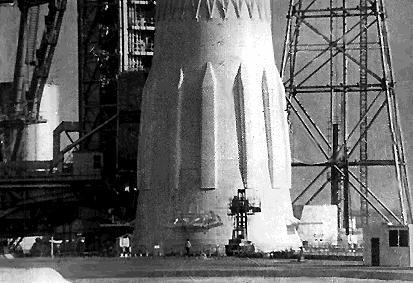
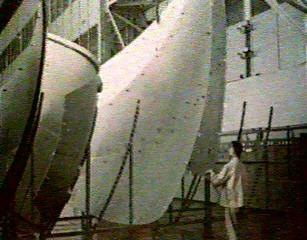
N-1 7L on pad. The last N-1 had a modified first stage,
including more aerodynamical fuel conducts' fairings.
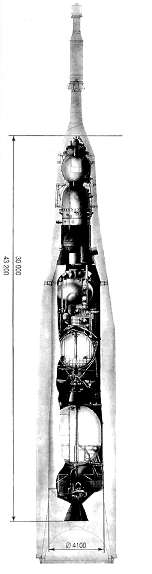
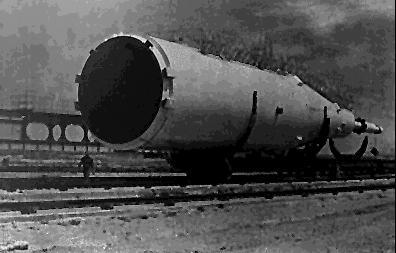
N-1/3L shroud. Inside was the L3 complex: the LOK spacecraft, the LK lunar lander,
the Block-D lunar crasher stage and the Block-G translunar injection stage.
Author: Peter Always.
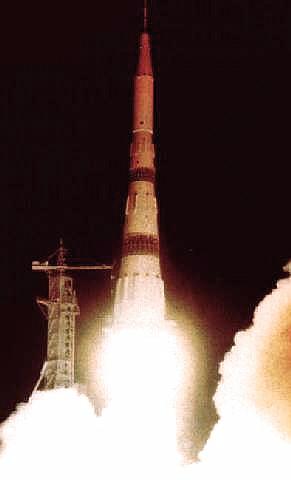
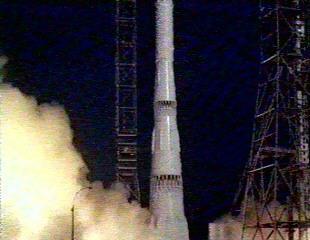
N-1 5L night (the only one) launch.4 July 1969.

 Back
Back
 Get your own Free Home Page