          ORDER: Proboscidea
          FAMILY: Elephantidae
          GENUS: Loxodonta
          SPECIES: africana
1-DESCRIPTION:
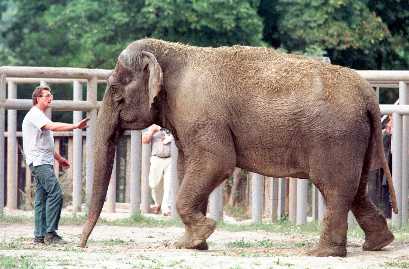
The adult male is much larger than the adult female. Head and body length including trunk: 19-24 feet. Shoulder height: 10-13 feet. Weight: 5.5 - 7 tons. Tail: 4 feet. Brownish gray skin has folds and may be one inch thick in places. The African Elephant has a marked dip between its fore and hindquarters giving a concave curvature to its back. Ears are large and fan-like. The trunk has two prehensile protrusions at the tip. Large tusks are present in both sexes. Elephants are digitigrade with pads of fibrous tissue to cushion toe bones.
2-GEOGRAPHICAL RANGE AND HABITAT:
Natural home range is 500 miles; migratory patterns are taught from one generation to the next. Now they are mostly restricted to parks and preserves. Habitat formerly was area south of the Sahara; agricultural expansion has severely reduced it. Highly adaptable, elephants can survive in forest, bush or savanna.
3-DIET:
Elephants have an inefficient digestive system and digest only about 40 per cent of what they eat. They eat enormously. Estimates in the wild range from 100-1000 pounds of vegetation per day (a 16 hour period). Zoo elephants are estimated to eat approximately 50 pounds of food per ton of elephant per day. Working elephants need 300 to 600 pounds of food per day. The wild elephant is a destructive eater, uprooting and scattering as much as is eaten, often breaking down whole trees. Elephants eat almost anything green, but green grass, shoots and buds of trees and shrubs are preferred. Farms are often raided for fruits and vegetables of all types. Average daily consumption of water for full-grown animals is between 30 and 50 gallons.
4-LIFE CYCLE/SOCIAL STRUCTURE:
Elephants live in a complex matriarchal society normally composed of 8 to 15 related members and led by a dominant cow. Three or four generations of cows and calves spend their entire lives together with the exception of males, who leave the group at puberty. Groups of related families stay in fairly close range of each other and communicate often; these are called kin groups. In times of danger, kin groups will mass and form clans of 200 or more. Ongoing studies at Amboseli Research Center in Kenya indicate a complex bull dominance structure which determines mating success as well as every day life. Another primary mating factor is musth, a periodic hormonal cycle seen in both species. Physical manifestations in males include heavy secretions from temporal glands, high blood testosterone levels, urine dribbling (marking) and aggression. Cows seem to prefer a musth bull, but can successfully breed whether the bull is in musth or not. The cow's oestrus cycle is roughly a monthly one and lasts 2-6 days. Gestation is approximately 22 months. The birth is usually a single one; twins are born only 1.35% of the time. Birth weight is 175 to 250 pounds. Mother is often assisted by another cow during birthing. The calf can stand shakily and nurse (with mouth, not trunk) a few hours after birth. Mammary glands are located between the front legs. Calves will nurse well into their third year and are very dependent on their mothers for eight to ten years. Adolescence at 12 to 14 years of age. Most physical growth is reached at 20, but growth continues throughout life. Top mental ability is at age 30 to 45. Death comes at 65 to 70 years of age when the last set of teeth wear out.
