5-SPECIAL ADAPTATIONS:
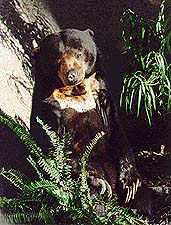
Arboreal, nocturnal. Sleep and sun bathe in tree nests formed of bent branches (often as high as 23 feet off the ground). This bear never hibernates. Huge claws aid in climbing and manipulating food items and are probably used in defense as well. Unusually long tongue is used in slurping up insects.
6-INTERPRETIVE INFORMATION:Also called "honey bear". Malayan name, basindo nan tenggil, means "he who likes to sit high". The pigeon-toed gait signals that this animal is arboreal. Chest markings are variable and may even be completely lacking, but the name "sun bear" may be due to the crescent shape usually present, likened to a rising or setting sun. If caught by large predator, can turn in its loose skin and bite attacker.
7-STATUS IN WILD:
At this writing (1996) no research on wild sun bears is being done (or ever has been done) and there are presently no plans for habitat management aimed at their conservation, although they are listed as threatened under CITES. In Thailand, the primary threat is forest destruction - especially logging, and the pet trade. By law, every man, woman and child is allowed to keep two of any species as pets, except none that are on the brink of extinction. Elsewhere, poaching for meat, medicinal use of organs primarily in China, Taiwan, South Korea (greatest consumer) and Japan is the greatest threat. Thai officials say at least 30 sun bears were illegally shipped to South Korea to fortify Korean athletes for the 1988 Olympic Games.
8- EVOLUTION:Bears underwent radiation in the Palearctic Region far to the north and later came to tropical Asia.