Carol Sharpe
Kate McCuskey
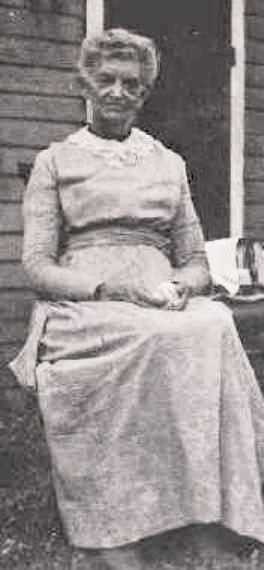
In the evening the old wounds bothered her as she sat in her leather chair turned towards the window. There was a long curving scar on the inside of her left ankle where a scythe had caught it years ago, and there were smaller scars on her hands from cuts inflicted during canning season. But she looked out her window hoping for passersby until night chased day up the quiet street to the edge of her lawn: she saw it coming there, stalking the maples, the elm, the portulaca beds, the cropped lawn. She was restless, the knee she had sprained on the farm as a girl ached, and she leaned her cane against one arm of the chair while she massaged the ache with a long hand. The knuckles were thickened on that hand, and the fingers were flesh transparent on the bone. Then into her eyes came the gray of dusk with blue lingering around the black iris, and over her face crept the pallor of loneliness and death.
Perhaps on Sunday evenings the room behind her awaited chaotic, sticky from the jellied fingers of her grandchildren, and empty of them. The hired woman washing up in the kitchen would soon put that to rights; it was therefore no concern of the old lady's. She sat looking until the windowpane reflected her long sweet melancholy face and her crown of white hair with one striking deep wave across the brow pointing downward at her left temple. Her arthritic hand on that temple traced a thin vein through which thin blood raced. And then it was time to go to bed.
It was as difficult to prepare for bed as it was easy to get up in the morning. When the housekeeper came to help her rise from her chair, the old woman grasped the knob of her many-faceted cane, one long hand laid painfully over the other, and with a hand beneath her armpit and an alien voice urging in her ear she rose, hesitated, staggered off down the buckling floor to come at last to the short hallway and then to her bedroom door and finally to the high straightbacked chair beside her narrow bed. She sat there nightly, a captive queen, not letting go the cane until the last possible minute while the thin dark chattering woman her children had hired to care for her disrobed her. She suffered the intrusive fingers at her neck as the floorlength dress was unbuttoned and eased down over her broad bony shoulders. And she bore the rest of it with a patient smile, and a distant gaze became blue again in the lamplight. The room was too familiar; she had never any need to look at anything in it; had she been able to walk unassisted, she could have found her way around it and over the whole old house blindfolded.
When she lay supine, her clean white nightdress smoothed down over her flaccid thighs, her narrow feet side by side and her cane within reach leaning against the nighttable, it was time to stare for a long time at the ceiling with the light on; like a little child she took comfort in the light and held her eyes open sometimes by force in order to enjoy its benificence as long as possible. Sometimes she would ring her bell and demand a fresh glass of water; sometimes she would complain of a headache; sometimes she asked to be helped to the bathroom ten minutes after having been settled. Even so, it was always early when she went to sleep, six-thirty or seven in winter and eight-thirty or nine in summer, depending upon the season and the life of each season's daylight. With her eyes closed finally and tension leaving every nerve in her wasted body she fell into sleep as into an open grave; frequently she forced herself awake again for a minute or two having experienced semi-consciously the dreadful sensation of falling. She slept soundly then for two or three hours, but from midnight on she was apt to be startled or even alarmed by noises, and even the first birdcall in the trees found her fully awake, listening, her face turned toward the shaded window to catch the first shaft of sunlight over the lilac.
She sat in the brown leather chair while the woman dusted and vacuumed behind her; her own highcut shoes were always dusty although it had been a year, two years since she had been out of the house for a walk. Her married daughters visited her often; her sons-in-law took her for rides in their automobiles and joked with her. But they came and went many times with no more than a faint polite nod from her, except for one, a granddaughter who sat on the arm of her chair and worshipped her, a small brown-eyed girl with olive skin and a lively smile. It was for her that the housekeeper made cookies every Saturday and hid them away from all the cousins on Sunday until she could come and share two on a plate with the grandmother. And often she would drop in after school to sit with her grandmother, staring up at her and smiling, to tell her of everything that had happened along the way from school. The snails they thought about, the frost-riven curbstones, the wind in the pine trees all made more sense to the old lady than anything else she heard. But she listened for another step, and occasionally when the little girl was in the room she thought she heard it. raising her head, the refined profile cleaving the air, the fading eyes eager, she said several times, "Charles, is that you,Charles?" It was the name of one of her sons, long since dead. The little girl shared her grief when he did not come to stand beside his mother's chair, his great happy tenor laugh booming out, his kiss on her white hair.
The old lady's favorite son-in-law was the little girl's father, a small muscular brown-eyed man with the voice of a Russian basso. He found her in tears one Sunday afternoon when all the family had left but for him and his wife and daughter. All his customary swagger left him as he put his warm vital hand over her old cold ones, on the cane and asked, "Kate, oh now, Kate, what is it after all?"
She lifted her swimming blue eyes to his and the tears streamed down her thin-skinned cheeks as she said in a strangled voice, "I want to go home, oh, I want to go home."
Her daughter came to sit on a hassock before her and said with a white strained face, "But, Mother, you are home. This is your home where you have lived for fifty years. This is where we all grew up. It is your home."
All the old woman could do was to weep.
Then her son-in-law, who was suffering, said loudly, "By God, then, get your hat and coat and come on. You don't have to stay here if you don't want to. I'll take you home now." He called the housekeeper and they put the old lady into a black cloth coat with a worn fur collar and put on her head a Queen Mary hat. Leaning heavily on the ebony cane she went out of that room and out of the house to the drive where his Chevrolet was parked. The housekeeper moved her legs up into the car and said goodbye to her as she sat weeping but expectant, nodding to her daughter and granddaughter in the yard. The women were glad for the breathing spell. Watching the car back down the drive the daughter asked the housekeeper, "Is she always like this now?" But the housekeeper answered deferentially that this was a new quirk. And they waited.
Within half an hour the Chevrolet was coming back up the drive, and as it pulled to a stop the son-in-law called merrily, "I've brought her home. She's home!"
The old woman turned her head slowly, fearfully. When she saw the pampas grass bush, the portulaca, the elms, the side door shaded by lilac and maple, the sweetest of all her smiles appeared tremulously, and her shoulders slumped forward and down in the loose coat as though a great weight had been lifted from them. Then, fairly erect, assisted only by the small man at her side, she came the last perilous journey up the walk and through the door of her home. With the qualifying air of the grand old lady, she said to him in a whispering voice, "How can I ever thank you, my dear?" and then, to her granddaughter, "You don't know how good it is to be home."
Reprinted from ACCENT, A Quarterly of New Literature, Summer 1960.
|