 |
 |
|
| AXALON-Class Command/Assualt Carrier |
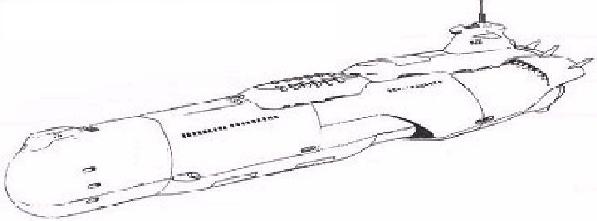
| The AXALON-Class Command/assult Carrier is the newest warship in use by the UN Spacy fleet. These vessels are designed for front-line combat duty and rapaid deployment. The ships are a common part of every UN Spacy military, and often serve as the command vessel during occupation type operations the first two ships were built to carry the 91st Marine Division . Axalon Carriers are produced by UN Spacy at a rate of several dozen per year. There are currently no plans to redesign or replace the class in the near future. RPG STATS Government: New Unity Government (Earth) Ship Type: Long Distance Carrier Class: Axalon Class Manufacturer: UN Spacy Crew: 33,600 total Command Crew 270 Assigned Personnel: 6,000 Marines 21,150 VF-Pilots 2350+340 reserve VF support crew 3000 Shuttle unit 500 MDC BY LOCATION: (1) Main Body 450,000 (2) Command Tower 9,500 (2) Sensor Array (on top of Command Tower) 1 000 (3) Main Engines/Power Plants (3) 8,000 each (3) Secondary Engines (4) 20,250 each (3) Small Guidance thrusters (180) 200 each Main Cannons (7) 900 each Heavy Missile Launchers (12) 400 each Anti-Warship Cannons (48) 300 each Anti-Aircraft Missile Launchers (240) 250 each Rectractable Laser Turrents (240) 100 each Small Airlocks/Access Hatches (110) 250 each Flight Deck Airlock (100) 500 Outer Hull (per 40ft area) 300 Interior walls (per 20ft) 75 (4) Pin Point Barriers (4) 5,000 each NOTES: Depleting the MDC of the main body will put the frigate out of commission. All internal systems will shut down, including life support and internal gravity. The ship itself will be an unsalvageable floating wreck. Destroying the command tower will instantly kill the command staff and deprive the ship of all forms of long range communications, radar and targeting. The range and targeting capabilities of the secondary systems are equal to that of a VF-19. The ship can still operate, but is at -3 on initiative, -3 to strike, and number of attacks per melee of the weapon systems are reduced by half. Destroying the main sensory array atop the command tower will have the same effect, but the command staff will not be killed instantly. Depleting the MDC of the main engines will force the ship to rely on its secondary engines. Depleting the MDC of the main engines AND secondary engines will leave the ship adrift in space. If in an atmosphere, the ship will crash (destruction of the main engines will render the antigravity system useless due to loss of power). The Pinpoint Barriers regenerate at a rate of 2,500 MD per second (5,000 MD per melee round). If destroyed, a barrier will completely regenerate within 2 seconds (1 melee rounds). SPEEDS: Speed(sublight): 0.20 speed of light (32,000 miles per second) Speed(Auxiliary Drives): Mach 3 Space Fold: Range Unlimited (1 light year every 6 minutes) Planet bound: Can land if necessary but not designed to maneuver in an atmosphere. Can only land in a body of water (does not have landing gear). Maximum Range: Unlimited (estimated 20 year life span, which can be extended with regular maintenance and overhauls) STATISTICAL DATA: Length: 5000 m Weight: 324,000,000 tons Power System: Auto Heat Pile System Fold System: U.N. Spacy Advanced Fold Cluster Sublight Drive: U.N. Spacy Impulse Drive Cluster Gravity Control System: Internal Auxiliary Engine: Fusion Reactor Type Sensor System: Standard & Subspace Mass Detector WEAPON SYSTEMS: MAIN LASER CANNONS (7): The main weapon systems of the Axalon Carrier are 7 heavy laser cannons, mounted on either side of the ship facing forward. Each laser can fire separately or together, (2)front (4)sides and (1) rear of the ship. (lasers can aim 180 degrees off the ship's centerline). PRIMARY PURPOSE: Heavy Assault SECONDARY PURPOSE: Anti-Warship RANGE: 100,000 miles (160,000 km) DAMAGE: 1D8x1000 M.D. per blast RATE OF FIRE: Unlimited. Will function so long as the main engines are intact. HEAVY MISSILE LAUNCHERS (24): To back up the heavy lasers the Axalon Carrier are also armed with 24 heavy missile launcher tubes that launch ICBM-like missiles at enemy ships. The missile tubes resemble torpedo launchers and are mounted dorsally, in front of the command tower. The launchers contain long-range nuclear or reflex missiles and are usually used only during assaults and heavy combat. PRIMARY PURPOSE: Assault SECONDARY PURPOSE: Anti-Warship (Mecha Planetary Assault) RANGE: 5,000 miles (4824 km) SPEED: Mach 2+ (1340 mph/2140 kmph) in an atmosphere. DAMAGE: 4D6x1000 M.D. BLAST RADIUS: 3,000 feet (915 m) RATE OF FIRE: The rapid reload system used on the missile launchers allows each tube to be loaded and fired once per round. PAYLOAD: A typical battle carrier carries 96 missiles in storage that can be readied for firing in about 30 minutes. Additional missiles can be carried if deemed necessary, however. NOTE: These missiles CANNOT be used by variable fighters. Each missile is approximately the same size of a VF-11 ANTI-WARSHIP CANNONS (48): Axalon Carriers are also armed with anti-warship cannons similar to zentraedi concealed laser cannons. Unlike the main laser cannons the anti-warship cannons have arc of fire (180 degrees off centerline) and can rotate 360 degrees PRIMARY PURPOSE: Assault SECONDARY PURPOSE: Anti-Warship RANGE: 100,000 miles (160,000 km) DAMAGE: 1D6x1000 M.D. per shot RATE OF FIRE: Each cannon can fire twice per melee. The cannons can fire individually or be combined with the heavy lasers to fire a single volley. PAYLOAD: Unlimited. RETRACTABLE MISSILE TURRETS (240): For anti-aircraft defense the frigates are armed with medium-range missile launchers set at key locations along the ship's hull. Each launcher contains 6 missile tubes allowing volleys of up to 6 missiles to be fired at a single target per launcher. Once depleted, the missile launchers are reloaded by an automated loading system that takes 15 seconds (one melee round) to reload all 8 missiles. Armor-piercing smart missiles are usually used to avoid chances of friendly fighters being shot down by the missiles. PRIMARY PURPOSE: Anti-Aircraft SECONDARY PURPOSE: Anti-Warship MISSILE TYPES: Any type of UN Spacy Medium Range Missiles can be used. Smart missiles are commonly used to avoid hitting friendly aircraft. RANGE: Varies, typically 60 miles (80.4 km). SPEED: Varies, typically 1600mph (2571kmph). DAMAGE: Varies, typically 2D4x10 M.D. BLAST RADIUS: Varies, typically 15 feet. RATE OF FIRE: Each Turret can fire once per melee, the minimum missiles pervolley is 10. PAYLOAD: Effectively Unlimited RETRACTABLE LASER TURRETS (240): Identical to the turrets used on Zentraedi vessels. PRIMARY PURPOSE: Assault SECONDARY PURPOSE: Anti-Warship RANGE: 200,000 miles, Half in Atmosphere DAMAGE: 1D4x100 M.D. RATE OF FIRE: Each Turret can fire twice per melee. PAYLOAD: Effectively Unlimited PINPOINT BARRIER DEFENSE SYSTEM: Originally developed by researchers onboard the SDF-01 Macross during Space War One, the Pinpoint Barrier System is a standard defense system on board all UN Spacy starships, including the Northampton frigates. The system generates four small disc-shaped force fields that can be positioned anywhere along the ship to deflect missiles, energy beams or projectiles. Each pinpoint barrier is about 200 ft (61 m) in length and can absorb up to 5,000 MD in damage, which then regenerates within four seconds (1 melee round). The barriers can also be layered on top of each other to generate a field which provides 20,000 MDC and can even deflect heavy particle beams (sometimes). The four barriers are controlled by operators in the command tower of the carrier. These operators are instructed to defend (1) the command tower, bridge, and sensor array, (2) main engines, (3) hangar bays, and (4) weapon systems, in that order. The operators primarily concentrate on defending the ship against larger spacecraft and leave defense against mecha attacking the carrier to the VF pilots. PRIMARY PURPOSE: Defense (the pinpoint barrier system cannot be used as a weapon) RANGE: Up to 500 feet (125.5 m) from the surface of the vessel. DAMAGE CAPACITY: Can sustain up to 5,000 MD per round. Regenerates at a rate of 2,500 MD per melee round. RADIUS: 300ft (91.5 m) DEFENSIVE MOVEMENT: Can move from one end of the carrier to the other in less than a single round. Trained operators can attempt to block attacks up to 8 times per melee (counts as a parry) and are at +7 to block. Untrained characters can parry up to their number of hand-to-hand attacks with their normal parry bonuses only. PAYLOAD: Nearly inexhaustible. Will work as long as system is functional (see below) and engines are intact. If main engines are destroyed, the barrier will loose power and not function. NOTE: If all four barriers are grouped in a single spot they can deflect a heavy particle beam attack, such as the one generated by the Macross Cannon, Zentraedi/Varuta command warships, and some Protodeviln. However, the beam will completely destroy all four barriers and put incredible strain on the pinpoint barrier system, to the point where it may short out. After deflecting an energy beam, roll percentile dice on the table below to determine additional effects/damage. 01-05: Lucked out, system will be operational in 1D6 hours. 06-20: Minor damage, system will require 4D6 hours to repair. 21-35: Major damage, system will require 2D6x10 hours to repair (yes, DAYS of work). 36-64: Completely destroyed! System can be rebuilt, but will require new parts and 2D6 DAYS of work to replace. 65-79: Major damage, system will require 2D6x10 hours to repair. 80-94: Minor damage, system will require 4D6 hours to repair. 95-99: Lucked out, system will be operational in 1D6 hours. 00: It's a miracle! Trivial damage only, system will be operational again in only 4D6 melee rounds! SYSTEMS OF NOTE: ANTIGRAVITY PROPULSION SYSTEM: The Axalon Carriers are equipped with an anti-gravity propulsion system used for planetary landings and liftoffs. The system is good for vertical ascent/descent only and can lift the ship at speeds of up to 1,320 feet (400 m) per minute. The system will function so long as the main engines can supply energy to it HYPERSPACE COMMUNICATIONS: Based on the same technology as the space fold system, the hyperspace communications relay allows faster-than-light communication between UN Spacy starships and other vessels or planetary bases. Hyperspace communications are still not instantaneous, however. Audio/video communication travels through hyperspace at a rate of about 5 seconds per light year, so messages communicated over vast distances can still take days, weeks, or months to arrive. LIFE SUPPORT SYSTEMS: The carriers have sufficient life support to provide breathable air and comfortable temperatures for 50,000 people for up to 20 years (air is recycled). In an emergency the life support system can support up to 16,000 people at one time, though living conditions onboard will get extremely cramped at that point. The carrier also holds sufficient food and water to support 55,000 people for up to 6 months. LONG-RANGE LASER/SATELLITE RELAY COMMUNICATIONS: The impressive communications array of the carrier can communicate with up to 1,000 craft simultaneously at ranges of up to 900 miles (1,440 km). This range can be boosted indefinitely by using satellites or other spacecraft as to relay communications. LONG-RANGE RADAR: The radar array of the carrier is equally as impressive as the communication system, and can track and identify up to 3,000 craft simultaneously. The radar system has a 4,000 mile/6,200 km range. SPACE FOLD SYSTEM: For FTL propulsion, the carrier is equipped with an U.N. Spacy Advanced Fold System Cluster, capable of propelling the carrier through hyperspace at speeds up to 3.28x10^10 mps (5.25x10^10 kmps), or 1 light year per 6 minutes. The range of the fold drive is theoretically unlimited except by the life expectancy of the spacecraft. SUBLIGHT ENGINES: As a backup to the Fold System, equipped with U.N. Spacy Impulse Drive Cluster engines that can propel the craft at speeds up to 0.20 speed of light (32,000 miles per second) in space. Note that these engines are mainly intended for rapid movement inside a planetary system and are not suited for long voyages between star systems. In a planetary atmosphere the carrier is limited to landing and taking off due to hull stress. SUBSPACE MASS SENSORS: The Axalon Carriers are equipped with subspace sensors, which are based on the same principles as the hyperspace communications array. These sensors can essentially instantly detect mass readings and movement of objects up to 1 AU (93 million miles) distant from the carrier, and the readings are used both for early warning and for navigation when travelling at sublight speeds. Readings taken with the subspace sensors are not very detailed (-25% penalty when trying to identify a detected object) and cannot detect objects of less than 60,000 kg (this includes most variable fighters). MARINE COMLEMENT: 21,150 MECHA COMPLEMENT (STANDARD): VF-11EX:1200 VF-19 : 600. VF-Z1 : 240 VAB-2: 96 VFB-111: 48 VF11-EFA: 120 VF-17: 24 VB-6 : 24 VF-22 :2 Shutles/transports MS-60; 24 MS-42: 48 DS-37: 72 NOTE: The Axalon Carriers have enough room to hold an additional 40 squadrons (480 fighters) if necessary, though the landing bays would be extremely cramped at that point. The Axalon is an evolution of the old Zentraedi Landing Ship. The Zentraedi ship carried approximately 35,000 combat mecha, in designing a high capacity command carrier for Spacy use, the basic proportions, and truth be told, many of the same systems were retained, but the higher mecha capacity was sacrificed in favor of standards of comfort humans have come to expect. Still this ship fields the largest number of mecha of any carrier of human design. |
|