 |
|
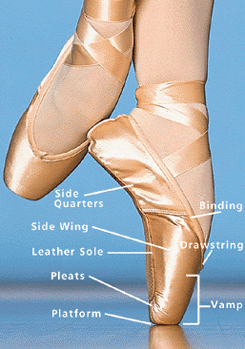
| The Parts of a Pointe Shoe |
| ~ The platform is the section of the shoe that you dance on. ~ The vamp is the top of the box which covers the toes. ~ The pleats is the area between the shank and the platform which helps support the toes. ~ The leather sole, or shank, is the area which supports the arch. ~ The drawstring, similar to in a ballet slipper, tightens to fit the shoe to the foot like a glove or a second layer of skin. ~ The side wing and side quarters fit snuggly to the foot. The ribbons and sometimes the elastic is sewn into the inside of the side quarters. ~ The binding holds the shoe together. ~ The ribbons and elastic hold the shoe onto the foot by the lower ankles. |
| 19 Makers of Pointe Shoes 1. Capezio (USA) 2. Grishko (Russia) 3. Bloch (Australia) 4. Gaynor Minden (USA) 5. Fuzi (China) 6. Freed (England) 7. Chacott (Spain/Japan) 8. Repetto (France) 9. Gamba (England) 10. Sansha (China) 11. Prima Soft (USA) 12. Porselli (Itlay) 13. Angelo Luzio (Canada) 14. Schachtner (Austria) 15. Russian Pointe 16. Baryshnikov (USA) 17. Eva (Germany) 18. Gandolfi 19. Soloist |
| 10 Reasons Teachers Don't Let Students Start Pointe 1. Improper placement 2. Too young 3. Not pulled up in body or feet 4. Feet not arched enough 5. Overweight 6. Lack of strength in torso 7. Weak knees 8. Weak ankles 9. Basic stance on demi-pointe not strong and correct 10. Taking too few classes per week |
| Remember: The pointe shoes do not hold a dancer up on pointe, her body does!!! |