The Changing Face of the Online Music
Industry
Introduction
Since the creation of the internet and the establishment of MP3
technology, an explosion of music downloading has fundamentally changed the way
consumers discover, listen to and purchase music. No longer are consumers
automatically purchasing CD’s simply from music retailers, but online music
service providers (MSP’s) such as Kazaa, Morpheus and the
now defunct Napster provide software that
enables the user to download music files at near CD quality for free. This has
caused artists and recording labels to rethink the way they are targeting their
customers, as well as raising a huge range of legal issues regarding the
copyright and protection of artist’s songs. Record companies have tried to
reinforce the fact people are stealing from the artists when they download
copyrighted material illegally and have tried to transfer the responsibility of
acting morally onto the consumer.
A copyright is infringed once a song is made available to the public by uploading it to an internet site for other people to download, sending it through over email, chat service, or otherwise reproducing copies without authorisation from the copyright owner. The No Electronic Theft Act (NET) details penalties for those who break copyright laws, including up to three years in prison and even $250,000 fines. Repeat offenders can expect anything up to six years in jail.[1]
In the beginning…..there was Napster
The concept of MP3 file sharing was first introduced to people around the globe with the creation and launch of Napster in 1999[2]. Napster essentially was the pioneer of large-scale file sharing giving users access to an enormous catalogue of music files. However, the most crucial point of this service was that Napster’s software was free for users to download, which then enabled users worldwide to obtain music at no cost (other than the internet connection) which was in breach of the copyright regulations.
Obviously, the Recording Industry Association of America (RIAA) was faced with a huge threat and MP3’s potential (undoubtedly assumed negative) impact on the music industry posed a major risk. At the peak of its existence Napster had up to 64 million members[3] and was estimated to have cost the RIAA a supposed $300 million in lost sales to date, although this can not be directly proven. It is simply far too early to tell whether the drop in record sales over the period 1999-2002 is simply a blip on the screen, or evidence of further recession to come. Nor is it possible to assess reliably, without survey data, whether consumers are indeed copying instead of purchasing, or whether other factors, such as lack of income and the narrowing of musical style in teen-pop chart records have caused people to look elsewhere for their sources of entertainment.[4] Either way, regardless of whether Napster was responsible or not, the RIAA, after a series of gruelling legal battles starting in December 1999 finally in July 2002 managed to get a court order that essentially shut the file sharer down and forced the company to declare bankruptcy.[5] However, Napster vowed to work out and settle all its copyright dispute issues, and eventually return with a “pay for only what you download” scheme based on the utility business model, rather than the previous registered users system where Napster based its service around an advertising business model to generate the needed revenue for existence.
Competitors in the free file music sharing market
After the final downfall of Napster in 2001 the online file
sharing community gave rise to the creation of what is now know as Peer to Peer
(P2P) sharing software. Rather than information being
based at a central location, P2P is distributed
throughout the world and it is harder to have a centrally responsible party. The
largest of these currently is the enormously popular Kazaa, which had 5.5
million unique visitors alone in the week of 29th June to
Other important competitors in the music sharing market include Morpheus, Winmx, Bearshare Earth Station and Madster and many other minor sharers. Winmx has around 1.5 million users, while Bearshare has under one million, but justifies its service by stating it is based around the Gnutella network that services the internet community by promoting and sharing open source software.
In summary, Kazaa is currently the most dominant file sharing software available, and is considered a powerful force to be reckoned with in the market where it operates using a registered users approach under the advertising business model. This is obvious when using Kazaa as it is full of advertisements for varying topics.
Where we’re at….Paying for file sharing
New findings from international research firm Ipsos-Reid show that less than 1 in 10 (8%) Americans over the age of 12 who have ever downloaded or streamed music off the Internet have actually paid for this material. In addition, over four-fifths (84%) of those who have downloaded music without paying report they would not be likely to pay for streaming or downloading music off of the Internet, even if there was no free music available, Ipsos-Reid found in its latest syndicated study; TEMPO: Keeping Pace with Online Music Distribution. “This suggests there may be resistance among current downloaders to the initial legitimate fee-based online music services recently launched by the major recording companies,” said Matt Kleinschmit, Senior Research Manager for Ipsos-Reid. “There currently appears to be a segment of the downloader population that has a fundamental objection to the idea of paying for music downloads or streams obtained from the Internet.”[8]
 Despite
this desire for free and mostly illegal music, however, evidence shows that
downloaders do not stop buying pre-recorded compact discs when they discover
downloading. In fact, 81% of downloaders report their CD purchases have stayed
the same or even increased since they initially began downloading music from
the Internet. In addition, downloaders appear to have a voracious appetite for
online music-related information, as over eight in ten (84%) report also using
the Internet for more than just downloading, such as listening to song clips,
reading about lyrics and tour information, and researching bands prior to
actually purchasing their CD. And nearly half (47%) of these individuals
indicate that they have subsequently purchased a particular CD from a band or
artist solely because of something they first read or listened to on the
Internet. [9]
Despite
this desire for free and mostly illegal music, however, evidence shows that
downloaders do not stop buying pre-recorded compact discs when they discover
downloading. In fact, 81% of downloaders report their CD purchases have stayed
the same or even increased since they initially began downloading music from
the Internet. In addition, downloaders appear to have a voracious appetite for
online music-related information, as over eight in ten (84%) report also using
the Internet for more than just downloading, such as listening to song clips,
reading about lyrics and tour information, and researching bands prior to
actually purchasing their CD. And nearly half (47%) of these individuals
indicate that they have subsequently purchased a particular CD from a band or
artist solely because of something they first read or listened to on the
Internet. [9]
Kleinschmit said “They are taking advantage of the World Wide Web as a resource for both obtaining and researching music, and then often putting this newfound knowledge to use in offline venues. Many of these individuals appear to be looking to the Internet as a way to discover new bands and sample different types music prior to making a traditional retail purchase.” This suggests that current music downloader’s can be influenced by their online music activities, and may subsequently adjust offline listening and purchase behaviours as a result.

Figure 1:Have
you paid for any of the music you have downloaded in the last month?
Competitors in the Pay for File Sharing Market
Paying for the service to download music by file sharing is a relatively new and promising market on the internet that is certain to have a massive impact on the way we discover, listen to and purchase our music now and into the future. The products competing in this paying market are all relatively new ranging in age from being launched in 2000 to July of 2003. All are based around either the utility business model which sees users “pay as they go” for each individual song, or the content services approach using the subscription model where consumers pay a flat monthly fee for either a set number of songs/albums or even unlimited downloads.
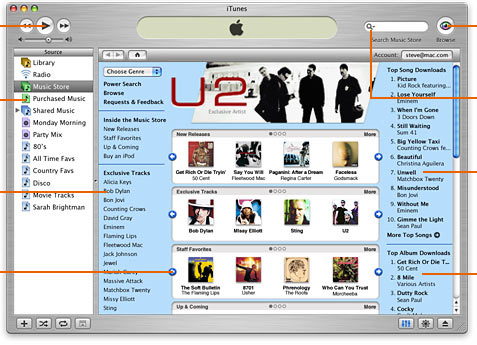 The
newest and currently most successful pay for online music store is Apple’s
recently launched iTunes, which in its first week of
release in April 2003 achieved just over one million downloads. The iTunes
music store has since had over 7 million downloads of songs that are
attractively priced to consumers at US$0.99, and
promotes itself on the notion that “It’s easy, it’s fair and it’s legal”. The
music store operates using the utility business model that sees each user pay
only directly for each individual song they download, and no more. Overall the
store is described as fast and convenient for the new generation music user,
while also being fair to the artist and record companies. In a nutshell, Apple
allows you to play your music on up to three computers, enjoy unlimited
synching with your iPod (a portable music player) and burn (copy) unlimited
CD’s of individual songs and play lists.[10]
Essentially all an Apple user has to do is go online to iTunes, log
on and then search for the song titles they are after, which once they have
selected are charged to them and downloaded onto their computer. The Internet
may be global, but buying music legally online must still respect national
borders. The music licensing deals behind these legitimate online services,
dictate domestic sales only and this means many of these services are available
to US customers only[11].
That is because the music industry has yet to figure out how to ensure that
everyone gets fairly paid.
The
newest and currently most successful pay for online music store is Apple’s
recently launched iTunes, which in its first week of
release in April 2003 achieved just over one million downloads. The iTunes
music store has since had over 7 million downloads of songs that are
attractively priced to consumers at US$0.99, and
promotes itself on the notion that “It’s easy, it’s fair and it’s legal”. The
music store operates using the utility business model that sees each user pay
only directly for each individual song they download, and no more. Overall the
store is described as fast and convenient for the new generation music user,
while also being fair to the artist and record companies. In a nutshell, Apple
allows you to play your music on up to three computers, enjoy unlimited
synching with your iPod (a portable music player) and burn (copy) unlimited
CD’s of individual songs and play lists.[10]
Essentially all an Apple user has to do is go online to iTunes, log
on and then search for the song titles they are after, which once they have
selected are charged to them and downloaded onto their computer. The Internet
may be global, but buying music legally online must still respect national
borders. The music licensing deals behind these legitimate online services,
dictate domestic sales only and this means many of these services are available
to US customers only[11].
That is because the music industry has yet to figure out how to ensure that
everyone gets fairly paid.
Along with the blossoming of iTunes,
BuyMusic.com (run by Buy.com founder Scott Blum) entered the fray in July
looking to copy the success story with the far larger audience that runs
Windows software (iTunes is, for now, available only
to Macintosh machines, which account for only 1 percent of the
Services such as Pressplay, which uses Microsoft technology, have been put on the defensive with iTunes success. But Microsoft is betting that new security enhancements planned for later this year could make renting music, rather than owning it, more attractive to consumers.[12]
Microsoft said it is developing software that makes it easier for subscription services to transfer music to portable music players. These services now provide unlimited downloads of hundreds of thousands of songs to a PC for a monthly fee, but they typically do not allow files to be moved around much. Microsoft said it will soon address this shortcoming with technology that will allow unlimited downloads to a portable device - a dramatic improvement.
At the same time, old-guard Web sites that hoped to shape the digital music sector are falling away – two of the highest-profile among them, MP3.com and Tonos, have been shut recently.
Other pay sites include Musicnet and Pressplay.
Legal Issues
The music industry is currently in a state of massive transition
as digital convergence continues. Record companies are struggling to realise
that conventional CD sales will continue to decline and new types of
distribution emerge as the internet takes a firmer hold on retailing. The
recording industry, rather than embracing this new form of distribution, has
taken a more defensive stance and is preparing to launch a massive legal attack
against music piracy on the Internet. Hundreds of lawsuits are being filed by
the Recording Industry Association of America (RIAA
)against individuals it believes share vast amounts of music online. But a
handful of universities and a major Internet-service provider have challenged
the validity of those subpoenas, and a
The RIAA vs. Kazaa, A fight that pits the huge music industry against the world's most popular file-sharing software program – or file-stealing program, depending on who you talk to. Kazaa is facing a number of lawsuits filed by some of entertainment's biggest producers. The companies are asking the courts to assess penalties of $150,000 for every offence, meaning the company could be on the hook for billions of dollars in fines. While RIAA argues that Kazaa is ruining the music industry by allowing inferior copies of music to be downloaded, Kazaa’s CEO, Nikki Hemming disagree’s, "Rights-managed content through Kazaa is as good as any rights-managed content anywhere in the world. We use the same technology to wrap and deliver premium files as iTunes”[14].
Hemming said she has offered several solutions to the record companies, including a pay-per-download Kazaa service. "If the music industry had taken up the opportunity that was presented to them—and was a completed piece of technology 14 months ago—there would be a rough income to the music industry of between US$35 and US$40 million already. That's been left on the table, and that's available right now," she said of the software.
[graph] 
After years of delays, the record industry is experimenting with services to combat the wide availability of free music brought on by the MP3 file format and file-swapping software such as Kazaa. Record labels and retailers have tried to lure paying customers by offering singles for sale as downloads for less than $1, and also for rent through monthly subscription services.
Outlook for Music Distribution
According to Tom Vassos, an IBM Canada Ltd. Consultant, The music business is one of the most profoundly changed industries in the world as a result of the Internet, "It is just so difficult to change the entire business model of an industry that has really operated the same way for decades." One reason it has taken music producers to compete with free downloads is that it has necessitated creating an entirely new business model. The old system, where artists are payed a few cents each recording sold in store, has been in place for a century. The key will be quality and reliability of downloads in order to combat free alternatives. Apple, in introducing iTunes in April shed a large ray of hope on the industry. Apple’s pricing, the simplicity of paying per song, and the quality of the music files seem to be the key to success and a model that others will emulate[15].
The iTunes success has been a mix of timing, Apple's special brand of artsy simplicity, marketing and pricing. But it is also, so far, a minor victory in a major war. By some estimates, 35 billion music files are now downloaded each year, and only the tiniest trickle of that colossal tide creates any revenue for the music industry. Some say that iTunes has only delayed the crisis that the Record companies must eventually face
Napster 2.0 is in the re-development track, after being purchased by Roxio digital entertainment, a company most renowned for its Easy Cd-burning software. As Chris Gorog, CEO of Roxio says, “We believe that the new, legal version of Napster will be the richest, most complete music experience available on the Internet and that it will offer consumers, for the first time, a choice between a la carte downloads and a monthly subscription program”[16].
For the music industry, wireless is an emerging appeal, as mobile phones offer direct and easy access to music fans. Equally important and attractive though is that it is a medium that allows for more control over securing profits for the music industry and enforcing digital rights management. Servos says one aspect of wireless that publishing companies and labels are most excited about is being able to monetize music, something they have not been able to accomplish with the Internet[17].
“Wireless from day one has been more of a commerce-based service,” Servos says. “There has been a lot of thought that has gone in right from the handset manufacturer, straight through to the carrier to insure that digital rights management, which is key here, is contemplated in the design development of handsets, applications and content.”
Conclusion
Revolutions are nothing new, in the 1950’s the rebellion was the sound of rock ‘n roll. The 1970’s had punk and disco up against big money rock. In the 1990’s the revolution has been in the medium and for the first time the consumer has called the tune. "I had no idea what I was walking into, the shrapnel that would come my way," Lars Ulrich of Metallica says now about his leadership of a legal battle with Napster.
"If I had known, I wouldn't have done it. I didn't know there was this whole world into this. Now everybody knows."[18]While the record companies currently have a barely noticeable revenue flow from online music, a combination of education and threat of litigation may drive many consumers to purchase legitimately. Companies such as Apple and BuyMusic.com are paving the way and creating business models which may ultimately define how large scale distribution of music is implemented. In the long run, record companies embracing new technologies and creating a new environment to encourage payment for downloads is likely to be far more productive than blocking it.