History: 1813 - 1824
War
I (1813 - 1815)
The
first year passed in a sort of haze. He
spoke little, did not weep at all, and fought like a demon.
It was not until his first promotion that the reality of his situation
finally struck him. He took a week’s leave then, returning to his father’s
home to return his uniform and his weapons—and to mourn at his wife’s grave.
When
he returned, he had donned his own uniform, complete with its new markings of
rank. He wielded his own saber and
pistol, and there was light 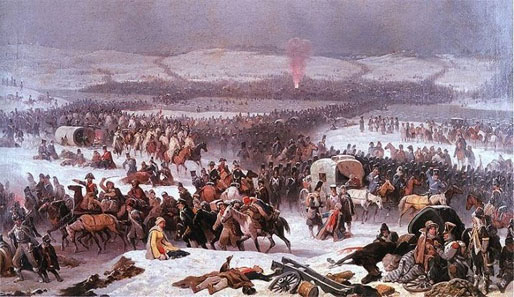 in his eyes again.
He had loved and lost; for that, he would be reimbursed in full.
In blood. Some called him
valiant; others vicious; still others, cruel.
Yet none could deny he was destined to exceed his father, for Nikolaus
differed from Adelrich in one crucial way.
Nikolaus had absolutely nothing left to lose.
So it was that while Adelrich was dependable, tireless and solid,
Nikolaus was daring. Bold. Unpredictable.
While Adelrich stuck to the book and fought well and bravely, Nikolaus
improvised, ambushed and surprised. While
Adelrich was trustworthy and respected, Nikolaus was a military genius.
And most importantly, he was charismatic enough to convince his followers
that his madman’s ideas would succeed.
in his eyes again.
He had loved and lost; for that, he would be reimbursed in full.
In blood. Some called him
valiant; others vicious; still others, cruel.
Yet none could deny he was destined to exceed his father, for Nikolaus
differed from Adelrich in one crucial way.
Nikolaus had absolutely nothing left to lose.
So it was that while Adelrich was dependable, tireless and solid,
Nikolaus was daring. Bold. Unpredictable.
While Adelrich stuck to the book and fought well and bravely, Nikolaus
improvised, ambushed and surprised. While
Adelrich was trustworthy and respected, Nikolaus was a military genius.
And most importantly, he was charismatic enough to convince his followers
that his madman’s ideas would succeed.
And
they did.
For
two years he fought with the Prussian army, his rise through the ranks
accomplished with an unprecedented speed. He
gave himself totally to the war and all its violence in a way that Adelrich
never had. One might say he became
corrupted, for only those tainted by war can understand it in the way he did, be
as brilliant as he plainly was, and he knew it.
When the joint Prussian-Austrian-Russian forces defeated the last of
Napoleon’s soldiers in 1815 and the Germanic states formed the German
Confederation, he resigned. If he
did not, he would be consumed by his own violence.
Yet home was too painful for him, too haunted by memories of the love he
had lost. Perhaps it was a certain
morbid curiosity; perhaps it was an attempt to convince himself the hated French
were human as well. Either way, when the war ended, Nikolaus followed the
survivors of Napoleon’s army west, to France.
La
Comtesse (1815 - 1824)
Changes
would come in the changing country of France.
No longer was he a man of the military; he was an aristocrat.
No longer would he be confined merely to the narrow world of the mortals;
he would have his first brush with the supernatural, and it would not be his
last.
After
Napoleon had toppled from his glory, the newly reinstated nobles of France were
eager to ingratiate themselves with the rest of the aristocracy of Europe, as
though to prove themselves somehow better than and totally unrelated to the
shooting-star that Napoleon had proven to be.
In addition, it was the Russians who took the bulk of the credit in
Napoleon’s defeat, and the Russians, not the Germanic peoples, who
subsequently received the most flak from the defeated French.
While
the French nobles sought to bury Napoleon’s memory, the prominent Kindred of
France were scrambling to cover their faux-pas. The younger leaders who had borrowed Napoleon’s radical
momentum to overthrow their elders were extinguished one after another, and that
was the end of that. The elders who
jumped ship to avoid the dagger, disgraced when their pawn-turned-prince turned
into a frog, were eager to sink out of political circles into the easier, less
ambitious ways of pleasure-centered decadence.
So it was that the chagrined, once-powerful, war-minded Brujah, Tremere
and Ventrue Princes were done away with and rapidly replaced by other Ventrue
with their eyes on money and Toreadors, whose love of beauty was deemed the wave
of the future. They had had it with
revolution and war. From this
moment on, until forever—or until a better opportunity presented
itself—their eye was on art and wealth.
All
of which was fine with Nikolaus. He
had come to forget. To see new
things, and abandon the old. Making
a token gesture to conceal his military past, he soon began to move in the
aristocratic circles his grandfather had moved in before he had decreed the
destiny of the House of Doenhoff lay in war.
He gained friends, however superficial the bonds may be, and passed the
days and nights gambling, drinking, indulging in youth.
Being a widower with a distinctly brightening future, what with
Napoleon’s demise and Prussia’s slow climb to power, he was again an
eligible bachelor, this time one surrounded by possible spouses.
It didn’t hurt, either, that he had inherited his mother’s blonde
hair and blue eyes, though both took on a distinctly paler shade in the frigid
North where he was raised. He had
also inherited his father’s stature and commanding—some would say
intimidating—manner, and his grandfather’s distinctively Nordic profile.
All told, the young hauptman
cut a compelling figure in the newly reorganized courts of France and drew
attention wherever he went. Yet
settling again was out of the question, at least for the time being, and so the
years began to wear on, and Paris with its unstable sequence of new rulers
became his residence, though never his home.
In
1819, there was a small uproar among the elite of Paris.
A particular noblewoman by the grand name of Liandrée Mallandaine, la
Comtesse d’Icibas had surfaced, and every would-be detractor succumbed to her
wit and charm. A true
night-blooming rose, she came to grace only the soirees and the elaborate balls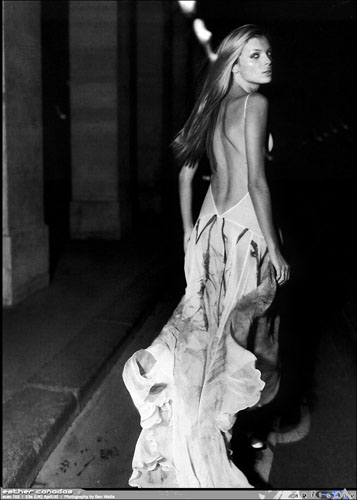 of the evenings (it is said Masquerade balls were her favorite) and was never
seen during the day. Those who went
to call upon her were turned away politely but firmly; those who asked of her
habits found their conversations wandering far from the topic before they had
even realized it. She had appeared
seemingly out of thin air, claiming an old and proud lineage—those old enough
to remember often sighed she was the very image of her mother.
Her husband was a silent and dark man, seldom seen in the hallowed halls
of society. When he did appear she
would make no effort to disengage from her latest fling and he did not appear to
care.
of the evenings (it is said Masquerade balls were her favorite) and was never
seen during the day. Those who went
to call upon her were turned away politely but firmly; those who asked of her
habits found their conversations wandering far from the topic before they had
even realized it. She had appeared
seemingly out of thin air, claiming an old and proud lineage—those old enough
to remember often sighed she was the very image of her mother.
Her husband was a silent and dark man, seldom seen in the hallowed halls
of society. When he did appear she
would make no effort to disengage from her latest fling and he did not appear to
care.
The
mills began to turn, and the stories reached Nikolaus’ ears.
Perhaps she herself encouraged the rumors—stories of spirited young men
seduced into her boudoir only to be grown weary of in a matter of weeks and
abandoned, pale pathetic shades of their former selves that soon died of
heartbreak; tales of beautiful youths taken into her bed and never heard from or
seen ever again—for while they might have made another woman formidable and a
horror to be avoided, they only made her more fascinating, more beautiful, more
alluring. Such was her magic.
What
initially drew her to Nikolaus is not hard to decipher.
The flaxen-haired Comtesse loved the beautiful and the exotic; he was
beautiful and different, which is close to exotic.
What initially drew him to her is the oldest reason of all: lust.
Before three nights had passed since their first encounter, he was in her
bed. The difference was he still
held a place in her bed, and some would say her heart, three weeks hence, and
three months after that, and on.
She
was a vampire, of course. A rose
watered in blood, as they say, and an ageless and forever unwithering rose whose
beauty only hid the sharpest of thorns. A
Toreador with a Toreador’s love of beauty, and a Toreador’s pathos of life
lost, perhaps she was attracted by his passion. For while he tried to hide among the ranks of nobility, it
was obvious he only came truly alive when he rode his charger into a hunt and
lifted his pistol to fell his prey, ever unerringly. Some say it was his years in the military; more likely it was
the indomitable Kasch blood, of which military prowess was merely an effect and
not a cause. At any rate, he gave
her what the nobles she had grown accustomed to could not—what even blood
could not fully give.
He
was full of life. She was
infatuated. Borrowing the
instability of French politics as an excuse, she returned to her ancestral home
west of the Rhine a year after her grand entrance to Parisian society and asked
him to follow. Nikolaus, seeing no
harm in the offer, accepted, and they set off eastward, across the torn and
heaving country of France. Behind
them lay a trail of broken hearts. Ahead
lay blood.
Her
blood, to be exact, which she began to feed him in his food.
He began to notice she never ate, merely sipped at a dark red wine and
watched him devour his meals with his young man’s appetite, and when she
watched, a curious expression would steal over her face: half pleasure, half
regret. He could not understand
why, but by then her blood mingled with his in his veins, and he did not care.
He was happy in her presence.
The
days passed into weeks, into months and seasons and years.
Power passed from hand to hand in Paris, but it was distant and they did
not care. Prussia grew steadily
stronger, but it was of little consequence to Nikolaus now.
He himself grew stronger, too, though his common sense told him he was
finished with growing. But his
newfound strength pleased her, and so he too was pleased.
They
spent their evenings conversing by the fire, for she was fiercely intelligent
and clever, and their nights making love. She
began to teach him to play various instruments, but his deft strong hands became
accustomed to the beautiful curves of the violin.
He began to teach her swordplay, but it was his heavy pistols that caught
her fancy. And through it all,
never once did he see her during the daylight hours.
Nor did she tell him of her nature.
He did not ask; after all, she never asked about his past.
They did not age, but without the comparison of mortal friends and
family, Nikolaus could not be certain of it.
And so they were content to live together thusly, deeply in lust, which
eventually becomes a form of love.
Beethoven
(1824)
Two,
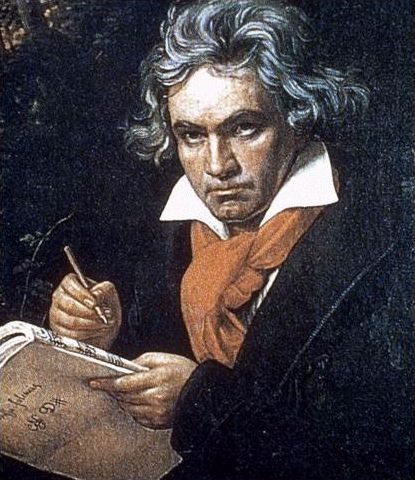
three decades ago, a young musician bearing the noble name Ludwig von Beethoven
had exploded onto the scene with his fiery, passionate music.
Notorious for his temper and his mood swings, the man was nonetheless a
genius. Toreador around the world
were ecstatic. Many were determined to bring the composer into their fold,
but in the end the Toreador Prince of Vienna, once an aspiring composer himself,
declared that to crush such ambition, such raw emotion with the dead stagnancy
of the Embrace was immortal sin. Not
everyone agreed; most didn’t. Nonetheless,
Vienna was the music capitol of the world at the time, and its Prince, who had
shoved even the venerable old Tremere aside with his scores and compositions,
was a powerful and respected figure. His
word was heeded, and so the Toreador watched, agonized, as Beethoven grew older,
deafer, all the more magnificent.
Now
it was being said that Beethoven would not live much longer, that his latest
symphony, the Ninth, could well be his last.
The Roses of the world flocked to Vienna, jostling for seats at the première
to pay their tributes to the genius of an age.
Through bribes and bloodshed alike, a lucky few acquired tickets—among
them, la Comtesse d’Icibas. In
the late April of 1824, she and Nikolaus traveled to the Austrian capitol.
May
7th. Opening night.
The concert hall was filled with an unprecedented gathering of Toreadors,
along with a smattering of elders of other clans come with half-sardonic
interest to see what the fuss was about. It
was there in the Kaertnerthortheater that he first saw her: far across the room
at intermission, light and conversation and centuries of time between them. Her name was Ilse Kohlerkall, the Gräfin von Stauffenberg,
and she was raven-haired, fierce and beautiful.
Though
he did not know it then, she was his rendezvous with destiny.
After
the concert, a messenger that had sought Nikolaus at the Comtesse’s summer
manor on the Rhine caught up with the pair in Vienna. The news was dire: Adelrich von Doenhoff had been gravely ill
when he had sent the messenger some weeks back. In all likelihood, it was already too late.
Nikolaus was shocked. How
could his father be dead, when he was still a young man?
Yet when he counted the years, he realized he was nearly thirty, and his
father nearly seventy.
He
asked Liandrée that night how it came to be that he did not look the slightest
bit different from the way he had looked years before, when he followed her to
Ems. He asked how it was that she
did not age either, but remained forever young.
He asked why he never saw her in the day, why she never ate, why she
drank only her dark wine. He asked,
and she looked at him, and did not answer.
He saw a coldness in her eyes he had never seen before, and he knew fury
as he had never known before. She
saw a strength in his, a rebellion against the blood-borne love she had laid
upon him. And deep in her
Toreador’s cruel and vulnerable heart, she ached.
By
the time the sun set the evening after, he was long gone.
He had taken with him his pistol and one of the carriage horses, a change
of clothes, and little else. Liandrée
stood at the window a long time, staring into the cold north.
Next