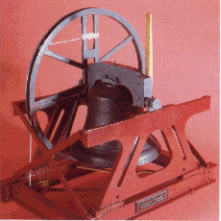
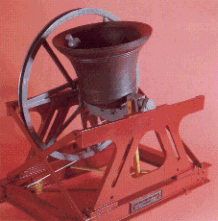
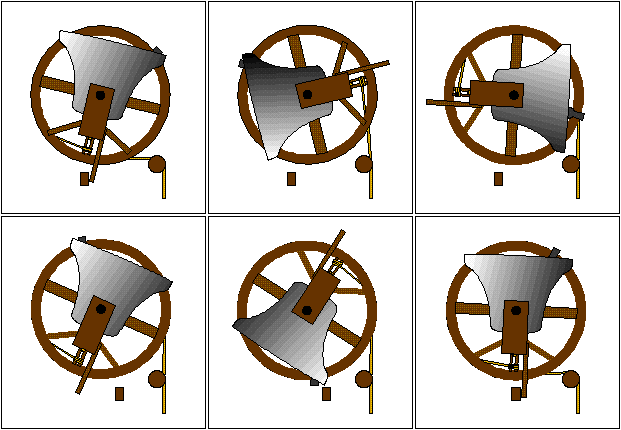
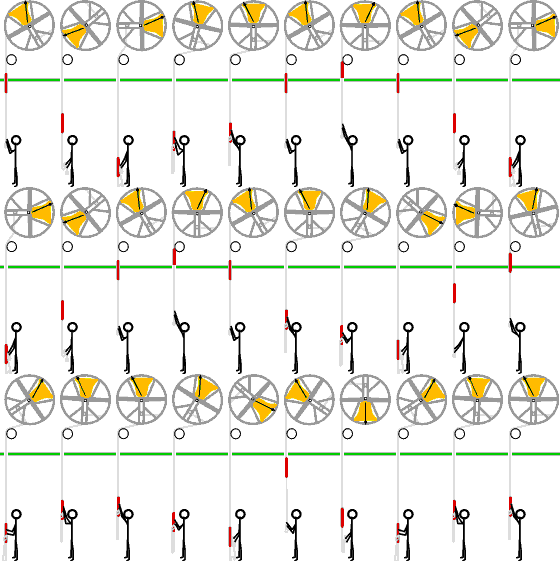
For centuries church bells have been chimed from below by means of ropes attached to simple levers fixed to the fittings from which the bells are rung. The replacement of levers by full wheels, which began in the sixteenth-century England gave the ringers better control of their bells, allowing sets of bells to be rung in systematically different patterns.
The bells are tuned to a normal (diatonic) scale and it is usual to start with ringing down the scale, a sequence which ringers call "rounds". The order in which the bells sound is then altered to give different sequences called "rows" or "changes". Click here for a sound clip of the Ashford bells being rung to changes followed by rounds.
Changes may be called out individually by the conductor or alternatively the changes may be made to a preset pattern or "method", and each ringer must learn that method in order to know when his or her particular bell must sound in each row. This style is known as method ringing.
Call changes and a few standard methods are rung in most towers and this makes it very easy for ringers to visit and ring with other bands. There are many more advanced methods which provide a continuing challenge as ringers gain proficiency over time.