
The pros and cons of engine customization for you to learn on what to do for your cars best output. Also given is the price, the manufacturers name, and how much horsepower you gain.
Camshafts
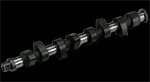 The stock camshaft or
camshafts are designed for mid range power with a smooth idle. Camshafts
can be purchased or custom designed to improve the air flow at higher
rpms. They allow for a longer duration for when the valves are open and
act as a direct timing change without adjustment. The more power you expect
to get from a camshaft, the more problems you can expect to encounter,
eventually leading to major problems with vacuum controlled accessories,
such as the power brake booster. The engine will not create enough of
a vacuum for the brake booster to function properly. Second generation
Probes have direct fit 'drop-in' camshafts from J-Spec engine which can
improve top end power. Many performance engine shops in your area may
be able to create custom camshafts for any application.
The stock camshaft or
camshafts are designed for mid range power with a smooth idle. Camshafts
can be purchased or custom designed to improve the air flow at higher
rpms. They allow for a longer duration for when the valves are open and
act as a direct timing change without adjustment. The more power you expect
to get from a camshaft, the more problems you can expect to encounter,
eventually leading to major problems with vacuum controlled accessories,
such as the power brake booster. The engine will not create enough of
a vacuum for the brake booster to function properly. Second generation
Probes have direct fit 'drop-in' camshafts from J-Spec engine which can
improve top end power. Many performance engine shops in your area may
be able to create custom camshafts for any application.
Pros:Improved mid and upper range power, mainley used for that extra ummph towards the end of shifting.
Cons:Can cause problems with your vacuum controlled accesories like your anti-lock brakes and so on.
Cost: roughly around $100-$400
Manufacturers: Cork Sport, Crower Cams, Check with local performance shops
Horsepower Gain: 5-10 Horses depending on type of shaft and car type.
Catch Can
 The Positive Crankcase
Ventilation (PCV) system relieves the pressure in the cylinder head caused
by a pressurized crankcase. Older engines use to vent these fumes into
the atmosphere, but due to the EPA and emission regulations, newer engines
are designed to vent the fumes into the intake system to be burned up
along with the air and fuel mixture. The problem with this is that the
crankcase fumes contain vaporized oil. This mist settles on anything in
its path and coats the entire intake manifold with an oily film as well
as enters the combustion chamber with the air/fuel mixture. When the piston
rings begin to wear, combustion pressure increases blow-by considerably.
This can end up causing your car's emissions to worsen and result in failure
of emission tests. As the oily film builds up, a substantial decrease
in performance will occur, including engine problems such as low idling
and stalling.
The Positive Crankcase
Ventilation (PCV) system relieves the pressure in the cylinder head caused
by a pressurized crankcase. Older engines use to vent these fumes into
the atmosphere, but due to the EPA and emission regulations, newer engines
are designed to vent the fumes into the intake system to be burned up
along with the air and fuel mixture. The problem with this is that the
crankcase fumes contain vaporized oil. This mist settles on anything in
its path and coats the entire intake manifold with an oily film as well
as enters the combustion chamber with the air/fuel mixture. When the piston
rings begin to wear, combustion pressure increases blow-by considerably.
This can end up causing your car's emissions to worsen and result in failure
of emission tests. As the oily film builds up, a substantial decrease
in performance will occur, including engine problems such as low idling
and stalling.
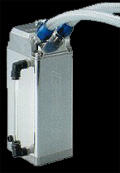
The best option are catch cans. They attach between the PCV valve and the intake manifold to filter out oil before it reaches your intake system. This keeps your intake system cleaner. The only requirement is that you empty the tank occasionally as normal maintenance.
Pros: A legal way to make your engine healthier and produce more. Also lets your car run well past 100,000 miles. Not just used for import tuning or drag racing.
Cons: Requires maintenace every couple of months.
Cost: $50-$200
Manufacturers: Cusco, GReddy
Horsepower Gain: NONE but helps out your engine
Copper Head Gasket
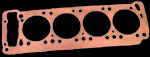 As
compression and horsepower increases under turbocharged and supercharged
applications, head gaskets can become weak and fail. Standard head gaskets
are usually made of layers of material such as steel, carbon, and asbestos.
A seal is made when the cylinder head is torqued down and the head gasket
is squished. Copper head gaskets are solid and always keep their shape.
Even under extreme compression, copper head gaskets will maintain their
integrity. Since copper head gaskets do not squish during the cylinder
head torquing, they can be reused over and over again. As long as they
are properly installed, they will last the life of your car. Proper preparation
will add considerably to the cost of this upgrade. Although locating a
direct fit copper head gasket may be difficult, most shops and companies
that offer them for other engines are usually willing to work with custom
applications.
As
compression and horsepower increases under turbocharged and supercharged
applications, head gaskets can become weak and fail. Standard head gaskets
are usually made of layers of material such as steel, carbon, and asbestos.
A seal is made when the cylinder head is torqued down and the head gasket
is squished. Copper head gaskets are solid and always keep their shape.
Even under extreme compression, copper head gaskets will maintain their
integrity. Since copper head gaskets do not squish during the cylinder
head torquing, they can be reused over and over again. As long as they
are properly installed, they will last the life of your car. Proper preparation
will add considerably to the cost of this upgrade. Although locating a
direct fit copper head gasket may be difficult, most shops and companies
that offer them for other engines are usually willing to work with custom
applications.
Pros: Virtually indestructible, reusable
Cons: Improper preparation during installation can cause problems.
Cost: $100-$400
Manufacturers: N/A
Horsepower Gain: None but again helps out your engines long term performance.
Enging Balancing
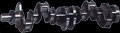 When an engine is built
at the factory, the crankshaft is balanced in line with the pistons for
smooth engine rotation. Although it's balanced closely enough, there is
a wide enough tolerance that more horsepower is lost during the rotation
then there needs to be. When upgrading an engine, this lost horsepower
can be more evident. Having each piston balanced so each are perfectly
equal in weight, then balancing the crankshaft for the pistons using a
strict tolerance, will allow the engine to run considerably smoother.
The smoother the engine can run, the less horsepower is lost from the
rotation. This also greatly increases engine life, since less stress is
being placed on the bearings.
When an engine is built
at the factory, the crankshaft is balanced in line with the pistons for
smooth engine rotation. Although it's balanced closely enough, there is
a wide enough tolerance that more horsepower is lost during the rotation
then there needs to be. When upgrading an engine, this lost horsepower
can be more evident. Having each piston balanced so each are perfectly
equal in weight, then balancing the crankshaft for the pistons using a
strict tolerance, will allow the engine to run considerably smoother.
The smoother the engine can run, the less horsepower is lost from the
rotation. This also greatly increases engine life, since less stress is
being placed on the bearings.
It's also important to have the engine balanced when replacing the pistons.
If you replace the pistons with a lighter or heavier set of pistons, engine
rotation can be adversely effected and engine life can be considerable
reduced.
Pros:Improved mid and upper range power, mainley used for that extra ummph towards the end of shifting.
Cons:Can cause problems with your vacuum controlled accesories like your anti-lock brakes and so on.
Cost: roughly around $100-$400
Manufacturers: Cork Sport, Crower Cams, Check with local performance shops
Horsepower Gain: 5-10 Horses depending on type of shaft and car type.
Engine Upgrades
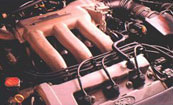 The most solid, efficient
horsepower increase you can get is from a new engine. Designed from the
ground up to be high performance engines, these provide more horsepower
and a better starting ground for other modifications.
The most solid, efficient
horsepower increase you can get is from a new engine. Designed from the
ground up to be high performance engines, these provide more horsepower
and a better starting ground for other modifications.
The most popular engine upgrade is the Japanese spec engines straight
from Japan. These engines are designed for racing without the EPA controlled
guidelines. The only problem with these engines are that they're technically
not legal for street use.
Pros: More horsepower resulting in more acceleration and top speed.
Cons: Expensive, time consuming, sometimes illegal
Cost: $1,500-$6,000
Manufacturers: Cork Sport, Probe Industries, SOKO
Horsepower Gain: 35-100 Horsepower gained
Forged Pistons
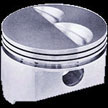 Just and upgraded piston
over your stock piston. Can take on heavy load of power.
Just and upgraded piston
over your stock piston. Can take on heavy load of power.
Pros: Lasts much longer than stock pistons, ability to put up with a lot higher power demands.
Cons: Requires much work to install, costly
Cost:$100+ each
Manufacturers: Probe Industries, Zip
Horsepower Gain: moderate to none
Cold Air Intake
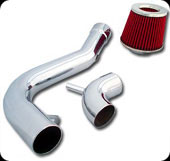 Intakes are usually placed
high away from ground water and tucked away to keep foreign objects from
entering them. Air rams extend or replace stock intakes in order to bring
them into the open. The normal stream of air that's around the car is
forced into the intake... the faster your car moves, the faster the air
is forced into the intake. This improves horsepower ratings at high RPM
when the stock intake can't feed the engine enough air.
Intakes are usually placed
high away from ground water and tucked away to keep foreign objects from
entering them. Air rams extend or replace stock intakes in order to bring
them into the open. The normal stream of air that's around the car is
forced into the intake... the faster your car moves, the faster the air
is forced into the intake. This improves horsepower ratings at high RPM
when the stock intake can't feed the engine enough air.
Cold air intakes differ from air rams in that they aren't designed to
force air into the engine. They replace the stock air filter with a cone
filter, but instead of the filter feeding off of the hot engine compartment
air, the cold air intake extends down to the bottom of the engine compartment
and supplies the filter with fresh air. Although better than the stock
set up, this is not as effective as an air ram.
Pros: Increased air into the engine, increased high RPM horsepower.
Cons: Increased dirt and water onto air filter.
Cost:$10-$200
Manufacturers:HKS, Hotshot, K&N, PaceSetter, RS Akimoto, Weapon R
Horsepower Gain: 5-10hp
Boost Controller
 Boost controllers allow
you to bypass the preset boost level and adjust it to a higher level.
The first generation GT has a boost of 7.3psi and an overboost of 9.3.
Increasing the boost level to 10 or 12psi will allow an instant increase
in horsepower. The GT's computer will cut the fuel at 15psi, but it's
not recommended to go any higher than that anyway without forged pistons.
Boost controllers allow
you to bypass the preset boost level and adjust it to a higher level.
The first generation GT has a boost of 7.3psi and an overboost of 9.3.
Increasing the boost level to 10 or 12psi will allow an instant increase
in horsepower. The GT's computer will cut the fuel at 15psi, but it's
not recommended to go any higher than that anyway without forged pistons.
Manual boost controllers are simple knobs that allow you to adjust the
boost through an approximate range. A more accurate boost gauge is highly
recommended with a manual controller. An electronic boost controller costs
more, but is very helpful when adjusting the turbo's levels. Most include
an integrated boost gauge that allows you to better fine tune the boost
levels.
Before increasing your car's boost level, check the engine's condition
and compression. Increasing the boost on worn engines can cause damage.
Pros: Adjustable increase in horsepower.
Cons: High boost amounts can damage engine.
Cost: $300-$600
Manufacturers: A'pexi, GReddy, Hallman, HKS, TurboXS
Horsepower Gain: 5-50hp
Intercooler
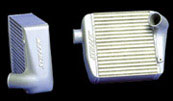 The intercooler is
an important part of a turbo system. As pressure rises in the intake manifold,
temperature also rises. The overall heat in the engine compartment can
increase the temperature of the intake air even more. Anyone who's driven
hard on cold days as well as hot days knows cooler air provides more power.
You can expect to lose 1% of horsepower for every 10º the temperature
rises over the outside air temperature. That could be as much as 15 horsepower.
An intercooler is like a small radiator for intake air that allows it
to cool. Although it can't cool the air completely, an intercooler can
help you regain a few horsepower.
The intercooler is
an important part of a turbo system. As pressure rises in the intake manifold,
temperature also rises. The overall heat in the engine compartment can
increase the temperature of the intake air even more. Anyone who's driven
hard on cold days as well as hot days knows cooler air provides more power.
You can expect to lose 1% of horsepower for every 10º the temperature
rises over the outside air temperature. That could be as much as 15 horsepower.
An intercooler is like a small radiator for intake air that allows it
to cool. Although it can't cool the air completely, an intercooler can
help you regain a few horsepower.
The stock intercooler for the first generation Probe GTs is small and,
like most other factory parts, conservatively designed. Getting a larger
intercooler will increase the surface area allowing the air to cool better.
Horsepower gains depend on your overall turbo and intake set up. If everything
else is stock, gains will be minimal with a drop in boost pressure and
response. If you have a high flow air filter and air ram, gains will be
more noticeable. You will benefit most from a larger intercooler if you
have a high flow filter, air ram, and you increase the turbo boost.
Pros: Cooler air entering the engine providing extra horsepower
Cons: No available direct fit kits, drop in boost pressure, lowered boost response.
Cost: $750+
Manufacturers: HKS, Stillen
Horsepower Gain: 2-15hp
Intercooling Piping
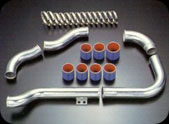 The same press bent
style of piping that hinders performance in a stock exhaust system creates
restrictions in the intake of a turbocharged engine as well. Unlike a
normally aspired engine where air goes from the air box straight into
the throttle body, a turbocharged engine has many feet of extra piping
that the air must travel through to get to the intake manifold. Air must
travel from the air box to the turbo, then out into the intercooler, then
finally into the throttle body. The small, press bent pipes increase restrictions
in the intake system and raise the temperature of the air entering the
cylinders. Mandrel bent piping will allow a less restrictive airflow traveling
throughout the system, reducing backpressure, and thus reducing the turbo's
work load.
The same press bent
style of piping that hinders performance in a stock exhaust system creates
restrictions in the intake of a turbocharged engine as well. Unlike a
normally aspired engine where air goes from the air box straight into
the throttle body, a turbocharged engine has many feet of extra piping
that the air must travel through to get to the intake manifold. Air must
travel from the air box to the turbo, then out into the intercooler, then
finally into the throttle body. The small, press bent pipes increase restrictions
in the intake system and raise the temperature of the air entering the
cylinders. Mandrel bent piping will allow a less restrictive airflow traveling
throughout the system, reducing backpressure, and thus reducing the turbo's
work load.
Pros: Increases airflow throughout intake system, lower intake temperature.
Cons: Cost
Cost: $300-$400
Manufacturers: GReddy, HKS
Horsepower Gain: 2-3hp
J-Spec Intake Manifold
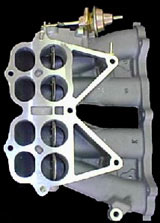 -Spec engines
have become popular upgrades recently. J-Spec engines are engines from
Japan, pulled out of Japanese cars. These engines have much more power
than the U.S. versions, mostly due to excessive U.S. regulations. For
those who want the benefits of J-Spec engines, but don't what to swap
the entire engine, many importers are offering certain parts separately
from the engine.
-Spec engines
have become popular upgrades recently. J-Spec engines are engines from
Japan, pulled out of Japanese cars. These engines have much more power
than the U.S. versions, mostly due to excessive U.S. regulations. For
those who want the benefits of J-Spec engines, but don't what to swap
the entire engine, many importers are offering certain parts separately
from the engine.
The 2.5L V-6 J-Spec intake manifold has a few differences from its U.S.
counterpart that allows more air to enter the engine. The angled throttle
body and larger ports allow considerable better airflow, resulting in
improved horsepower, especially at higher rpm.
The J-Spec version of the 2.0L 4-cylinder's intake manifold makes an even larger improvement over it's U.S. counterpart. The 2.5L makes a lot of horsepower due to the Variable Resonance Induction System. This system opens valves at higher rpm to allow more airflow into the engine, but closes them at lower rpms to lengthen the runners and provide low end torque. The problem is that the VRIS feature is not available on the U.S. 2.0L. The J-Spec manifold, on the other hand, has the VRIS feature, giving it a considerable boost in power, while retaining low end torque.
You should check inspection laws in your state to make sure this manifold is legal before purchasing.
Pros: Makes considerable airflow improvements, 2.0L gets VRIS.
Cons: May not be legal in certain areas.
Cost: $500-1000
Manufacturers:Corksport
Horsepower Gain: 10-15 hp
Nos (Nitrous Oxide)
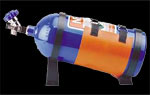 Nitrous oxide, also known
as N2O or laughing gas, is a quick and relatively cheap way to add a lot
of horsepower to your engine. It adds horsepower in two ways. First, when
nitrous oxide is released into the intake system, it contains almost 2½
times more oxygen than air, allowing more fuel to be burned in the cylinders,
creating a lot more horsepower. The more nitrous oxide that's released
into the system, the more horsepower can be made. The second way it increases
horsepower goes to an important principle of the intake system: colder
air is better. For every 10° you drop the air temperature entering
the cylinders, you'll get about a 1% horsepower increase. Nitrous oxide
can drop the air temperature by 60° to 80°, which could add about
10 to 13 horsepower to a second generation GT. Very impressive results
either way.
Nitrous oxide, also known
as N2O or laughing gas, is a quick and relatively cheap way to add a lot
of horsepower to your engine. It adds horsepower in two ways. First, when
nitrous oxide is released into the intake system, it contains almost 2½
times more oxygen than air, allowing more fuel to be burned in the cylinders,
creating a lot more horsepower. The more nitrous oxide that's released
into the system, the more horsepower can be made. The second way it increases
horsepower goes to an important principle of the intake system: colder
air is better. For every 10° you drop the air temperature entering
the cylinders, you'll get about a 1% horsepower increase. Nitrous oxide
can drop the air temperature by 60° to 80°, which could add about
10 to 13 horsepower to a second generation GT. Very impressive results
either way.
Unfortunately, nitrous oxide comes at a large price. First, and foremost,
is the destructive side effects... stock engines aren't designed to handle
that enormous power that comes from nitrous oxide. Aside from increase
engine wear, piston damage, cylinder head damage and blown head gaskets
are a common result. A stronger head gasket, forged pistons, and an upgraded
fuel system is strongly recommended, if not required, driving the price
of a nitrous oxide system up substantially. A nitrous oxide system on
a four cylinder engine is not recommended. Also, nitrous oxide systems
can be extremely dangerous. If not installed correctly or a low-quality
system is installed, the nitrous oxide bottle can become a bomb, capable
of completely destroying your car.
Nitrous Oxide Systems and Venom Performance currently makes nitrous oxide systems for all Probes.
Pros: Massive boosts of power obtainable.
Cons: Can be destructive to stock engines, not for engines with high miles, safety concerns.
Cost: $300+
Manufacturers: Nitrous Oxide Systems, Venom Performance
Horsepower Gain: 25-100hp
Supercharger
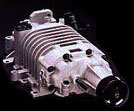 A supercharger is
a type of air induction system that, like a turbo, forces more air into
the engine's cylinders. A supercharger is a fan that's belt driven along
with the AC and alternator. As the engine spins faster, the blower spins
faster forcing more air into the engine. With more air entering the cylinders,
more horsepower can be made.
A supercharger is
a type of air induction system that, like a turbo, forces more air into
the engine's cylinders. A supercharger is a fan that's belt driven along
with the AC and alternator. As the engine spins faster, the blower spins
faster forcing more air into the engine. With more air entering the cylinders,
more horsepower can be made.
Currently, there is only one place where you can get a direct fit supercharger
kit for your car and they're only available for the second generation
Probe GTs. These kits, created by Thomas Knight Turbos, include everything
you need to install the supercharger, and yields pretty impressive results.
Unfortunately, since it's not a factory manufactured kit, quality is questionable.
The biggest problem with these is the installation. It requires a lot
of work and relocation of the battery. You'll need to be very fluent with
your car to get through it yourself.
Pros: A lot more horsepower, safer than nitrous oxide
Cons: Quality of some fabricated supercharger setups, installation, price
Cost: $2500-$5500
Manufacturers: Thomas Knight Turbos
Horsepower Gain: 50-125hp
Turbocharger
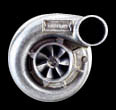 A turbocharger is a type
of air induction system that forces more air into the engine's cylinders.
As the exhaust gases exit the cylinders and go through the exhaust manifold
into the exhaust system, it first passes through one side of the turbocharger.
As it passes, it causes the turbocharger's fan to spin, which also spins
the fan on the intake side of the turbocharger. The spinning of the intake
fan forces more air into the intake manifold. With more air entering the
cylinders, more horsepower can be made.
A turbocharger is a type
of air induction system that forces more air into the engine's cylinders.
As the exhaust gases exit the cylinders and go through the exhaust manifold
into the exhaust system, it first passes through one side of the turbocharger.
As it passes, it causes the turbocharger's fan to spin, which also spins
the fan on the intake side of the turbocharger. The spinning of the intake
fan forces more air into the intake manifold. With more air entering the
cylinders, more horsepower can be made.
Currently, there is only one place where you can get a direct fit turbo
kit for your car and they're only available for the second generation
Probe 2.0L and 2.5L engines. These kits, created by Thomas Knight Turbos,
include everything you need to install the turbo, and yields pretty impressive
results. Unfortunately, since it's not a factory manufactured kit, quality
is questionable.
Anyone with a first generation non-turbo 4-cylinder looking to add the first generation GT's turbo to your engine should reconsider. Although the engines are the same, most of the components differ, making this an extremely costly and time consuming job.
The biggest problem with these is the installation. It requires a lot
of work and relocation of the battery. You'll need to be very fluent with
your car to get through it yourself.
Pros: A lot more horsepower, safer than nitrous oxide
Cons: Quality of some fabricated turbo systems, installation
Cost: $2000-$4000
Manufacturers: Thomas Knight Turbos
Horsepower Gain: 25-125hp
Turbocharger Upgrades
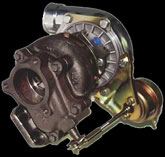 A turbo upgrade
is basically just a larger turbo capable of forcing more air into the
engine with less effort. The only turbo upgrade available is obviously
for the first generation GTs since they were the only ones to have a turbo.
Thomas Knight Turbos makes a turbo upgrade kit for first generation GTs.
Positive effects will be minimal on a stock computer program, but are
more evident with either a reprogrammed computer or a boost controller.
Negative effects will include lowered boost response, and less boost power
at lower engine speeds.
A turbo upgrade
is basically just a larger turbo capable of forcing more air into the
engine with less effort. The only turbo upgrade available is obviously
for the first generation GTs since they were the only ones to have a turbo.
Thomas Knight Turbos makes a turbo upgrade kit for first generation GTs.
Positive effects will be minimal on a stock computer program, but are
more evident with either a reprogrammed computer or a boost controller.
Negative effects will include lowered boost response, and less boost power
at lower engine speeds.
Pros: Higher induction capacity over stock turbo
Cons: Less boost response, less boost at lower rpm.
Cost: $500-$1000
Manufacturers: Thomas Knight Turbos
Horsepower Gain: 5-10hp
Twin Turbo
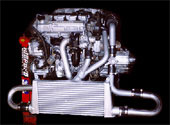 As a turbo setup is
one of the top upgrades you can get for you Probe, a twin turbo setup
would be top-of-the-line. Single turbocharger systems do a great job of
forcing air into the engine, but as you increase the size of the turbo,
the turbo will take longer to spool up, losing low end boost power. Twin
turbo's use to two smaller turbos instead on one large turbo to improve
spool up, while offering high end boost power. With a twin turbo system,
you get the low spool up time of a small turbo, with the large boost levels
of a large turbo.
As a turbo setup is
one of the top upgrades you can get for you Probe, a twin turbo setup
would be top-of-the-line. Single turbocharger systems do a great job of
forcing air into the engine, but as you increase the size of the turbo,
the turbo will take longer to spool up, losing low end boost power. Twin
turbo's use to two smaller turbos instead on one large turbo to improve
spool up, while offering high end boost power. With a twin turbo system,
you get the low spool up time of a small turbo, with the large boost levels
of a large turbo.
Thomas Knight Turbos offers a twin turbo kit at request, but it's a custom
order. Installation is not for the novice mechanic, and it's strongly
suggested that you do some major maintenance work on your engine before
installing a twin turbo kit.
Pros: Higher induction capacity single turbo, safer then nitrous oxide.
Cons: Quality of some fabricated turbo systems, installation, can be too much for the engine to handle.
Cost: $5000-$8000
Manufacturers: Thomas Knight Turbos
Horsepower Gain: 100+hp