

Saudi Arabia #1 Breeder and Importer of World Class German Shepherds.
German Shepherd that looks beautiful, and that has the capabilities of doing what he/she was developed to do over the years.
Importing the finest German Shepherd lines that Germany offers from our USA contacts!
So whether you are looking for a Schutzhund prospect or personal protection dog, we can fulfill your request
.
Simba is Schutzhund prospect and from >Von Glaeser Haus Von Glaeser Haus is a Top quality imports from Germany and small breeder for over 18 years.Staying within the standard of the SV. Breeding for temperament, conformation and workability in Jamul California
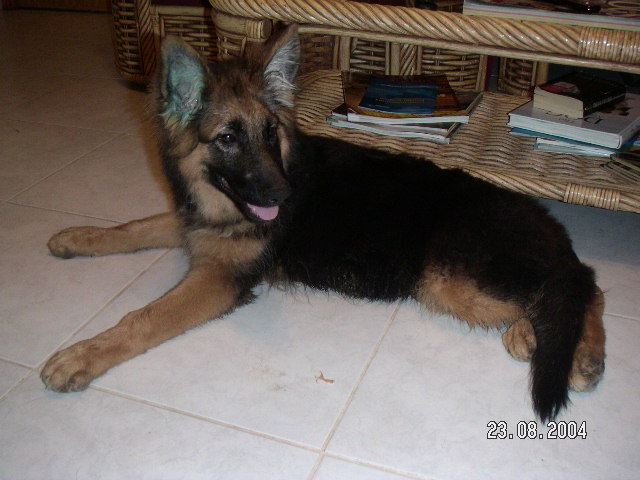
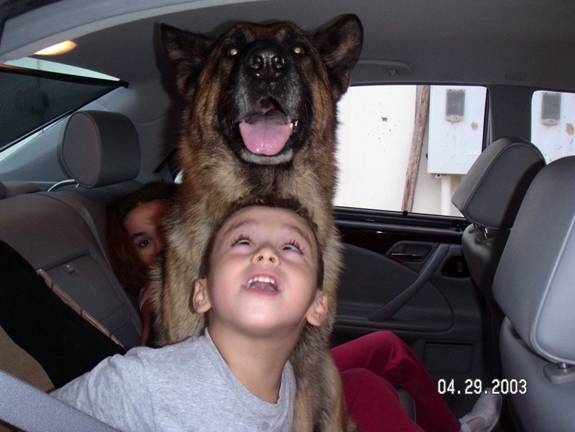
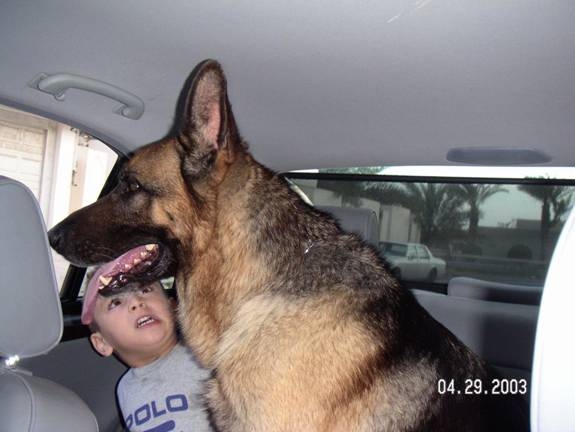
Simba At Home in La Jolla California
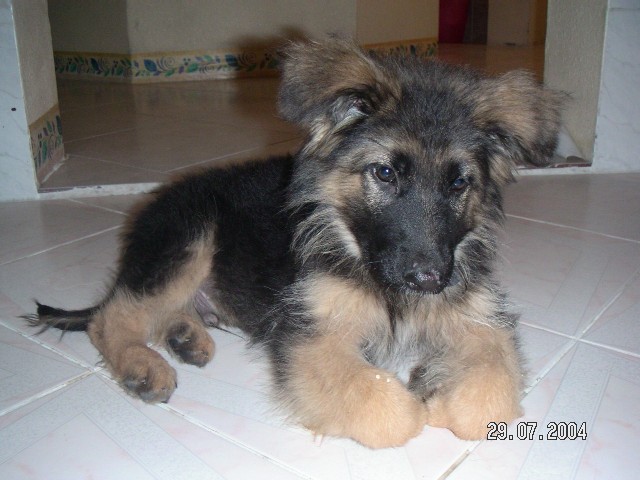
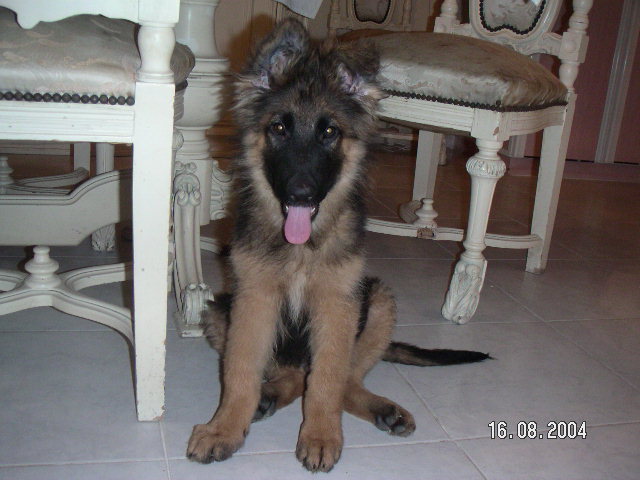
Simba at Home In Dammam Saudi Arabia
Simba at Home In Dammam Saudi Arabia
Engie Aus Der Movenstrasse, SchH1 Granddaughter of Sieger Ursus von Batu & great granddaughter of Sieger Visum von Arminius.
V Ernie von Hafjager Haus, SchH2
Sudney At Home In Dammam Saudi
German shepherd, with a wonderful Pedigree.
The German Shepherd is one of the most intelligent breeds of dog, and it needs structure, someone to love, companionship and a purpose in life...
Call Ashraf at +966 505663857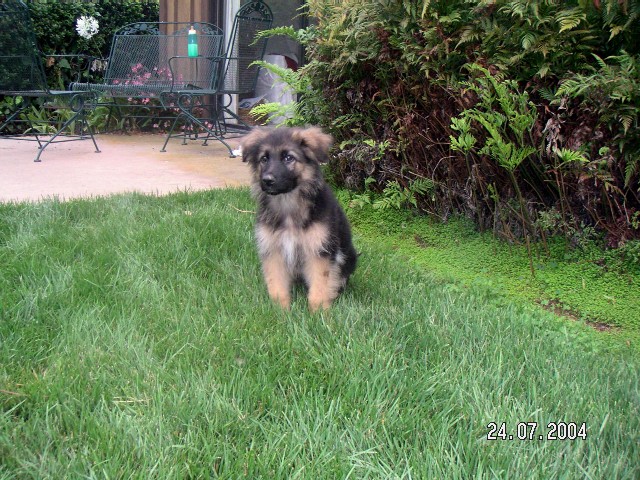
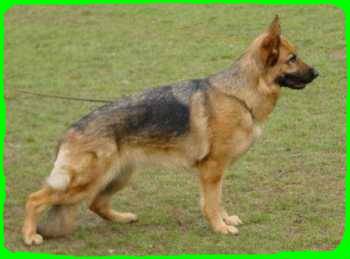 Simba's Mam
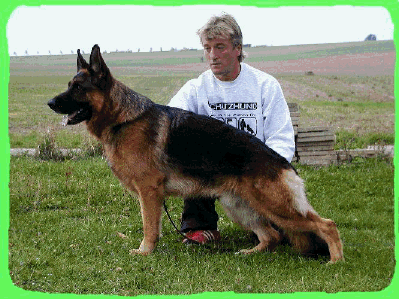
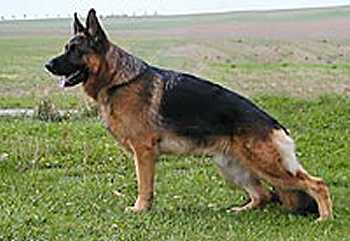 Simba's Dady in Germani
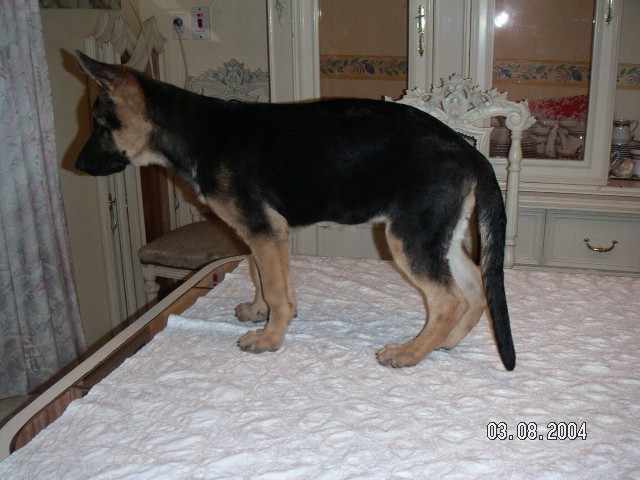
> Questions and Answers on Dog Training
Questions
>
Do GSDs make good family pets?
Yes! GSDs are naturally protective of their "pack". Young children should never be left unattended with a puppy, however, if the children learn to respect the puppy as a living being, the puppy will be a wonderful companion for the children as they all grow up together. Your dog's ranking in the "pack" should always be established as the bottom (Omega) member below humans.
>
What traits are inherent in GSDs generally?
GSDs are natural herding dogs. Your GSD will try to "herd" you and your family. Often they will "follow ahead", walking in front of you and looking back to make sure you're going where you should. Although the GSD is not used as frequently for herding in present time, there are many breed lines still known for their herding. The breed is naturally loyal, intelligent and protective (which makes it good for police work). The GSD has an excellent nose, making it good for tracking and search and rescue work. They are calm and have a steady temperament when well-bred which is why they have been used as "Seeing Eye" dogs. A GSD thrives on regular exercise, mental stimulation and a well-balanced diet.
These traits make a GSD an absolute pleasure to own when well-trained, but in the hands of a novice, unconcerned, uncommitted owner, their intelligence and drive can become difficult to manage.
Breeding plays an important role in the temperament of GSDs, so selecting a reputable breeder concerned with both physical health and the personality of their puppies is of utmost importance. Different bloodlines exhibit traits differently, so question breeders about the strong and weak traits of their bloodlines. See the question on German versus American bloodlines about specific general differences.
>What should I look for in a GSD puppy?
Obviously, many factors affect the selection of the puppy, including the personality and lifestyle of the prospective owner. Avoid puppies that appear too shy or nervous. Puppies at an age where they can be sent home with their new owners should be inquisitive and curious. GSD pups generally lengthen along the back and loin rather than get shorter. Look for balance in angulation, especially in the hind quarters as an imbalanced pup may never grow into the correct angulation. Meet both sire and dam if possible since character is very important. The puppies' parents should be OFA certified (preferably "Good" or "Excellent") (US dogs), OVC certified (Canadian dogs) or certified "a-normal" (German dogs). Make sure you see the parents' certifications. Hip problems can be devastating.
The OFA is the Orthopedic Foundation for Animals. When potential breeding stock reaches the age of 2, the breeder should have a set of x-rays taken and submit them to the OFA for certification. OFA will return a certification (Excellent, Good, or Fair) along with a certification number for the dog. (Dysplastic dogs will not be given a certification number.) (German certification is done over 1 year of age.) For information on German certifications, see the section on German Pedigrees, Working Titles and Certifications. More information on OFA can be found in the health and medical FAQs in rec.pets.dogs.info. Statistics regarding the GSD and OFA information can be found in the section on OFA Information and Statistics. Watch as the puppies move about. If you are inexperienced with GSDs, do not pick the "bully" of the litter. Watch the puppies interact with each other in the litter as well as with you and your family members. Watch the puppies you are considering interact with you without the rest of the litter present. Look for a friendly puppy who is not afraid, but also allows you to handle it without a lot of struggle. Bloodlines will make a difference in the working drive of the dog. German lines tend to be more dominant than American lines as discussed a few questions down.
Ask to look through the puppy's pedigree. Look for obedience titles, conformation titles, hip certifications and make sure that common ancestors are at least 3 generations back. If you don't understand something, ask the breeder! Most of all, select a puppy that feels comfortable with your family. Reputable breeders will also make suggestions to insure their puppies go to happy, well-chosen homes.
You can also ask if the puppies have been temperament tested and look at the results. "The Art of Raising a Puppy" by the Monks of New Skete (see Bibliography) details temperament testing and puppy selection.
Elbow certifications as well as hip certifications are becoming more common. As with hip dysplasia, elbow dysplasia can only be diagnosed by radiograph.
Also check out the breeding information found at http://www.cluebus.com/holly/breeder.html about specific questions to ask (and to be asked).
>Can my breeder guarantee my puppy will not have hip problems?
NO! Hip dysplasia is considered to be polygenic. That means that it's caused by a combination of genes that may not show up in any litter previously. No matter the certifications in the pedigree it is possible that your puppy could be predisposed to hip dysplasia. That's why preliminary hip x-rays after 6 months are a good idea. Treatments (both surgical and drug) can be done early to alleviate problems down the line. If in doubt, find an orthopedic specialist. Be wary of a breeder that says their puppies will definitely not have hip problems.
But, a responsible breeder will guarantee their puppies for life. The guarantee may vary. Some breeders will require you to return the puppy for a replacement; some will refund all or part of your money; some will not require you to return the puppy, but still offer a replacement or refund. Do not be dismayed at a requirement for a return of a puppy. A puppy may be in severe pain and an owner may not be emotionally prepared to put a puppy down who really should be put down. A responsible breeder will want what's best for the puppy/dog.
>Should I get a male or female?
This is an age-old question and almost strictly a matter of preference. Some people will say that males are more "location" protective while females are more "pack" protective. Males are generally more territorial, so unless training steps are consistent, marking could be a problem. (Neutering may help alleviate this problem. Any dog not intended for a breeding program should be neutered or spayed. Besides eliminating the possibility of unwanted puppies and reducing some undesireable behaviors, it's considerably healthier for your dog since it eliminates or severely reduces the chance of testicular or mammary cancers. Breeding should *never* be taken lightly.)
> How old should my puppy be before I take it home?
Puppies are weaned from their mothers by about 6 weeks of age, but the period following weaning is very important in terms of learning "pack" behavior. Although 8 weeks is old enough and a common age for leaving the litter, 10 weeks is probably optimum for a GSD. However, better to take the puppy at 8 weeks if the rest of the litter have already gone to their homes. Puppies up to 12 weeks old should pose no additional concerns. After 12 weeks old, make sure the breeder has taken special care to socialize the puppy (puppies) with other dogs and people.
>How big will my GSD be?
The full adult size of your GSD will depend in large part on the genetic background of its parents. The AKC Standard states that adult males should range between 24-26" at the shoulder blade, females from 22-24". Males within the standard may weigh anywhere from 65-90 lbs. depending on their bloodlines. Females may weigh anywhere from 55-80 lbs. (Again, much depends on the genetics and bloodlines. The above are only a rough idea.) Although your pup will reach close to adult height by 10-18 months, s/he will continue to fill out until up to 3 years old.
Be wary of breeders who emphasize "oversize", "huge", "big-boned" breeding stock or puppies. Bigger is not better in German Shepherds. The German Shepherd is not built to have a skeletal and muscular structure of an oversize breed. An inch or so out of standard may be acceptable providing the general line is not consistently out of standard. A responsible breeder will offset an oversize dog by breeding with a line that is a bit smaller in order to maintain the standards as closely as possible.
>What is "socializing" and why is it so important?
Socializing refers to exposing your puppy to a variety of experiences, including meeting lots of people of various ages, races, sizes and both sexes as well as teaching them how to acceptably interact with other dogs. Puppy kindergarten classes provide an excellent opportunity for socialization in a controlled environment.
Socializing is important because it helps strengthen your dog's confidence and reduces the chance that your dog will become shy or fearful. Fearful dogs can become fear aggressive or fear biters.
>
when will my GSD puppy's ears stand?
Although some puppies' ears stand as early as 8-10 weeks, don't be concerned if your pup's ears don't stand until 6-7 months (especially pups with large ears) after teething. Some pups ears never stand. This is known as a "soft ear". Sometimes taping is successful. "Soft ears" are a genetic trait, and dogs with soft ears should not be bred even if taping is successful. It is a disqualification in showing. Some GSDs ears stand but wiggle at the tips when the dogs run. This is known as "friendly ears". Friendly ears are not a disqualification but are not a desirable trait.
One method of "taping" ears is to take a pink foam roller and attach it with eyelash glue to the inside of the ear (the pinna). Do not block the ear canal. Taping may take up to 2 months. But again, be cautious about considering breeding a dog whose ears have had to be taped.
>What precautions should I take with my GSD puppy?
Other than the normal precautions of immunizations (see the new puppy FAQ at http://www.k9web.com/dog-faqs/new-puppy.html#health), beware of a fast-growing puppy. There are studies that show a correlation between fast growth and hip dysplasia (if your pup is predisposed to HD). You may want to switch your puppy over to adult food if it seems to be growing very quickly (see also Your New GSD at Home).
Don't pet your puppy's ears backwards before they stand. Although people often do this by nature, it can damage the cartilege in your pup's ears which can affect the ear carriage.
When your puppy is about 6 months old, have preliminary x-rays done of your puppy's hips. If your pup shows signs of dysplasia, there are treatment alternatives available to younger dogs that are not available if the dog is older and has arthritic changes. If detected early, there are things you can do for your dog to give it a happy, healthy life even with dysplasia. If your pup shows mild signs, consider having another set of x-rays taken after your dog turns one year.