 |
stamps issued in 2002 january |
|
stamps issued in 2002 january |
[Home][About Us][Membership][Member
List][Links][Kids][Feedback][Magazines][Dealers][Societies][Articles][WhatsNew]
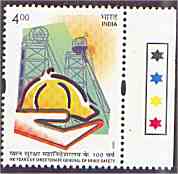
100 Years of Directorate General of Mines Safety The Directorate General of Mines Safety (DGMS), Dhanbad, a subordinate office of the Union Ministry of Labour is entrusted with the responsibility of ensuring safety, welfare and health of workers employed in mines. The procedures involved in the actual extraction of minerals from the depth of the earth continue to be tedious and hazardous, despite the concerned technologies having been refined many times over with the passage of time. Innumerable dangers loom large at every comer of the process and mining has rightly been deemed to be a war with the unpredictable forces of nature. The DGMS, originally called Bureau of Mines Inspection, was set up in 1902 with its headquarters at Calcutta. The headquarters was shifted to Dhanbad in 1908 and the organisation re-designated with its present name in 1967. At the headquarters of the DGMS, the Director General is assisted by staff officers who have specialisation in different disciplines like mining, electrical engineering, mechanical engineering, occupational health, law, survey statistics, administration and accounts. The country has about 600 coal mines, 6000 non-coal mines and 32 oil mines. In its hundred years of existence, the organisation has been closely associated with the policies and planning, research & development, education and other allied activities connected with the mining industry of the country. The DGMS has been striving to reduce the risk of occupational diseases and casualties to mine workers by drafting appropriate legislation and laying down standards. In order to ensure compliance of these laws and standards, it has initiated a variety of awareness programmes. The vision of the DGMS is to ensure nationally acceptable and internationally comparable standards of health, safety and welfare for employees of Indian mines.
|
|
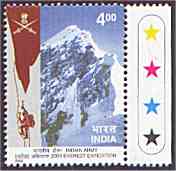 |
Indian Army Everest Expedition 2001 Indian Army added another feather to its cap in May 2001, when its mountaineers successfully scaled Mount Everest and put a record eight members and seven Sherpas on the summit. This is the largest number of summiteers on Mount Everest in an Indian expedition. Mount Everest, the tallest of the peaks of the Himalayas as also the whole world, stood in its unattainable isolation for thousands of years, till Tenzing Norgay and Edmund Hillary conquered it in 1953. The Indian Army Mount Everest Expedition was flagged off by the Chief of the Army Staff on 1st March 2001 at New Delhi. It was led by Col. Krishan Kumar. After flagging off, the team moved to Nepal and after a long trek from Jiri, reached Base Camp of Everest on 3rd April 2001. The stocking and establishment of various camps was completed by 1Oth May 2001 and summit attempts were planned for 14-15 May. However, bad weather forced the team to return to Base Camp from Camp-II. Weather remained bad for a few days. Finally on 19th May the team started from the Base Camp for their final attempt to reach the summit. On 2Oth May the first summit team reached Camp-III and the next day they reached South Col around 1300 hours. The same night the summit attempt started. After making their way through severe winds and subfreezing conditions, the first party consisting of seven members and three Sherpas finally reached the summit of Everest on 23rd May between 0720 hours and 0845 hours. The I second team comprising one member and four Sherpas left Camp-III around 0630 hours on 23rd May and reached the summit of Mount Everest around 0545 hours on 24th May 2001. Smooth de-induction to the Base Camp was subsequently carried out wherein all the camps were closed. In keeping with the Indian Army's care and concern for the protection of the environment, all waste was brought down from the mountain. This unique mountaineering feat has not only brought laurels to the Army but also glory to the nation.
|
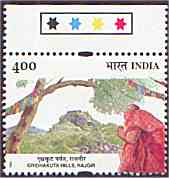
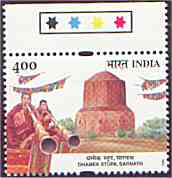
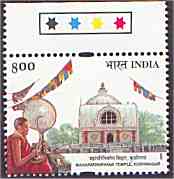
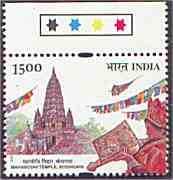
| Bauddha Mahotsav Buddhism taught humanity the middle path, the virtue of observing moderation in life and staying clear of the extremes of both self- indulgence and self-mortification. It rejected ritualistic practices and emphasised the need to eliminate desire in order to attain salvation from suffering. It also advocated peace, non-violence and respect for all forms of life. Having originated in India, Buddhism spread far and wide, to different corners of the world. India, the 'Cradle of Buddhism', has a past rich with Buddhist history and traditions. The places connected with the four principal events of Lord Buddha's life, viz. his birth, enlightenment, first sermon and nirvana, which took place respectively at Lumbini (Nepal), Bodhgaya, Sarnath and Kushinagar, are looked upon with great veneration. Sravasti, Sankisa, Rajgir and Vaishali, together with the first four are regarded as the eight holy places (Ashtamahasthanas) and are well known pilgrimage destinations. The annual Bauddha Mahotsav festival aims to propagate the message of Lord Buddha and to create awareness about India's rich Buddhist heritage. Promoting pilgrimages and tourism as well as increasing the travel facilities are integral to this festival. The Bauddha Mahotsav also aims to strengthen the cultural links provided by Buddhism between different countries and their people. The Department of Posts is happy to issue set of four stamps on the Bauddha Mahotsav. The first stamp shows the Mahabodhi temple located adjacent to the Mahabodhi tree at Bodhgaya. This magnificent temple dating back to the second century A.D. is an amalgamation of architectural features representing many cultures. The second stamp shows the Gridhakuta hills of Rajgir, from where the Lord had delivered many of his sermons. The third stamp depicts the Dhamek Stupa of Sarnath from where Lord Buddha is believed to have given his first sermon and the fourth, the Mahaparinirvana temple of Kushinagar where he is stated to have attained release from the endless cycle of birth and rebirth. The four stamps also carry pictures of prayers and festivities, in an attempt to capture the spirit of the Bauddha Mahotsav.
|
|
|
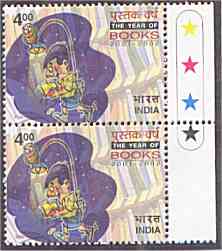
The Year of Books 2001-2002 The magic of the book has never ceased to charm humanity. Through the ages it helped man knit his hopes and aspirations. Secured within its covers, it brings to him ancient wisdom, with which he builds the edifice of the future. Books not only enable us to understand things in the correct perspective, but also empower us intellectually and can imbibe in us a sense of pride in our national culture. For almost a decade now, books have been facing serious competition from the audio-visual media. But the fact remains that it is only books and not computers that can be read anywhere, at any time and in any environment in a running train, in a favourite quiet corner of the library and even sitting on the water tank of one's multi-storied building. There is a need to make books reach the people and thus create an awareness about them. We need to inculcate the reading habit, specially among our youth and make available to them books at affordable prices. It is to create this awareness that the Government of India has dedicated one full year to books by declaring the year 2001-02, commencing on 23rd April 2001, as The Year of Books. The Year of Books seeks not only to create public awareness about the importance of reading books and find solutions to the many problems facing writers, publishers, book distributors and readers, but also to strengthen the library movement. The slogan for the Year of Books is "Books for All and All for Books".
|
Ovr Sz - Overall Size Pr Sz - Printed Size
[Home][About Us][Membership][Member List][Links][Kids][Feedback][Magazines][Dealers][Societies][Articles][WhatsNew]
Copyright
(c) Dakshina Kannada Philatelic Association
http://www.geocities.com/dakshina_kan_pa