




BY STACEY SHACKFORD
August 3, 2001
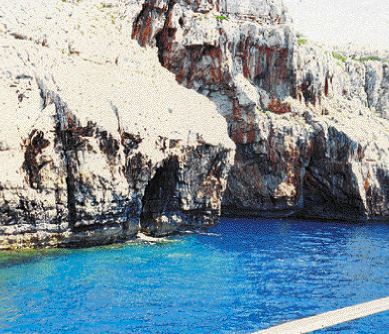
APPROACHING the Ionian coast by sea, it is easy to see why Odysseus went through such trouble to come home. The sea is a veritable palette of every imaginable hue of blue, from pale turquoise to deep indigo. Land is marked by dizzyingly steep cliffs that look like the exposed brittle bone of the Earth itself. And in between, rocks jut out randomly like the spines of sea monsters.
It is the landscape of poetry, the setting of epics. And a great place to take the kids on holiday.
The most diminutive of the seven Ionian Islands, or Eptanisa, Paxi and the surrounding area has become increasingly popular among vacationing families, and for good reason. There are excellent beaches, water sports, abandoned castles and enough potential day trips to satisfy several varied interests.
According to mythology, Paxi was in its very formation intended as a resort. Intent on creating a sanctuary for his wife Amphitriti, Poseidon was said to have struck off the southern tip of Corfu with his trident. Some Homer scholars also believe Paxi was the island of Aiaia where Odysseus consulted the goddess Circe.
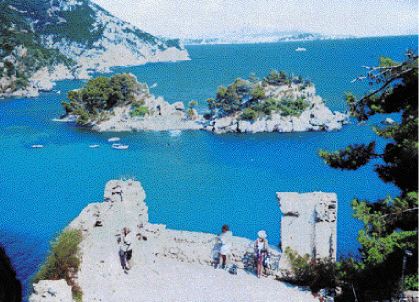
In more recent history, the island was occupied for 411 years by the Venetians, followed by the French, Russoturks and British, before being formally united with Greece in 1854. Traces of this history are most clearly seen in Gaios, the island' s capital, where the ruins of a 15th-century castle on the small islet of Agios Nikolaos dominate the harbour.
Although conveniently situated 14 km south of Corfu and 16 km from the Greek mainland, Paxi was, until recently, not easily accessible. As a result, it escaped much of the mass tourism of the surrounding islands.
Now, however, it is a much-advertised destination from Corfu and the mainland resort city of Parga, and a regular ferry stop from Igoumenitsa. Upon arrival in Gaios, the result of this change is readily apparent. The port is filled with shops overflowing with sundresses, beach toys and postcards. Tourists with sunburnt shoulders and straw hats disembark from their excursion boats and take refuge under brightly-coloured cafe umbrellas. Indeed, once dependant mainly on the production of olive oil, tourism is now the mainstay of the island's economy.
The most worthwhile activities in Gaios involve exploration of Agios Nikolaos and the adjacent Moni Panagias islet, named after its monastery, which is the centre of a large festival on August 15.
Much of the island' s charm, however, lies farther inland than most day trippers dare to venture on their limited three-hour stopover. The island is an endless olive grove, terraced with thousands of meters of stone retaining walls. The ratio of olive trees to residents is 10 to 1. The 250,000 knarled trees were planted during Venetian rule, and are as much a part of the island's history as the 152 old stone olive-presses, 63 churches and several windmills scattered among them.
Only 10 km long and 4 km wide, the island is easily walkable. At Bouas Tours in Gaios, one can buy The Bleasdale Walking Map of Paxos, which details 53 footpaths that wind through the olive groves to dramatic cliffs, caves, beaches and ruins. Motorbikes can also be rented in Gaios for 6,000 drachmas, and small motorboats for 9,000 drachmas.
The island's other towns are also worth exploring. Logos, 6 km north of Gaios, is a traditional fishing village with about 200 inhabitants. Its tavernas offer more authentic island cuisine, and the village boasts two churches, two windmills and a few nearby beaches. The northern port of Lakka is larger and more developed. Churches, villas, a lighthouse and a windmill surround the town. Nestled between a short promontory and near vertical cliffs, its horseshoe-shaped bay is a popular yachting destination and host to the sandy Harami Beach, base for many water sports.
Ultimately, the sea is the main attraction of Paxi. The east coast is dotted with secluded coves and beaches that are the envy of many northern European countries, which is perhaps why the beaches attract so many visitors from that region. The west coast, meanwhile, features precipitous cliffs and grottoes only accessible by boat. Underwater, there are caves and grottoes with interesting light-effects, a shipwreck, and sea creatures - moray eels, sea-perch, parrot fish, seriolas, and crayfish - that make the island a favourite destination for scuba divers. The Dive & Fun centre in Lakka (0662-31807) rents equipment and organises two boat trips daily for experienced divers. Other water activities, like boating, parasailing, windsurfing and waterskiing are organised through Jerry's Watersports (0937-36545), also in Lakka.
The tiny island of Antipaxi, 2 km south of Paxi, offers additional alluring beaches. Daily caiques from Paxi and Parga land at the celebrated white sand beaches of Vrika and Voutoumi, where the water is startlingly translucent. To avoid the throng of beach bums that invade the island on excursion boats between late morning and early afternoon, take the daily Antipaxos Lines boat that leaves from Gaios at 10 am and returns at 5 pm. The longer stay allows plenty of time to explore the island by foot. It is barely populated - only about 25 of its 80 houses are inhabited year-round - and used mostly for the cultivation of grapes, which produce a sweet local wine. Its main landmarks are a lighthouse and British Navy watering station used from 1816 until the First World War.
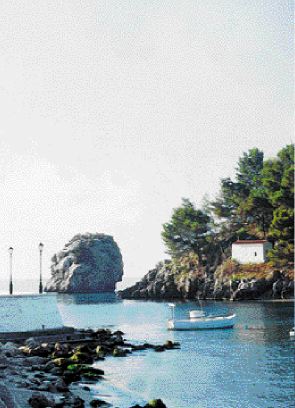
Another day trip from Paxi is Parga. Although a mainland resort town, Parga closely resembles an island with its wide, dominating harbor, winding, sloping streets, and excellent beaches. It, too, has a Venetian castle, perched high atop a little peninsula abutting the town, and a tiny islet in its harbour.
When to go
July 15 roughly marks the beginning of tourist season, which continues until late August. It is a good idea to make reservations if planning a trip during this time. The feast of the Panagia, on August 15, is widely celebrated on Paxos. From September 1 to 12, ten concerts will be held at the Pheonix Club in Gaios as part of the Paxos Festival. It includes chamber music pieces of the 18th, 19th and 20th centuries performed by young music students, as well as a music and theatre event involving children from the island of Paxos. The itinerary is online at www.paxosfestival.org.uk.
Where to eat
Not surprisingly, the regional specialities include seafood. The catch of the day is likely to include swordfish, mullet, snapper, sardines, anglerfish, squid, octopus and crayfish. Many of the eateries in Gaios are, also unsurprisingly, a bit touristy. Despite the tacky interior decorating at the Blue Grotto - seashells surround the doors, plastic grapes and life preservers hang from the ceiling, and AstroTurf covers the cement floor - the staff is unflaggingly friendly and the food genuinely good. Across the way, Taverna Andreas is known for its fresh fish. Loggos and Lakka both have more subdued and traditional tavernas. In Parga, the waterfront is absolutely packed with eateries. Zorba's has tasty traditional taverna food, while nearby Rudi's attempts a more diverse, upscale fare. Try some Antipaxi wine with your meal.
Where to stay
There are some 4,000 beds to be had in Paxi, according to local travel agents, but only two rather expensive resort hotels, Paxos Beach Hotel and The Paxos Club. The best bet is to rent domatia (rooms) or villas in any of the three main villages through the island's various travel agencies. Rooms can also be booked directly from the owners online at www.paxos-greece.com. Domatia also dominate Parga accommodations, although there are a few hotels. Agios Nektarios, located directly across from the hard-to-miss Chinese restaurant, has pleasant, affordable rooms and a friendly staff (0684 31150). Beachside camping is also plentiful.
How to get there
There are regular passenger and car ferries from Igoumenitsa and Corfu, as well as excursion boats and a daily passenger ferry from Parga. There are also buses from Athens to Paxi via Igoumenitsa three times a week - 7 hours, 9,250 drachmas - and from Athens to Parga three times daily. Once on the island, there are infrequent buses that link Gaios, Lakka and Loggos. Schedules are available at travel agencies.
It is worth a visit if only to be used as a base to the most worthwhile excursion of all - to the Nekromanteion of Aphyra, an ancient sanctuary to Hades and Persephone thought to be where Circe directed Odysseus to consult the dead. According to mythology, the present-day Acheron River was connected to the River Styx, across which the ferryman of the dead, Charon, would transport souls to the underworld. The Charon of your modern-day journey most likely will not be sombre, and if you are lucky he will closely skirt the coast on the way, to reveal secluded seaside churches and glittering caves.
The voyage is almost worth it for the ride alone. The entrance to the River Acheron is marked by magnificent rocky promontories, which seem, as someone in the boat is likely to remark, worthy gates of Hell. The river itself is lush and thick with reeds and other wildlife. The water is a glowing, yet murky, pastel green, and hundreds of brilliant blue dragonflies flit about. The boat docks along stairs roughly hewn into the riverbank, and the Nekromanteion is approached by a walk through a few kilometres of fields and paved road, up a hill to the site of a graveyard and the monastery of Agios Ioannis Prodromos (St. John the Baptist). The ancient ruins of the oracle of the dead are, perhaps aptly, located directly underneath. They include a labyrinth-like entrance, a few offering rooms, and a dank underground chamber where communications with the dead were purportedly held.
