

BY STACEY SHACKFORD
April 12, 2002
AS AN archaeology student, Pergamon (to be found in modern-day Bergama) was a dream come true for me: A magnificent acropolis, topped by the enormous, well-preserved ruins of the Temple of Trajan, surrounded by an entire ancient city and an insanely steep 10,000-seat amphitheatre. Below, the equally well-preserved Asclepion, with its columned sacred way, theatre, underground passageway, pantheon and slightly radioactive spring. It was the most extensive archaeological site I had ever seen, and, three years later, still is.
Of course, it was also much more than archaeology. Archaeology alone would not have lingered with me for so long, nor drawn me back again with such urgency. I also fell in love with the modern city and its people - with an unnamed eatery smaller than my kitchen where I had the best breakfast of my life and the friendly young boy who led me there. When you have a love affair with a place, it comes on unexpectedly and stubbornly refuses to leave.
My love affair with Bergama began in March 1998. Three other girls and I had chosen Turkey as our Spring Break destination while archaeology students in Athens. Our first stop, of course, was Istanbul, where we nearly froze to death while spending hours gazing in awe at the Topkapi Palace and Blue Mosque. Then we hit Cannakale and the ancient ruins of Troy, before stopping in Bergama on our way to a washed-up resort town and a ferry to Rhodes.
At that time, I had not yet gotten to the Hellenistic period in my ancient history, architecture and sculpture classes, so I did not immediately recognise the importance of the ancient city of Pergamon. We were there at the suggestion of a fellow student who insisted it was "awesome." We may have only been there a day or two, I don't remember exactly. It seemed like an eternity. We hunkered down in a hostel, took a taxi up the 5 km road winding around the mountain that is the ancient acropolis, and spent the next few hours working our way back down, dumbstruck.
On this trip, taken in mid-August, I headed straight to Bergama from the Greek island of Lesvos. I came with a different companion, one who had heard me reminisce endlessly about the place, and who had never been to Turkey herself. We didn't attack the acropolis immediately, but waited until early the next morning, when we could actually climb to the top. There was a fence around the site, which I didn' t remember before, but we quickly found a gaping hole in it and climbed through. At 8.15am, the site wasn't even officially open yet, and we could feel people glaring at us from inside an air-conditioned tour bus parked at the gate, waiting to be let in.
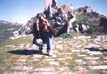
There's nothing like being alone among the crumbling remains of an ancient city, with no fences, no guards, no immediate sign of modern civilisation. You can almost feel history seeping up into you from the dust at your feet. Even without knowing anything at all about the history of the place, you can sense the ghosts of Roman Pergamon leading donkey carts past the long strip of stores in the agora.
I was glad we decided to approach the acropolis this way, the same way the ancient people would have come. It also led us to wonder about practical things: How did they ever get those enormous marble columns up there? Where did they get water? What was this used for?

Where to stay
The cheap option is to stay in a pension in the old quarter. There are two: 'Athena' (0232-6333420) and 'Nike Pansiyon' (0232-6333901), both with very friendly owners. In the more modern section of town, near the bus station and museum, are a string of hotels. A more luxury option is to stay at the 'Manolya Hotel' (0232-6334488). There is a swimming pool and cafe with Internet access, and rooms are air-conditioned with bathrooms.
Where to eat
Food in Bergama is plentiful and cheap. 'Meydan Restaurant', on the city's main street, is a popular local spot serving many spicy pureed dips, pickled vegetables, kebab and a never-ending list of aubergine-related items. Also, there are many good 'pide' - flat bread, adorned with a variety of toppings - and kebab stands along the same street. For breakfast, head for the places with cheese and big kettles displayed in the window - the one near the old stone bridge is especially good. For next to nothing you will get bread, cheese, butter, honey, eggs and a drink. For dessert, try some local 'halvah' and thick coffee or apple tea (ask for 'elma chai').
Other Activities
If possible, try to visit a mosque. They are open during the five daily calls to prayer - sometimes hours are posted on chalkboards outside. After hours, ask for the caretaker or 'imam' to let you in. Women are expected to cover their heads, upper arms and legs. Also, there are two bathhouses, or hamams, in Bergama. One, which accommodates both men and women but is a bit touristy, is located on the main street in the old town. For a more authentic experience, women should head to the 'Sauna Sprinter Centre' on Izmir Street (0232-6323648). Call ahead.
Getting there
There are daily ferries in the summer from Lesvos to the nearby Turkish port of Ayvalik. Once you get to Turkey you also have to pay $45 for a three-month visa. From Ayvalik, there is frequent minibus service to Bergama which is a one-hour ride. There are also several tour agencies in Ayvalik that offer package tours to Pergamon, including transportation. The nearest airport is in Izmir, which is two hours from Bergama by bus. Istanbul is six hours by bus, although you will be treated to first-class treatment with refreshments, water spritzes and towels.
I now know more about ancient Pergamon than I did three years ago. Scholars believe there was a Persian settlement at Pergamon, but the city really began to develop after Alexander the Great conquered it in 334 BC and one of his generals, Lysimachos, established his treasury there. A renowned school of sculpture developed from this wealth during the fourth century BC. Pergamon sculpture has a severe yet realistic style, marked by exaggerated muscles, frowning tragic-looking figures and lots of dishevelled hair. Examples of this can be viewed at the Archaeological museum downtown, which also features an interesting outdoor "garden of ruins", where Muslim funerary stellae mix with Hellenistic columns, cannonballs and an enormous Byzantine bell.
Returning to history - Eumenes I later expanded the territory around Pergamon and started a building programme on the acropolis in 263 BC that was continued by his successor, Attalos I, with the temple of Athena and the library of Pergamon, which at its peak contained 260,000 volumes and rivalled the library of Alexandria. An interesting footnote to history is related to the library: the Egyptian kings, alarmed at the library's growth, banned the export of papyrus to stop the production of books; this led to the revival of writing on animal skins and the invention of the paged book.
It was under the reign of Attalos' son, Eumenes II, that the city reached its height. His kingdom stretched from the Marmara to Cappadocia and his influence reached Rome. The theatre and gymnasium were built during this time, as well as the famous Altar of Zeus, whose magnificent relief sculptures have unfortunately been carted away to Berlin. The Romans later turned the city into a thriving cultural and commercial centre, and at one time its population reached 150,000.
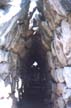
In the second century AD, the Asclepion of Pergamon p picked up where Epidaurus left off and became the prime health centre in the Aegean. The ruins that remain today were constructed mostly by Hadrian. Hadrian is also believed responsible for the construction of the enormous red-brick Serapeion, better known as the Red Basilica, which lies along the river directly below the acropolis. In Roman times, it is believed Egyptian gods were worshipped there. In the Byzantine period, it became a church. Its fame, however, stems from its mention as one of the "Seven Churches" of Asia Minor - St John refers to it as home of the throne of the devil. What remains of all this history? Remarkably, quite a lot. The acropolis is about five times bigger than the acropolis of Athens, and you can spend an entire day exploring its agoras, gymnasiums, temples, palaces, walls and underground tunnels.
Another fond memory I had of Bergama was standing atop the ancient acropolis as the call to prayer rang out from several mosques across the city. The chants echoed off the hillside in the most mesmerising way.
It was a great introduction to the modern city of Bergama, which I soon came to love as much as the ancient one. The place has a sense of unadulterated authenticity and timelessness that I have yet to discover elsewhere. It's an odd thing, because you know there is tourism there - every once in a while a busload of ogling old ladies speeds through town, heading straight for the acropolis - but it's hard to believe. People are genuinely excited to meet you. Children chase you through the streets, serenading you with hellos and offering presents. The most rewarding experience is wandering through the old quarter of town at the foot of the acropolis, where cobblestone streets lead you past Ottoman houses painted pink, blue, green, and every colour in between, faded into the most delicate hues. Paint flicked off in places reveals even older layers of spectacular colour, which give the buildings a pretty, mottled look. The houses? inhabitants are even more interesting. We saw old men and women who looked about 100 years old, both in age and costume, and curious young children who shyly approached, grinning. Everyone was amazingly friendly and eager to practice their English, if they had any. Otherwise, they tried to communicate through ingenious hand gestures and facial expressions.
I was especially struck by how nothing seemed to have changed in the past three years, at least in the old section of town. I returned to the same pension, where I remembered huddling around a space heater in the bedroom of Iven, the owner, listening to Turkish pop and discussing the intricacies of Turkish men. The place was exactly the same. Iven ushered us inside and laughed at my recollection as we sat down for about an hour to chat and share a drink. Later, wandering around the Red Basilica, a boy of about 12 years old rushed out of a nearby carpet store to meet. It was awkward because we were sure it was an elaborate attempt to sell us a carpet, but he was genuinely being friendly, and seemed so excited to meet us that it was quite endearing. He invited us in for tea, but we declined. He then insisted we take little presents of handmade coin satchels. As we left, he ran after us with old Turkish coins to fill them.
Afterwards, I was struck by an unshakeable feeling of deja vu, remembering the young boy who met us in almost exactly the same place three years ago and took us to the breakfast place. Could it have been the same boy, a few years older? At this point, it seemed possible, perhaps even likely. Eerie, yet also comforting.
The breakfast place - it was still there too, and just as I remembered it! No sign out front, and no indication that it was even an eatery. We walked inside and were motioned to a table, where we were served all the bread, fresh creamy butter, delicious honey, cheese and hard-boiled eggs we could eat. This time, however, instead of bringing over the strange, warm milk and powder that I remembered, they went to a nearby cafe to fetch coffee and tea in an effort to accommodate us. Other visitors I have come across have also mentioned the inexplicable magic of the place. In Bergama, history, both ancient and modern, seem to meld almost imperceptibly into daily life. You can still get scrubbed red in an old Ottoman bathhouse. You are more likely to get run over by speeding donkey-pulled carriages than cars. And it is nearly impossible to leave the city without meeting locals who promise not to forget you. You certainly won't forget them.

