Call me crazy but, I have a degree in mathematics, and I do not understand the new electoral math. I do not believe that a vote for Nadar is a vote for Bush. I do not believe that vote for Pat Buchanan is a vote for Al Gore. I believe that a vote for Harry Brown is a vote for Harry Brown. A vote for Nadar is a vote for Nadar. A vote for Bush is a vote for Bush, and on through the list.
I find it absolutely appalling to consider voting for any candidate who does not represent what I want from my government simply because my candiate of choice is unlikely to win. It is a matter of principle, it is a matter of conscience, and it is a matter of civic duty. My goverment representatives are there to do what I want them to do. My representatives need me to tell them what I want. When I vote for a candidate, that says to him, "I approve of your ideology. I approve of your goals. I approve of your plans for the country that I love dearly." If I vote for him simply because the other guy might not win, that defeats the entire purpose of the electoral system.
In 1776, the British army was the single most powerful army on earth. Ask yourself: What would the world be like today if that group of underdogs known as the American colonies had simply said, "We cannot possibly win, therefore, we will not try." I refuse to be a defeatist. I refuse to waste my vote. My candidate may not win in this election, but that, my fellow Americans, is not the point. It is about having the courage of my convictions. It is about accepting the responsibility that comes with the freedom of the electoral process.
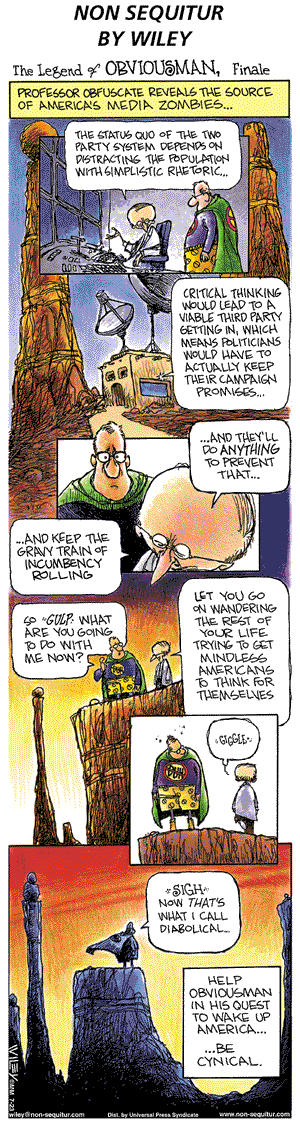
In most states in the United States there are at least five candidates on the ballot for President of the United States: the two main party candidates, Libertarian Harry Brown, Green Party candidate Ralph Nadar, and Reform Party candidate Pat Buchanan. These men represent a great array from the American polital spectrum. I urge you to vote for the man who most closely represents your beliefs. On November 7th, I will do just that. I will cast a vote for Libertarian Harry Brown, and my vote will not be wasted.
~ October 2000
|